In modern material handling scenarios covering warehousing, logistics, manufacturing and cold chain operations, forklift risk assessment is a core mandatory part of compliance management, which directly relates to operational safety, personnel protection and compliance with local safety regulatory requirements. As the penetration rate of new energy electric forklifts continues to rise in recent years, the targeted risk assessment work can no longer follow the old standards applicable to internal combustion forklifts, and needs to be adjusted according to the technical characteristics of electric vehicles to cover all possible hidden hazards in the whole operation process.
The first key point for compliance is to complete full-scenario risk identification before the operation of electric forklifts. The assessment team needs to conduct on-site investigation to confirm parameters including the width of operation channels, ground load-bearing capacity, slope gradient, position of pedestrian crossing routes, stacking height of goods, and arrangement of blind areas at corners, and mark all high-risk areas in the operation route to avoid collision, rollover or accidental injury of pedestrians. The assessment result should be dynamically updated according to the adjustment of operation layout and change of handling goods, instead of remaining unchanged for a long time.
The second core compliance point is the personnel qualification verification linked to risk assessment. All electric forklift operators need to complete systematic professional operation training, hold valid operation certificates recognized by regulatory authorities, and their physical and mental conditions need to meet the requirements of safe operation, and no person who is affected by fatigue, drug reaction or other factors that may affect judgment is allowed to participate in forklift operation. The assessment system also needs to cover the regular retraining records of operators, to ensure that all personnel master the latest operation specifications and hidden hazard response skills.
The third key point is the full-lifecycle vehicle risk inspection in the assessment system. Regular daily pre-operation check shall cover the power battery status, braking system sensitivity, steering system flexibility, warning light and alarm device effectiveness, and fork wear degree, to eliminate potential vehicle faults before operation. The periodic assessment also needs to verify the maintenance record of the vehicle, to ensure all components are maintained in accordance with official specifications, and no modified parts that do not meet safety standards are used.
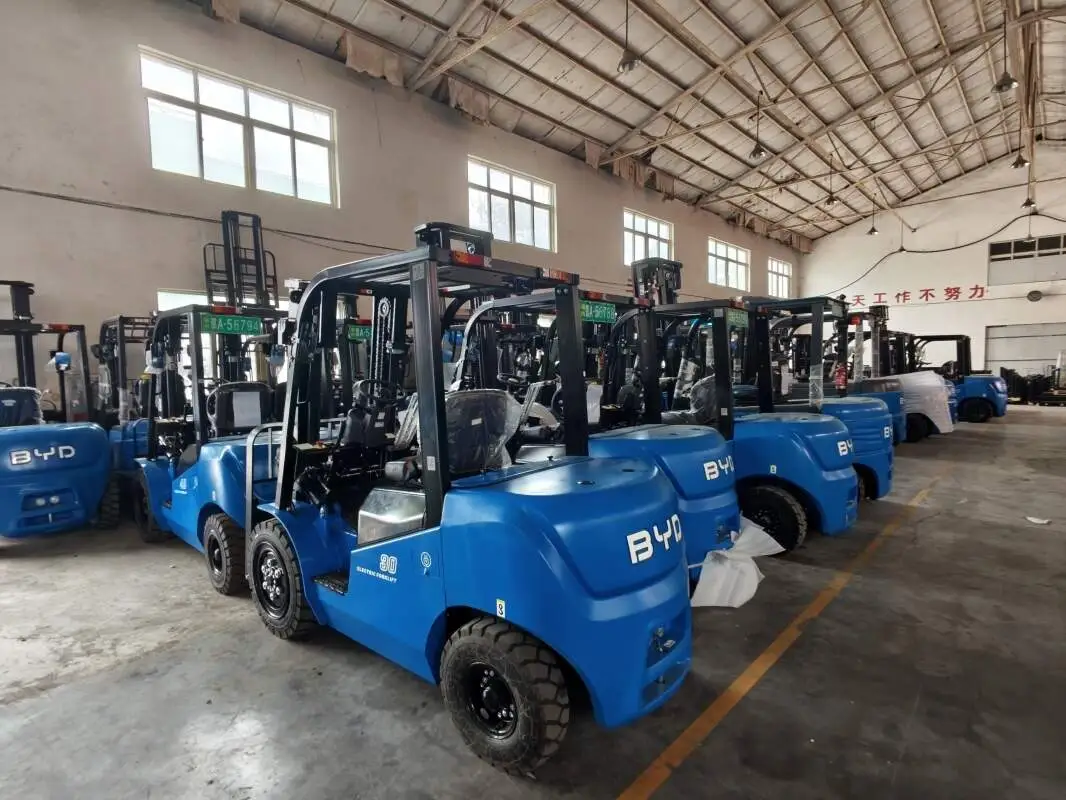
For enterprises that purchase and use electric forklifts, standardized risk assessment mechanism can effectively reduce safety hidden dangers, and help the operation system meet all regulatory compliance requirements. As an operator specializing in new energy material handling equipment, Jian Shu New Energy exclusively deals in BYD electric forklifts, and can provide supporting targeted risk assessment guidance services for all users, to assist customers to build a complete safety management system that meets regulatory standards.