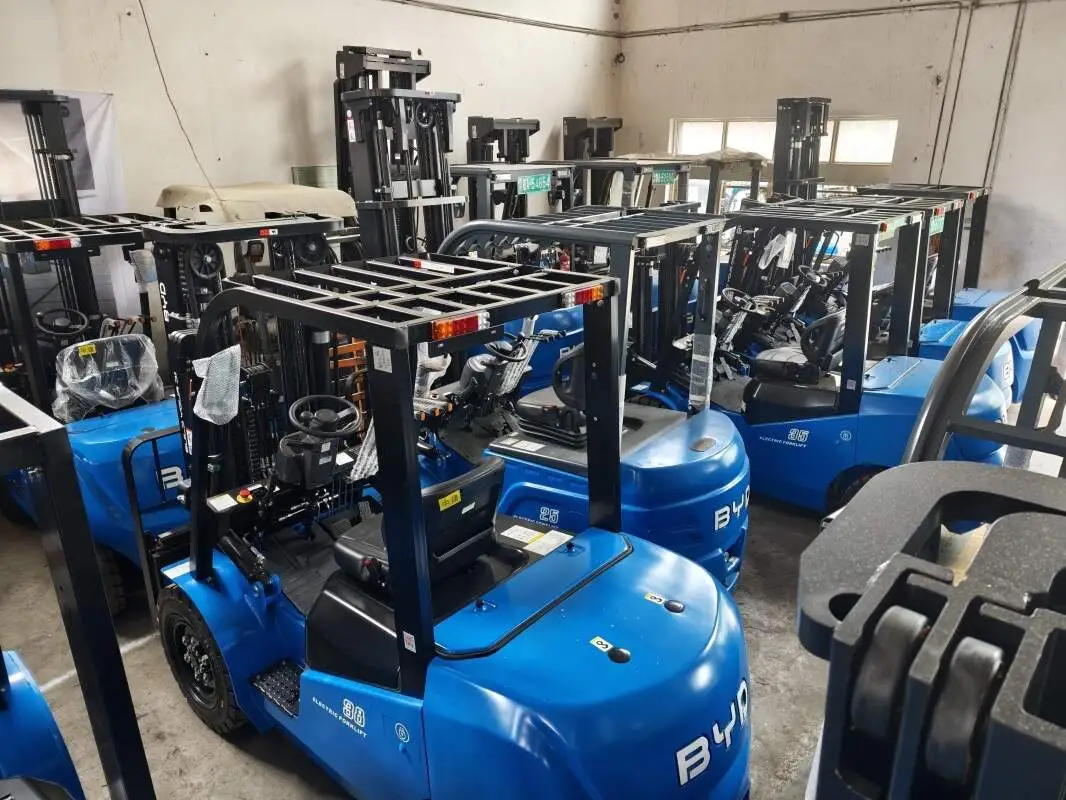
Construction and gravel sites are characterized by uneven terrain, loose surfaces, and dynamic work environments that pose significant challenges for standard material handling equipment. In these settings, 4x4 off-road forklifts emerge as a reliable solution, offering performance advantages tailored to the unique demands of outdoor, rugged operations.
One of the primary advantages of 4x4 off-road forklifts is their exceptional terrain adaptability. Equipped with full-time four-wheel drive, these vehicles maintain traction on muddy, gravel-covered, or sloped surfaces where standard forklifts might struggle to move. Their high ground clearance and robust, large-diameter tires with deep treads allow them to navigate over obstacles like loose rocks, ruts, and uneven soil without getting stuck. This capability eliminates the need for extensive site preparation, such as grading paths, which saves both time and resources for construction and gravel site projects.
Another key performance benefit is enhanced load handling stability. Unlike standard forklifts that require level ground to safely lift and transport heavy loads, 4x4 off-road models feature advanced balance systems and reinforced frames. These design elements enable them to maintain load stability even on uneven surfaces, reducing the risk of load shifting or tipping. This is particularly valuable for handling construction materials like steel beams, concrete blocks, and bulk gravel, where safe and efficient transport directly impacts project timelines.
Maneuverability in confined or cluttered work areas is also a standout advantage. Many construction and gravel sites have limited space between structures, material piles, or heavy machinery. 4x4 off-road forklifts are designed with compact frames and responsive steering systems, allowing operators to navigate tight corners and narrow passages with ease. This flexibility means they can reach areas that larger, less agile equipment cannot, ensuring that materials are delivered precisely where they are needed without disrupting other on-site operations.
Durability and low maintenance requirements further contribute to their value in rugged work environments. Built with heavy-duty components, including reinforced chassis, protective undercarriages, and sealed electrical systems, these forklifts are engineered to withstand constant exposure to dust, debris, and harsh weather conditions. Their robust construction reduces the frequency of breakdowns, minimizing downtime and lowering long-term maintenance costs. This reliability makes them a cost-effective choice for projects that require continuous, daily operation in challenging outdoor settings.
In summary, 4x4 off-road forklifts offer a range of performance advantages that make them ideal for construction and gravel sites. From navigating rough terrain with ease to providing stable load handling and agile maneuverability, these vehicles address the core challenges of outdoor material handling. Their durable design ensures consistent operation, helping to boost overall efficiency and keep projects on schedule. For businesses operating in rugged outdoor environments, integrating a 4x4 off-road forklift into their equipment fleet can lead to improved productivity and reduced operational hurdles.