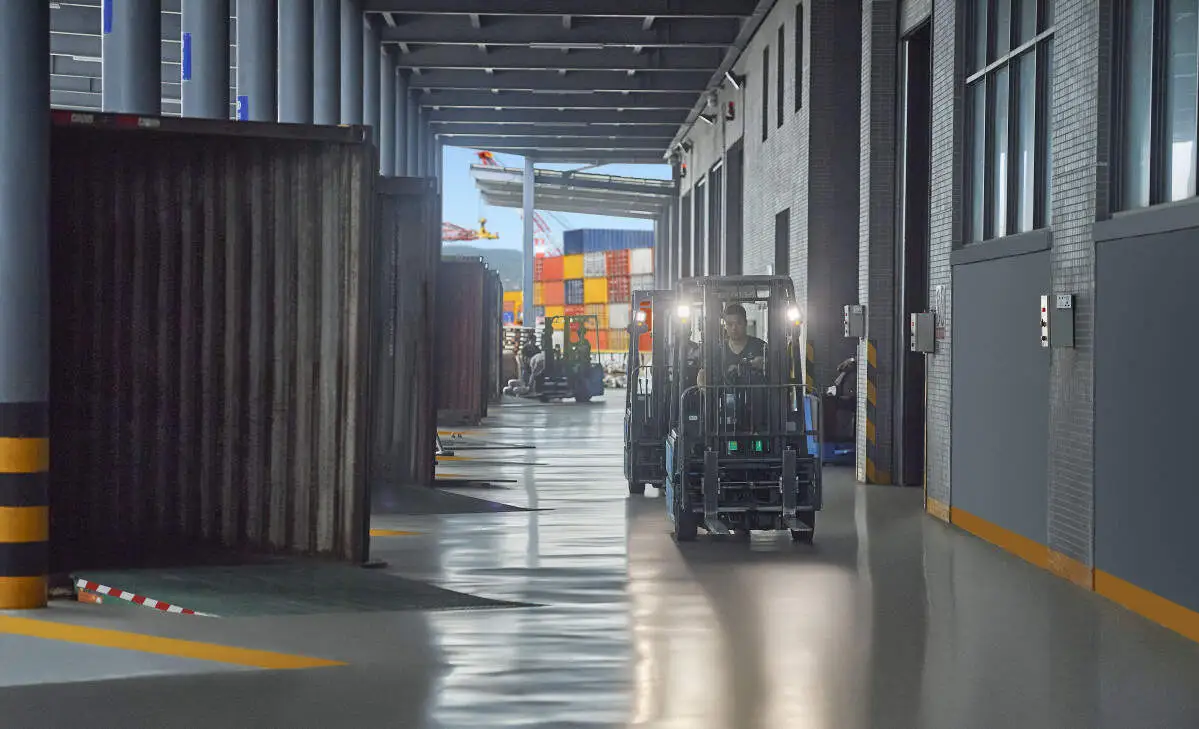
In today’s fast-paced logistics landscape, warehouses face growing pressure to handle increasing volumes of goods with greater speed and accuracy. Manual material handling processes often struggle to keep up with these demands, leading to bottlenecks, higher operational costs, and increased risk of human error. Enter AGV forklifts – a key component of smart warehouse automation that is transforming the way businesses manage material handling operations.
AGV, short for Automated Guided Vehicle, forklifts are self-operating vehicles designed to transport materials within warehouse facilities without direct human intervention. Equipped with advanced navigation systems, such as laser guidance, magnetic tape navigation, or vision-based navigation, these forklifts can move seamlessly through warehouse aisles, follow predefined routes, and adapt to changes in the environment in real time. Unlike traditional forklifts that require a trained operator, AGV forklifts operate under the control of a central management system, which coordinates tasks and monitors their performance.
One of the primary benefits of AGV forklifts is their ability to boost material handling efficiency. These automated vehicles can operate continuously, 24 hours a day, seven days a week, with minimal downtime for maintenance. This round-the-clock operation ensures that material flow remains uninterrupted, even during off-peak hours, significantly reducing order fulfillment times. Additionally, AGV forklifts can consistently maintain optimal travel speeds and take the most efficient routes, eliminating delays caused by human fatigue or inconsistent operation. By automating repetitive tasks like pallet moving and storage retrieval, businesses can reallocate human workers to more value-added roles, such as inventory management or quality control.
Safety is another critical advantage of AGV forklifts in warehouse environments. Human-operated forklifts are prone to accidents caused by operator error, such as misjudging distances, speeding, or inattentiveness. AGV forklifts, on the other hand, are equipped with a range of safety features, including obstacle detection sensors, emergency stop buttons, and collision avoidance systems. These features allow the forklifts to detect pedestrians, other vehicles, and obstacles in their path, and adjust their speed or direction accordingly to prevent collisions. This not only reduces the risk of workplace injuries but also minimizes damage to goods and warehouse infrastructure, resulting in lower operational costs and improved compliance with safety regulations.
AGV forklifts also play a vital role in optimizing inventory management. When integrated with warehouse management systems (WMS), these automated vehicles can transmit real-time data about their location and the status of the goods they are transporting. This data allows warehouse managers to track inventory levels accurately, monitor the movement of goods, and identify potential issues before they escalate. For example, if a pallet is misplaced or damaged, the WMS can immediately alert staff to address the problem, ensuring that inventory records remain up-to-date. This level of visibility and control helps businesses reduce inventory holding costs, prevent stockouts, and improve overall supply chain efficiency.
The workflow of AGV forklifts in a smart warehouse is streamlined and highly coordinated. The process begins when the WMS generates a material handling task, such as retrieving a pallet from storage or delivering goods to a shipping dock. This task is sent to the central AGV control system, which assigns it to the most suitable forklift based on factors like proximity, current workload, and vehicle capacity. The AGV then navigates to the designated location using its navigation system, uses its lifting mechanism to pick up the pallet, and transports it to the target destination. Once the task is completed, the forklift sends a confirmation signal to the control system and awaits its next assignment. This automated workflow eliminates the need for manual task coordination, reducing the risk of errors and ensuring that tasks are completed in the most efficient manner possible.
AGV forklifts are versatile and can be adapted to a wide range of warehouse environments and material handling needs. Whether in a large-scale e-commerce warehouse dealing with high volumes of small parcels or a manufacturing facility transporting heavy components, these automated vehicles can be configured to handle different types of loads, from pallets and crates to oversized items. Some AGV forklifts are designed for narrow aisle operation, allowing warehouses to maximize storage space by reducing aisle width. Others are equipped with specialized attachments, such as clamps or forks, to handle specific types of goods, further enhancing their flexibility.
Looking ahead, the role of AGV forklifts in smart warehouse automation is set to expand further. Advancements in artificial intelligence (AI) and the Internet of Things (IoT) are enabling AGV forklifts to become even more intelligent and autonomous. For example, AI-powered navigation systems can learn from past operations to optimize routes and adapt to changes in the warehouse layout, while IoT sensors can provide real-time data on vehicle performance, allowing for predictive maintenance to prevent breakdowns. Additionally, integration with other automated systems, such as robotic arms and automated storage and retrieval systems (AS/RS), will create fully integrated warehouse ecosystems that can handle complex material handling tasks with minimal human intervention.
In conclusion, AGV forklifts represent a smart and efficient solution for modern warehouse automation. By enhancing material handling efficiency, improving workplace safety, optimizing inventory management, and streamlining workflow, these automated vehicles help businesses meet the growing demands of the logistics industry. As technology continues to advance, AGV forklifts will become an even more integral part of smart warehouse operations, driving greater productivity and competitiveness for businesses of all sizes.