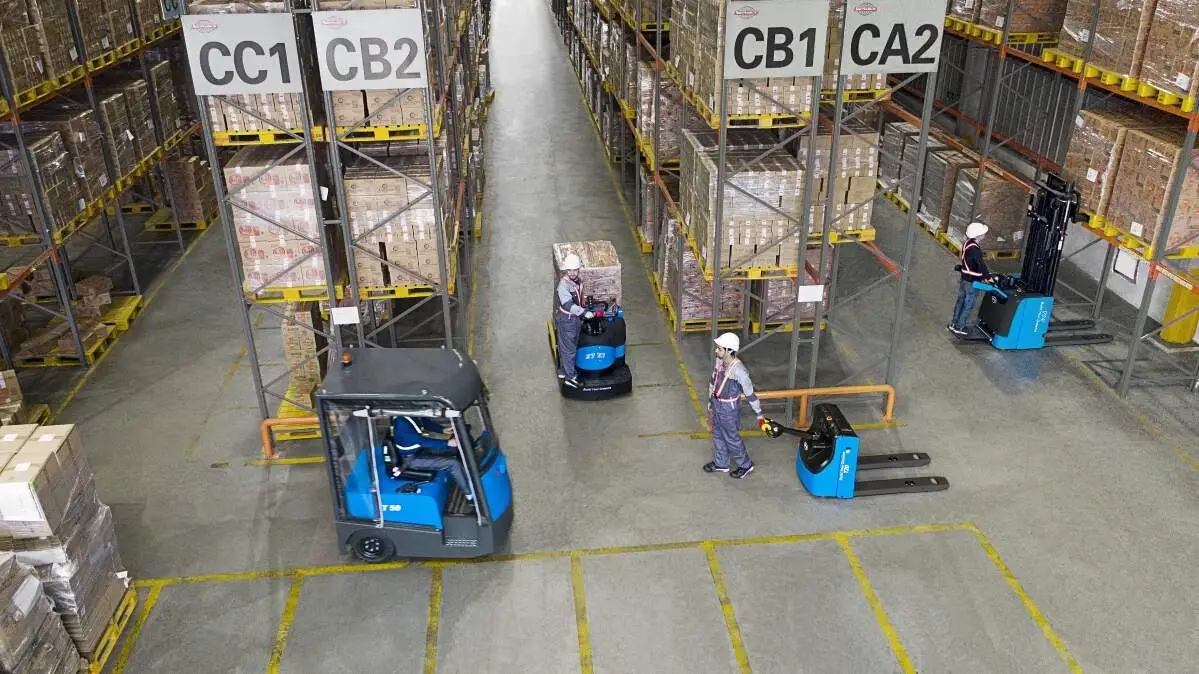
For decades, many material handling professionals assumed electric forklifts were only suitable for light to medium-duty tasks, leaving heavy-load lifting to internal combustion (IC) forklifts. But as battery and motor technology advances, this perception is rapidly shifting. Today, the question isn’t just “can electric forklifts handle heavy loads?” but “how effectively do they perform in these demanding scenarios?
Modern electric forklifts boast impressive lifting capacities that rival their IC counterparts. Depending on the model, some electric forklifts can handle loads ranging from 5 tons to 15 tons, with specialized variants designed for even heavier applications in ports and construction sites. This leap in capacity is largely driven by advancements in lithium-ion battery technology. Unlike traditional lead-acid batteries, lithium-ion batteries deliver consistent power output throughout their charge, ensuring the forklift maintains full lifting strength even as the battery depletes. Additionally, high-voltage battery systems provide the energy needed to power robust motors and hydraulic systems, critical for lifting heavy loads smoothly.
Beyond raw lifting capacity, electric forklifts excel in heavy-duty operational environments. In industrial warehouses and distribution centers, where heavy pallets and large containers are moved daily, electric models offer steady torque delivery. Unlike IC forklifts, which may experience power fluctuations under heavy load, electric motors provide instant torque, making it easier to start moving heavy loads and navigate inclines without losing performance. This consistent power translates to more efficient material handling, as operators can maintain steady speeds and complete tasks with fewer interruptions.
Several key factors contribute to the heavy-duty performance of electric forklifts. First, battery technology plays a pivotal role. Lithium-ion batteries not only offer longer runtime but also support fast charging, allowing forklifts to get back to work quickly during shift breaks. Second, advanced motor designs, such as permanent magnet synchronous motors, are more efficient and powerful than older motor types. These motors generate more power with less energy loss, ensuring that the forklift can handle heavy loads without draining the battery excessively. Third, optimized hydraulic systems, paired with electric power, provide precise control over lifting and lowering, reducing the risk of load damage and improving overall safety.
When compared to IC forklifts, electric models hold distinct advantages for heavy-load applications. Electric forklifts produce zero emissions, making them ideal for indoor heavy-duty operations where air quality is a concern. They also operate at lower noise levels, creating a safer and more comfortable work environment for operators. Maintenance requirements are another benefit: electric forklifts have fewer moving parts than IC models, meaning less frequent servicing and lower long-term costs. While IC forklifts may still have a place in some extreme outdoor applications, electric forklifts have proven their ability to handle the vast majority of heavy-load tasks in modern material handling operations.
As technology continues to evolve, the heavy-duty capabilities of electric forklifts will only improve. Ongoing innovations in battery energy density, motor efficiency, and smart material handling systems will further enhance their performance. For businesses looking to transition to more sustainable and efficient material handling solutions, electric forklifts are no longer a compromise—they are a reliable, powerful option for heavy-load lifting.