


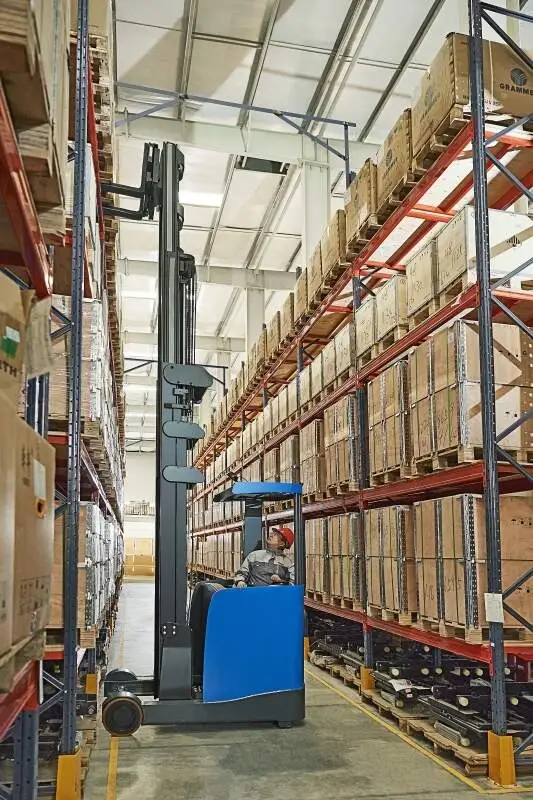
In the field of intelligent logistics and intelligent manufacturing, AGVs have become one of the core equipment to improve logistics efficiency with their automated and intelligent operation characteristics. Different models of AGVs have differences in load capacity and adaptation scenarios, and clear selection standards are the premise of giving full play to the value of equipment. This paper will focus on the ap15 and ap20mpw AGVs to analyze the key points of their application scenarios from multiple dimensions.
From the perspective of load demand, the core difference between the two AGVs is the rated carrying capacity. The rated load of the AP15 is 1.5 tons, which is more suitable for the handling needs of small and medium-sized materials. For example, in the small and medium-sized picking process of e-commerce warehousing, most of the goods are concentrated in a single box weight of 0.5-1 tons. The load capacity of the AP15 just matches, which will not cause excess performance and can stably complete continuous operations; while the rated load of the AP20MPW reaches 2 tons, which is more suitable for the transfer of medium and heavy materials. For example, in the automotive parts production workshop, the weight of some stamping parts and assembly modules is often in the 1.5-2-ton range. The AP20MPW can stably carry such materials and avoid the interruption of operations caused by insufficient load.
The adaptability of the working space is also an important distinction point. The AP15 body is relatively compact and has a smaller turning radius, which is more suitable for scenes with many narrow passages and complex spatial layouts. For example, in a small parts warehouse, the width of the passage between the shelves is only 1.8-2 meters, and the AP15 can be flexibly shuttled to complete the material transfer between the shelves without additional widening of the passage; while the AP20MPW has a stronger bearing capacity and a slightly larger body size, which is more suitable for scenes with spacious passages and open working areas, such as the transfer operation from the cargo area of a large finished product storage center to the loading and unloading platform. The open space allows it to play a stable long-distance handling advantage and improve the transfer efficiency of bulk materials.
Material characteristics will also affect the selection of AGV. For small and medium-sized packaging materials such as regular cartons and plastic boxes, the AP15 fork specification and bearing platform are more suitable, which can accurately intercept and transfer, reducing the risk of material deviation; while for large-sized and weight-intensive pallet materials, such as industrial metal pallets and large packaging pallets, the AP20MPW fork bearing capacity and stability are better, which can ensure that the material remains stable during handling and reduce the probability of cargo damage.
Finally, the operation frequency and efficiency requirements also need to be taken into account. In scenarios with high operation frequency and short single handling cycle, such as the feeding process of the production line in an electronics factory, a material transfer needs to be completed every 10-15 minutes. The AP15 has fast start-up speed and strong operation flexibility, and can quickly respond to multiple small batch handling needs. In scenarios with relatively moderate operation frequency and large single-time handling of materials, such as the batch material outbound from the building materials warehouse, the large load capacity of the AP20MPW can reduce the number of handling times, improve the overall operation efficiency, and reduce the operating frequency loss of the equipment.
In summary, enterprises need to consider factors such as their own load requirements, operating space, material characteristics, and operating frequency when selecting models, and choose AP15 or AP20MPW AGVs reasonably in order to maximize the value of automation equipment and promote the efficient operation of logistics operations.

