


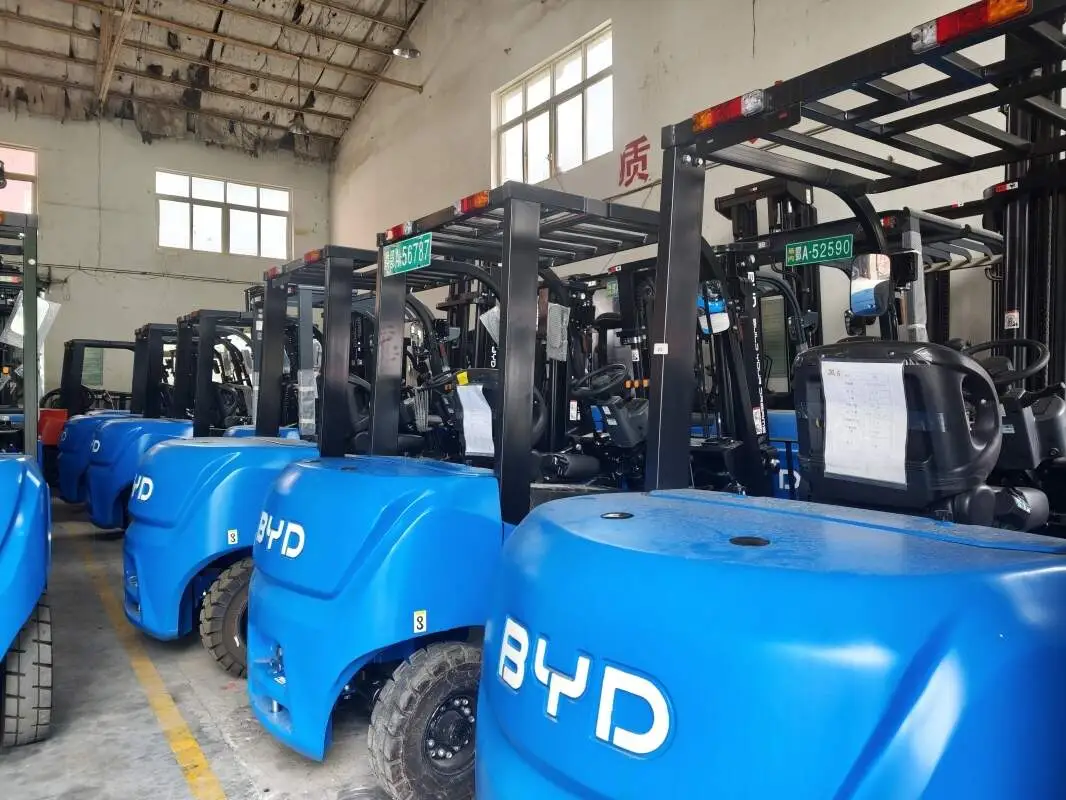
With its flexible operation characteristics, forward-moving AGVs have become important equipment for improving operation efficiency in the field of warehousing and logistics. Different types of AGVs have differences in performance parameters, which directly affect their adaptation scenarios and operation effects. The following will compare the core parameters of the two forward-moving AGVs in detail to provide reference for enterprise warehousing selection.
Core performance parameter comparison
Load and carrying capacity
There are clear differences in the load ratings of the two forward-moving AGVs, one with a rated load of 1.6 tons and the other with 2 tons. This difference in load-bearing capacity makes them suitable for cargo handling operations in different weight ranges. For warehousing scenarios dominated by small and light loads, the 1.6-ton model can meet daily handling needs; for the transshipment of heavy goods or bulk heavier materials, the 2-ton model can provide more stable load-bearing support.
Lifting height adaptation range
In terms of lifting height, the maximum lifting height of the two devices is different. One of the maximum lifting heights can cover the storage needs of most conventional high-level shelves, and the other has a higher lifting height, which can adapt to higher-level shelf storage scenarios. When choosing a model, enterprises need to combine the actual height of their own warehouse shelves to ensure that the lifting height of the AGV can meet the vertical range requirements of goods access.
Maneuverability Difference
The turning radius parameters of the two AGVs are different. One has a smaller turning radius, more flexible steering and shuttle in narrow passages, and is suitable for compact warehouses with limited channel widths. The other has a slightly larger turning radius, which is more suitable for storage spaces with sufficient channel widths, and more efficient in open environments.
Warehousing Scenario Adaptation Analysis
Light load small storage scene
For e-commerce retail, fast-moving consumer goods and other warehousing scenarios dominated by light-duty small goods, the forward-moving AGV with a rated load of 1.6 tons has more advantages. Its small turning radius allows it to travel flexibly between dense shelves, improving the efficiency of cargo sorting and transshipment, and adapting to the characteristics of small batches and fast circulation of goods in such scenarios.
Heavy-duty high-level storage scenario
For scenarios such as raw material storage in the manufacturing industry and warehousing of large-scale finished products, a forward-moving AGV with a rated load of 2 tons is more suitable. It can not only carry heavier goods, but also meet the access requirements of high shelves with a higher lifting height, which is suitable for the characteristics of large weight and high storage level in such scenarios.
Warehouse selection reference suggestions
Clarify cargo weight requirements
The enterprise first needs to count the average weight and peak weight of the goods in the warehouse, and select the corresponding load AGV based on this. If most of the goods weigh less than 1.6 tons and there is no frequent heavy load demand, the 1.6-ton model can be given priority; if there is a large number of heavy goods transshipment within 2 tons, the 2-ton model is more suitable.
Match shelf height parameters
Secondly, measure the maximum access height of the warehouse shelf to ensure that the maximum lifting height of the selected AGV can cover this range. If the shelf height is higher, choose a model with a larger lifting height to avoid the situation where high-level goods cannot be accessed.
Consider warehouse channel width
Finally, it is necessary to evaluate the actual width of the channel in the warehouse and select the type based on the turning radius parameters of the AGV. For warehouses with narrower channels, a smaller turning radius should be selected to ensure the fluidity of the AGV during operation; warehouses with sufficient channel width can be flexibly selected according to other parameters.

