


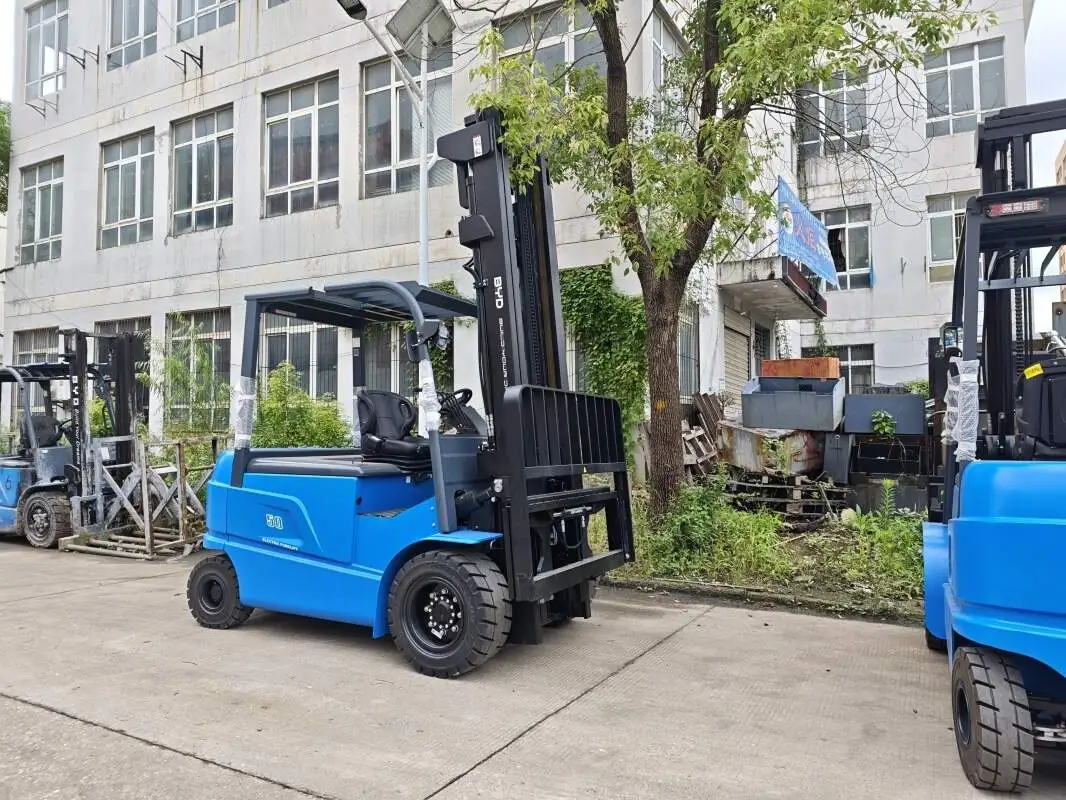
The chassis running system of an electric forklift is the core module to ensure the stable operation of the equipment. The close cooperation of various accessories directly affects the driving efficiency, load-bearing capacity and operation safety of the forklift. Understanding the characteristics and adaptation points of these accessories is essential for the daily maintenance and performance improvement of the forklift.
As the grounding part of the walking system, the tyre selection needs to fit the operation scene. In a flat indoor warehouse environment, wear-resistant solid tires are a common choice, which can effectively resist ground wear and reduce the cost of frequent replacement. If it involves outdoor complex road conditions, inflatable tires with both anti-skid and impact resistance can be selected to improve the driving stability of forklifts on bumpy roads and reduce the risk of damage to goods. The right tires can not only reduce driving resistance, but also reduce the load on other parts of the chassis.
The walking motor is the power core of the chassis system, and it needs to have stable torque output and accurate speed regulation performance. When the forklift starts, climbs or carries heavy loads, the motor can automatically adjust the power output according to the load change to ensure a smooth and smooth driving process; at the same time, the efficient motor can optimize energy utilization, improve the battery life of the forklift, and reduce the energy consumption cost of long-term operation. In daily use, it is necessary to pay attention to the heat dissipation maintenance of the motor to avoid overheating affecting the performance and service life.
The axle bears the dual responsibilities of power transmission and weight bearing in the walking system. The drive axle is responsible for transferring the power of the motor to the tires to provide driving power for the forklift. The internal transmission parts need to have sufficient strength and wear resistance to cope with long-term load operation; the steering axle ensures the flexible steering operation of the forklift. The accuracy of the steering mechanism directly affects the working efficiency of the forklift in a confined space. High-quality axles can reduce the frequency of failures and extend the overall service life of the equipment.
Choosing the full stack chassis travel parts supply can ensure the adaptability between the components, avoid the operation failure caused by the mismatch of the parts specifications, and facilitate the unified after-sales maintenance management to provide all-round support for the stable operation of the forklift. Whether it is parts replacement or system upgrade, one-stop service can simplify the process and improve efficiency.

