


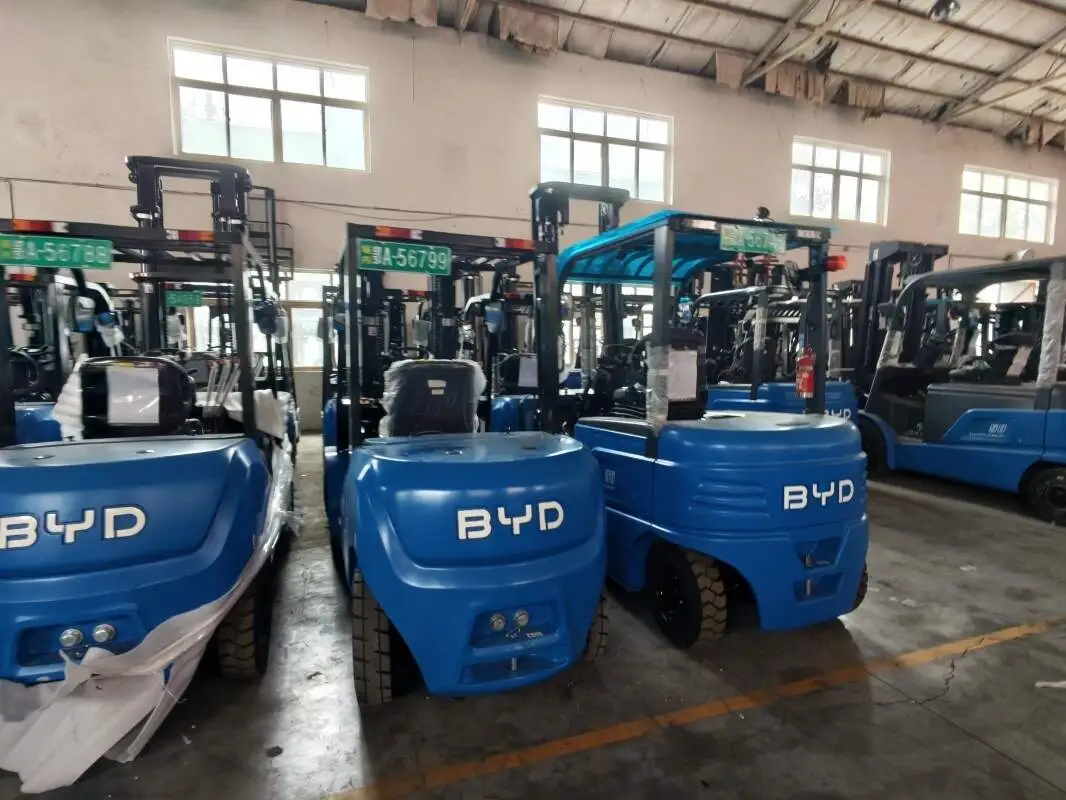
The walking system is the core support for the efficient operation of electric forklifts. Its parts are susceptible to wear and tear due to long-term load, friction, and working conditions. Timely identification and replacement of vulnerable parts can effectively extend the service life of forklifts and ensure operation safety.
Drive wheel tires are the basic wearing parts of the walking system. If you drive on rough ground for a long time or start and stop frequently, there will be problems such as uneven tread wear, cracks or bulging. When the tread pattern depth is less than 1/3 of the original depth, or penetrating cracks appear, it needs to be replaced in time. When replacing, pay attention to choosing the appropriate size and material to ensure that the tires are in uniform contact with the ground after installation to avoid bias load aggravating the loss of new tires.
The walking motor carbon brush is responsible for providing current to the motor. Long-term operation will cause the length of the carbon brush to shorten and wear unevenly due to friction. When the remaining length of the carbon brush is less than 1/2 of the original length, or there is serious partial wear and surface scorching, it needs to be replaced. When replacing, clean the toner on the surface of the motor commutator to ensure that the new carbon brush fits tightly with the commutator to avoid abnormal operation of the motor due to poor contact.
The gears in the traveling reducer bear the transmission torque for a long time, and are prone to tooth surface wear, pitting corrosion or broken teeth. If the abnormal sound of the reducer operation increases and the transmission efficiency decreases during daily inspection, the gear status needs to be disassembled and checked. Once obvious tooth surface damage occurs, the matching gears should be replaced in time, and the reducer lubricating oil should be replaced at the same time to ensure sufficient lubrication of the transmission system.
The brake shoe is a key accessory to ensure the safety of forklift braking. Frequent braking will cause the shoe to wear and thin. When the thickness of the shoe is less than 1/3 of the original thickness, or when braking, the braking distance becomes longer, abnormal sound, etc., it needs to be replaced immediately. When replacing, adjust the braking gap to ensure that the shoe and the brake drum fit well to avoid brake failure or biased braking problems.
The walking sensor is used to monitor the walking speed and position, and is susceptible to abnormal signals due to long-term vibration and dust. If the forklift has unstable walking speed, slow start-stop response, etc., it is necessary to check the connection line and sensing surface of the sensor. If it is confirmed that the sensor is damaged, it is necessary to replace the accessories of the same specification, and perform signal calibration after installation to ensure accurate control of the walking system.
In daily operation and maintenance, in addition to regularly checking the status of wearing parts, it is also necessary to do a good job of cleaning and lubrication to reduce the rate of parts loss. Formulating a reasonable replacement cycle for parts according to the working conditions of the forklift can effectively reduce the failure rate and improve the efficiency of the forklift operation.

