


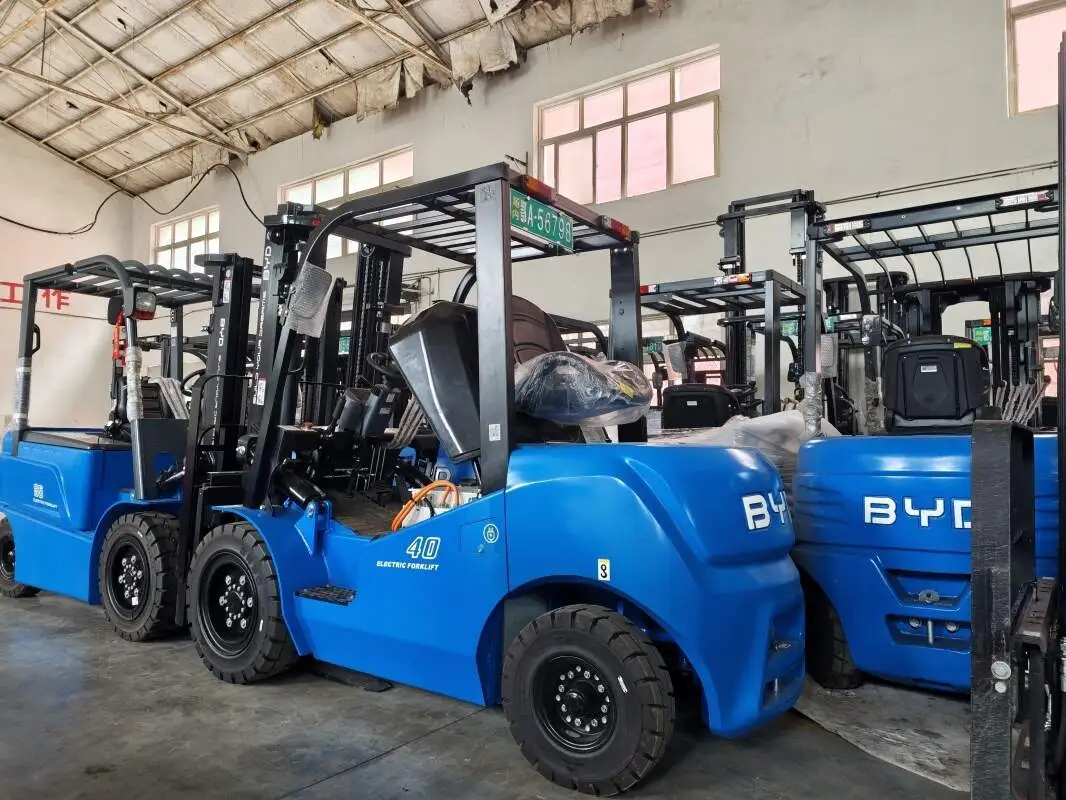
The chassis walking system of an electric forklift is the core component to ensure the stable operation of the equipment, and the accurate adaptation of its accessories directly affects the handling, bearing capacity and service life of the forklift. For BYD's various series of electric forklifts, there are differences in the model specifications of chassis walking accessories for models of different tonnages and power configurations. Mastering its adaptation logic is the key to daily maintenance and accessory selection for practitioners.
As the core bearing component of the chassis walking system, the drive wheel needs to be adapted according to the rated lifting weight and usage scenarios of the forklift. The small-tonnage series forklift drive wheels mostly use rubber wheels with specific diameters and widths, and the wheel surface pattern depth and installation hole size need to be paid attention to when adapting; the large-tonnage series forklift drive wheels need to have higher bearing strength. When adapting, they need to match the wheel hub and tire combination of the corresponding load level to avoid increased wear or insufficient bearing due to model discrepancies.
The adaptation of steering wheel and steering mechanism accessories needs to take into account steering flexibility and structural stability. There are differences in steering wheel diameter and deflection angle of different series of BYD forklifts. When adapting, it is necessary to check the installation shaft diameter of the steering wheel and the connection parameters of the steering knuckle. At the same time, the steering rod, steering power cylinder and other accessories need to match the steering system parameters of the model to ensure smooth steering without stagnation.
The adaptation of the walking motor and transmission parts needs to focus on the power configuration of the forklift. For forklifts with permanent magnet synchronous power systems, the model of the traveling motor needs to match the corresponding power output, and the transmission ratio of the reducer and transmission shaft needs to match the motor torque; for forklifts with asynchronous power systems, attention needs to be paid to the installation size and wiring specifications of the motor, and the material strength of the transmission parts needs to be adapted to the power output characteristics of the model.
When selecting parts, it is necessary to clarify the specific series number and factory configuration parameters of the forklift to avoid judging the model based on appearance or experience alone. At the same time, it is recommended to obtain parts adaptation information through regular channels, and consult professional and technical personnel if necessary to ensure that the selected parts fully meet the needs of the model and ensure the operation stability and safety of the forklift.

