

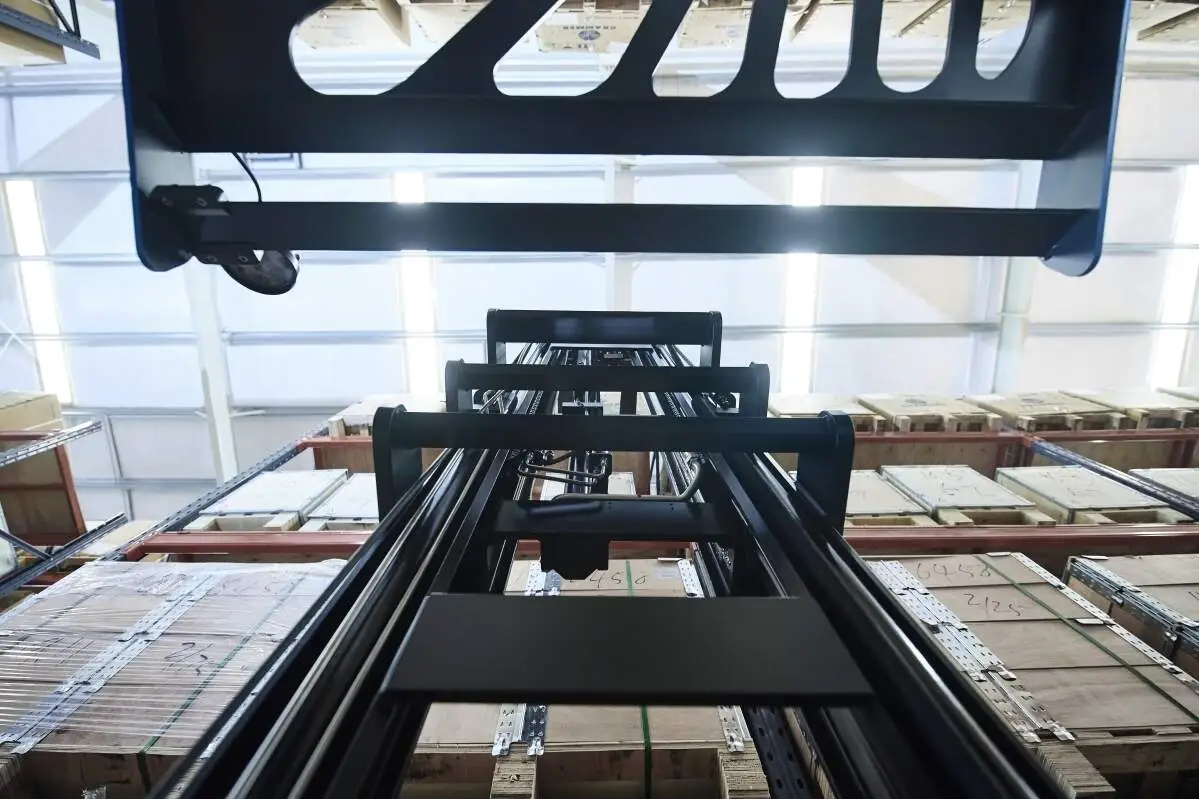
The abnormal noise or wear of the electric forklift gantry chain will directly affect the lifting stability of the forklift, and it needs to be investigated and dealt with in time. First, the root cause of the problem can be determined through visual observation and operation testing: if the forklift makes periodic abnormal noises during the lifting process, accompanied by the chain beating, there is a high probability that the chain tension is insufficient; if there are obvious tooth marks, cracks or elongated deformation on the surface of the chain, it is excessive wear and tear, and a new chain needs to be replaced.
Before replacing the chain, make full preparations: park the forklift on a flat and solid ground, pull up the parking brake, turn off the power supply and unplug the key to avoid misoperation. Prepare new chains, socket wrenches, torque wrenches, grease and other tool accessories of suitable specifications, and clean the debris around the door frame to ensure the safety of the operating space.
The formal installation steps are divided into the following steps: The first step is to remove the old chain. First reduce the door frame to the lowest position, find the connecting pin of the chain to the door frame and fork frame, remove the spring and bolt fixing the pin with a socket wrench, and slowly remove the old chain. During the process, pay attention to avoid the chain falling and bumping the door frame parts. The second step is to clean the parts. Use a brush to clean the sprocket, the door frame guide rail and the connecting parts of the oil, rust and wear debris to ensure that the installation surface is clean. If the sprocket is slightly worn, you can apply grease for maintenance at the same time. The third step is to install the new chain. Bypass the upper and lower sprockets in turn, align the mounting holes where the chain connects the pin, insert the pin and install the clasp to fix. Note that the direction of the chain should be consistent with the old chain to avoid running cards caused by reverse installation. The fourth step is to adjust the tension. Raise the door frame to half the height and adjust the chain tensioning device with a torque wrench to control the sagging degree of the chain within a suitable range (usually 1% -2% of the total length of the chain). If it is too tight, it will aggravate wear and tear, and if it is too loose, it is easy to cause abnormal sounds. The fifth step is to check the trial operation. Start the forklift, repeatedly lift the door frame 3-5 times, observe the running status of the chain, confirm that there is no abnormal sound or card phenomenon, and check whether the connection part is firm to ensure that
In daily use, it is necessary to regularly check the tension and lubrication status of the chain, and clean up the debris in time, which can effectively reduce the abnormal noise and wear problems of the chain and prolong the service life of the accessories.

