


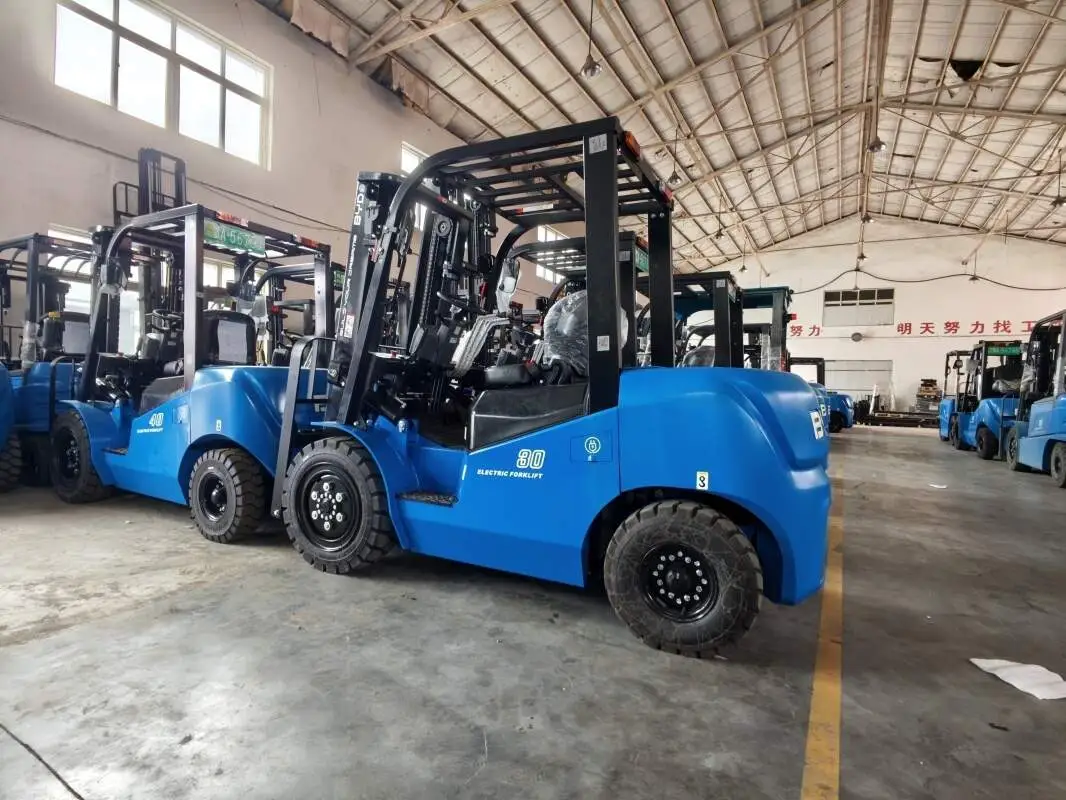
electric forklift lift cylinder oil leakage is a more common failure in daily use, which will not only reduce the working efficiency of the hydraulic system and affect the lifting performance of the forklift, but also may cause safety hazards due to the accumulation of oil pollution, which needs to be repaired in time. The following are the complete practical steps for oil seal and pipeline replacement, which need to be fully prepared before maintenance:
The first is to prepare for maintenance. Park the forklift on a flat and solid ground, pull up the parking brake and disconnect the power supply, release the pressure in the hydraulic system, and avoid the spray of hydraulic oil during the dismantling process. Prepare suitable maintenance tools, including socket wrenches, hexagonal wrenches, hydraulic cleaners, new oil seals, piping and sealing pads of suitable specifications, etc.
Oil seal replacement steps: The first step is to disassemble the oil cylinder. First remove the fixing bolts connecting the oil cylinder with the forklift door frame and hydraulic system, and slowly remove the oil cylinder. During the process, pay attention to avoid bumping the surface of the cylinder cylinder and piston rod; the second step is to clean the parts. Use a hydraulic cleaner to carefully wipe the inner wall of the cylinder and the surface of the piston rod to thoroughly remove oil stains and impurities, and check whether the sealing groove is damaged by wear and scratches; the third step is to replace the oil seal. Use a special tool to gently remove the old oil seal to ensure that there is no residual debris in the sealing groove. Put the new oil seal into the sealing groove in the correct direction. Use a rubber hammer or pressing tool to slowly press in to avoid scratches on the edge of the oil seal; the fourth step is to assemble the oil cylinder. Assemble the components of the cylinder in the reverse order of disassembly, and tighten the fixing bolts in turn. The torque must meet the requirements of the equipment to ensure that the components fit tightly.
Pipeline replacement steps: The first step is to check the oil leakage point. By observing the traces of oil pollution, accurately find the location of oil leakage such as loose pipeline interface and damaged pipeline. After marking, remove the old pipeline; the second step is to clean the interface. Use detergent to clean the oil at the interface between the cylinder and the hydraulic pump, take out the aging sealing pad, and check whether the interface thread is in good condition; the third step is to install a new pipeline. Select a new pipeline with suitable specifications, put a new sealing pad on the interface, connect the two ends of the pipeline to the interface between the cylinder and the hydraulic pump, and use a wrench to tighten the bolts appropriately to avoid excessive force causing thread slippage or pipeline deformation; the fourth step is to test the pressure. Restore the hydraulic system connection, start the forklift after turning on the power supply, test the lifting function many times, and observe whether there is still oil leakage at the cylinder and pipeline interface to ensure that the fault is completely resolved.
After the maintenance is completed, it is recommended to regularly check the lifting cylinder and hydraulic pipeline to clean up the oil pollution in time, and deal with abnormal oil leakage as soon as possible to prolong the service life of the cylinder and ensure the stable operation of the forklift.

