


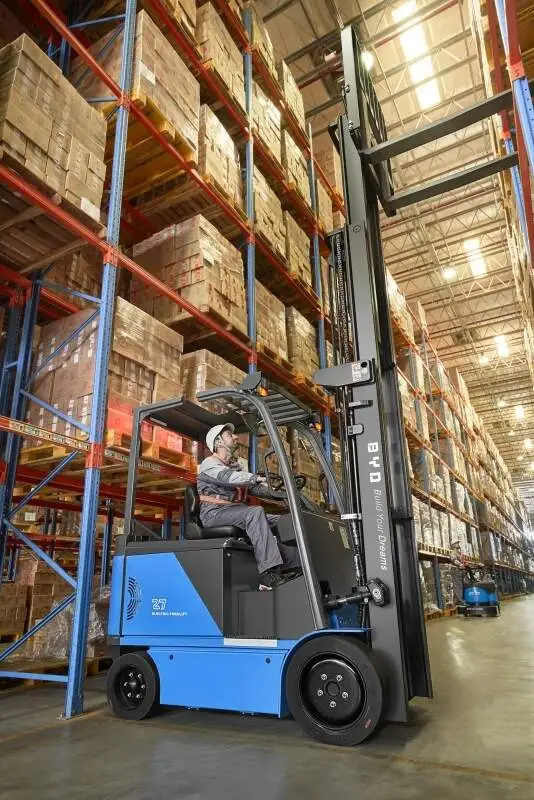
The operating handle is the core component of the electric forklift to control the driving, lifting and other functions. Once a failure occurs, it not only affects the operation efficiency, but also may bring safety hazards. The following is a detailed explanation of the complete practical steps for the replacement of accessories to help the operator solve the fault in a standardized manner.
First, pre-fault confirmation
First of all, it is necessary to eliminate external factors unless the accessories are damaged: check whether the handle cable is loose and falling off, check whether the power line has poor contact, and confirm that there is no foreign object stuck in the operation area. If the failure problem still exists after the above investigation, it is determined that the internal accessories of the handle are damaged and need to be replaced.
II. Preparation of accessories and tools
Prepare the appropriate handle internal accessories in advance to ensure that the accessory models are consistent with the original parts of the forklift to avoid installation failure due to non-compliance with specifications; at the same time, prepare commonly used tools, including hexagonal wrenches, screwdrivers, insulating tape, etc., to ensure that the tool is in good condition and the insulation performance is up to standard.
III. Safety operation front
Before performing any maintenance operations, be sure to power off the forklift, pull up the handbrake and secure the wheels to prevent accidental movement of the forklift. Wear insulated gloves during operation to avoid the risk of electric shock, and keep the maintenance area clean to prevent additional malfunctions caused by falling tools or accessories.
Fourth, disassemble the old handle accessories
First remove the fixing screws on the outside of the handle, carefully open the handle shell, and avoid pulling the internal wiring; find the malfunctioning target accessories, unplug the connected wiring plugs, and mark the corresponding position of the wiring to prevent subsequent wiring errors; use appropriate tools to remove the fixing screws, remove the old accessories smoothly, and place them in the designated area to avoid loss.
Installation and debugging of new accessories
Align the new accessories with the installation position and fix them firmly with screws to ensure that the installation is not loose; plug in the wiring plugs one by one according to the marked line position, and reinforce the wiring with insulating tape; reinstall the handle shell and tighten the fixing screws. After the installation is completed, power on to test the functions of the handle, check whether the driving, lifting and other operations are smooth, and confirm that the handle sensitivity is normal.
Six, post-maintenance tips
After the replacement of the parts is completed, it is recommended to regularly clean and inspect the handle to clean up the dust and debris in the handle gap in time to avoid sticking. Regularly check the connection status of the line to prevent loosening from causing failure, and ensure that the forklift operating parts are always in good condition to ensure the safety and efficiency of the operation.

