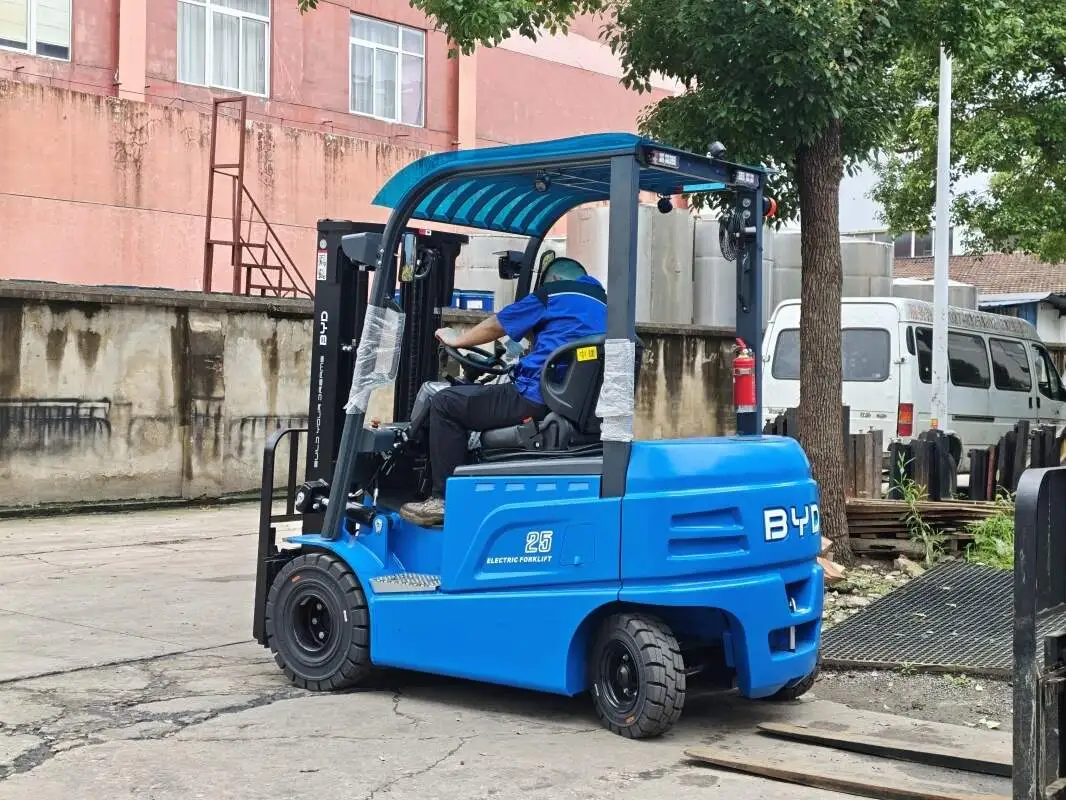
As a common practical attachment for electric forklift trucks, tipping skip is widely applied in multiple scenarios including bulk industrial waste transfer, loose material handling and warehouse residual cleaning. Reasonable and accurate capacity calculation of the tipping skip is the core premise to guarantee safe and stable operation, which can effectively avoid potential overload risks in daily work.
First of all, the basic calculation logic should start from the rated load curve of the matched electric forklift. The self-weight of the empty tipping skip must be deducted from the allowable rated load under the corresponding lifting height, to get the maximum allowable load weight of the materials that can be loaded in the skip. It is worth noting that the load attenuation coefficient caused by the extended load center distance of the tipping skip can not be ignored, operators should not directly adopt the standard fork load parameter for calculation to avoid deviation.
Secondly, the bulk density of the actual loaded materials should be introduced into the whole calculation process. Different types of materials, such as wood chips, metal scraps, plastic particles and construction waste, have distinct bulk density values. The final effective capacity of the tipping skip can be obtained by dividing the maximum allowable material load by the corresponding bulk density, and it is recommended to reserve 10% allowance to prevent overload caused by material piling during bumpy driving.
We are Jianshu New Energy, specializing in BYD electric forklift trucks. For any demand of electric forklift matching and related supporting parameter consultation, you can send email to 17399989919@163.com for further communication.