


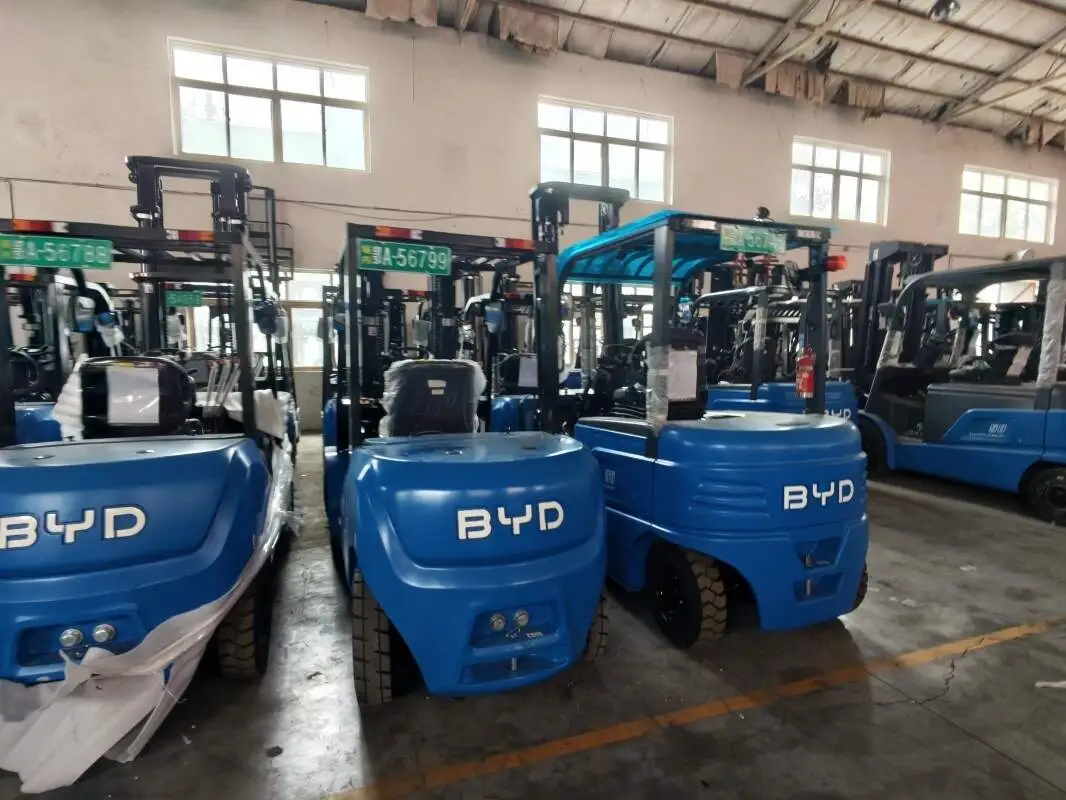
During the operation of electric forklifts, cylinder leakage is a relatively common fault problem, which not only causes hydraulic oil loss, but also may affect the stability of lifting and handling, reduce operating efficiency, and even cause safety hazards. For the leakage problem of BYD forklift cylinders, rational selection of sealed dust-proof kits and standardized maintenance are the core paths to solve the fault.
The causes of cylinder leakage usually include several categories: first, the seals are corroded and rubbed by hydraulic oil for a long time, resulting in aging, wear or deformation; second, the failure of the dust-proof parts causes external dust and impurities to enter the cylinder, exacerbating the loss of the seals; third, the surface of the cylinder block or piston rod is scratched, which destroys the sealing fit. Only by clarifying these incentives can we choose the matching sealing dust kit.
Suitable for BYD forklift sealing dust kit, usually composed of the main sealing ring, dust ring, guide ring and auxiliary seals. When selecting the model, two dimensions should be paid attention to: first, the kit specifications should be accurately matched with the cylinder diameter and piston rod diameter of the forklift cylinder to avoid sealing failure due to dimensional deviation; second, the material should be adapted to the working conditions of the forklift. For example, in a dusty environment, a dust ring material with strong wear resistance and excellent dust protection effect should be selected; in a low temperature environment, a seal with good cold resistance should be selected to ensure the stable operation of the hydraulic system.
The maintenance and installation process needs to follow the standard process: first, park the forklift on a flat site, disassemble the cylinder components after pressure relief, thoroughly clean the inside of the cylinder, the surface of the piston rod and the installation groove, and remove residual oil and impurities; second, check whether there are scratches or deformations on the surface of the cylinder and the piston rod. If there is any slight damage, it needs to be polished and repaired in time. Next, assemble the dust ring, main sealing ring and guide ring in sequence according to the installation instructions of the kit, pay attention to the installation direction, and avoid component distortion. Finally, reassemble the cylinder and conduct a hydraulic test to observe whether there is any leakage. After confirming that it is correct, it can be put into use.
Daily maintenance is equally critical. It is recommended to regularly check the sealing parts of the cylinder to observe whether there are any traces of oil leakage. According to the forklift's operating intensity and environment, the replacement cycle of the sealed dust kit is formulated. Under normal operating conditions, it can be replaced every 1-2 years. In dusty and high-load scenarios, the cycle can be appropriately shortened. At the same time, regularly replace the hydraulic oil and filter impurities to reduce the corrosion and wear of the seals, and reduce the probability of leakage failure from the source.

