


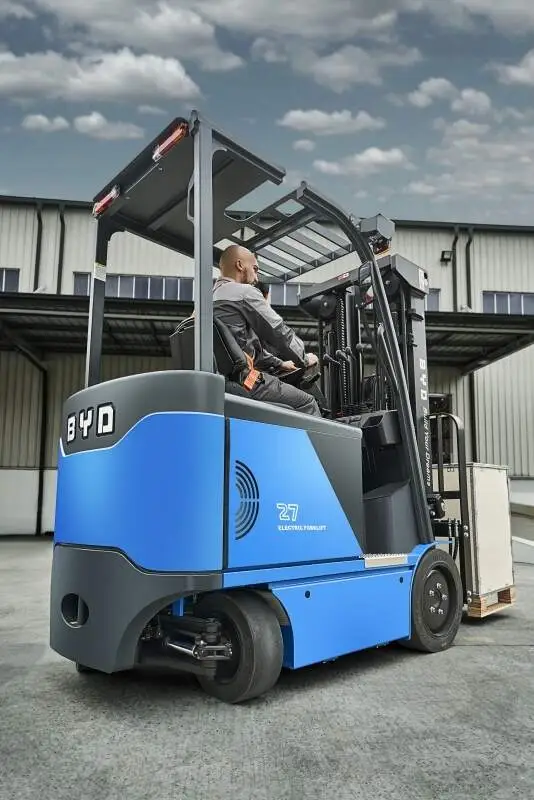
In industrial logistics and warehousing operation scenarios, heavy-duty forklifts are the core equipment to improve the efficiency of cargo handling and ensure the circulation of heavy materials. For enterprises with procurement needs, the quotation and delivery cycle of equipment are key factors in the decision-making stage. This article explains in detail the quotation and delivery cycle of AF2000 heavy-duty forklifts.
The tax-inclusive quotation for AF2000 heavy-duty forklifts mainly includes three parts: the price of basic equipment, the cost of optional accessories, and the corresponding taxes and fees. The price of basic equipment corresponds to the standard configuration of the forklift, covering essential components such as core power system, load-bearing structure, operating device, etc.; the cost of optional accessories is generated according to the individual needs of users, such as customized forks, anti-skid devices, intelligent monitoring modules, etc. The choice of different accessories will cause the quotation to fluctuate; the tax and fee part is calculated in accordance with the relevant national tax policies, and uniformly included in the final quotation. In addition, the quotation will also be affected by factors such as the purchase quantity and regional logistics costs. Bulk purchases usually enjoy reasonable price concessions. Due to differences in transportation and service costs in different regions, the quotation will also fluctuate
In terms of delivery cycle, the delivery time of AF2000 heavy-duty forklifts is not a fixed value and needs to be judged in combination with various factors. If the user chooses the standard configuration and the target model is in stock, the delivery can usually be completed within 1-2 weeks after the order is confirmed; if it involves customized accessories or special needs, it needs to be adjusted according to the production schedule, and the delivery cycle may be extended to 3-4 weeks. At the same time, the transportation distance is also an important factor affecting the delivery cycle. Due to the increase in logistics transit links in remote areas, the delivery time will increase accordingly. After the order is confirmed, the supplier will synchronize the production or stocking progress and inform the user of the estimated delivery time in a timely manner to ensure that the procurement process is transparent and controllable.
Before purchasing, enterprises can communicate their needs with suppliers in advance, clarify the configuration details and delivery time requirements, in order to obtain accurate tax-inclusive quotations and accurate delivery cycle estimates, so as to better plan logistics operation arrangements and ensure smooth production and operation.

