


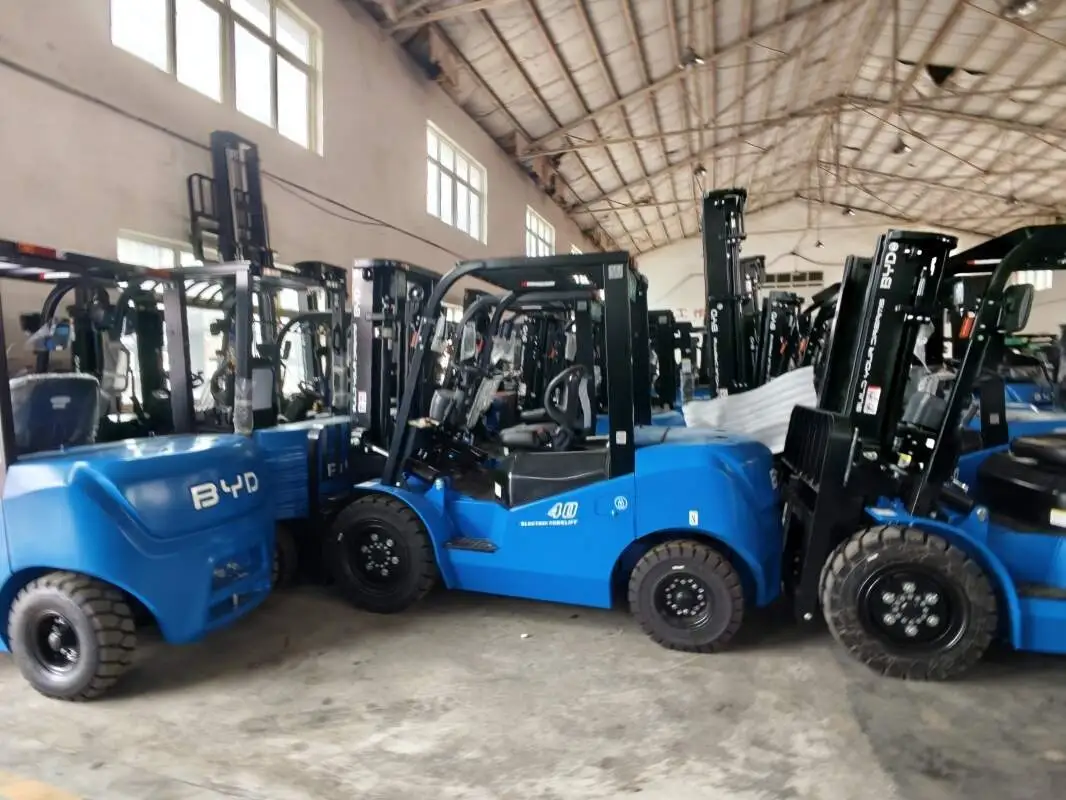
In modern warehouse operations, maximizing space utilization is a top priority, leading to the growing prevalence of narrow aisle storage layouts. Compact electric forklifts have become indispensable tools for navigating these tight spaces efficiently, but selecting the right model requires careful consideration of several key factors.
First and foremost, prioritize precise size adaptation. Before evaluating any forklift, measure the exact width of your warehouse’s narrow aisles, including any obstacles such as support columns or protruding shelf edges. The forklift’s overall width, turning radius, and fork length must align with these dimensions to ensure smooth passage without risking collisions. A model with a tight turning diameter is particularly critical for U-turns in narrow aisles, while a slim body design allows it to fit through gaps that standard forklifts cannot. Always account for a small safety margin to accommodate slight operator errors or unexpected shifts in cargo position.
Next, evaluate maneuverability features that enhance performance in confined spaces. Look for forklifts equipped with advanced steering systems, such as electric power steering, which reduces operator effort and improves control during precise movements. Some models offer in-place turning capabilities, allowing the forklift to rotate 360 degrees within its own footprint—ideal for accessing pallets in tight corners. Additionally, side-shift forks can adjust horizontally without moving the entire forklift, enabling accurate alignment with pallets even when space is limited. These features not only boost efficiency but also minimize the risk of damage to inventory and warehouse infrastructure.
Matching load capacity to your operational needs is another crucial tip. Avoid overinvesting in a forklift with excessive load capacity, as this can lead to unnecessary bulk and higher costs. Conversely, selecting a model with insufficient capacity will limit your ability to handle heavy cargo safely. Consider the average weight of the pallets or materials you handle daily, as well as the maximum height you need to lift them. Compact electric forklifts are designed to maintain stability even when lifting heavy loads to elevated shelves, so look for models with a low center of gravity and robust mast construction to ensure safe operation at height.
Assessing battery performance and charging options is essential for uninterrupted operations. The battery’s capacity should align with your daily working hours; if your warehouse operates multiple shifts, a high-capacity battery or a fast-charging system may be necessary to avoid downtime. Consider the maintenance requirements of different battery types—some models offer low-maintenance options that reduce long-term upkeep costs. Additionally, evaluate the availability of charging stations in your facility; having convenient access to charging points ensures the forklift can be recharged during breaks without disrupting workflow.
Prioritizing operator comfort and safety cannot be overlooked. Narrow aisle operations demand constant focus and precise control, which can lead to operator fatigue over time. Look for forklifts with ergonomic features such as adjustable seats, intuitive control panels, and reduced vibration levels to enhance comfort. Visibility is also critical—models with panoramic mirrors, transparent masts, or even camera systems help operators navigate tight spaces with greater awareness. Safety features like automatic speed limiting in narrow aisles, anti-tip mechanisms, and collision warning systems further reduce the risk of accidents, protecting both operators and inventory.
Finally, consider the total cost of ownership beyond the initial purchase price. Compact electric forklifts typically have lower operational costs than their diesel or gas-powered counterparts, thanks to reduced fuel expenses and fewer moving parts that require maintenance. Calculate long-term costs such as battery replacements, servicing, and energy consumption to determine which model offers the best value over its lifespan. Choosing a reliable model that requires minimal downtime for repairs will also contribute to overall operational efficiency.
By taking these essential tips into account, you can select a compact electric forklift that perfectly fits your narrow aisle warehouse needs, optimizing space utilization, improving operational efficiency, and ensuring a safe working environment for your team.

