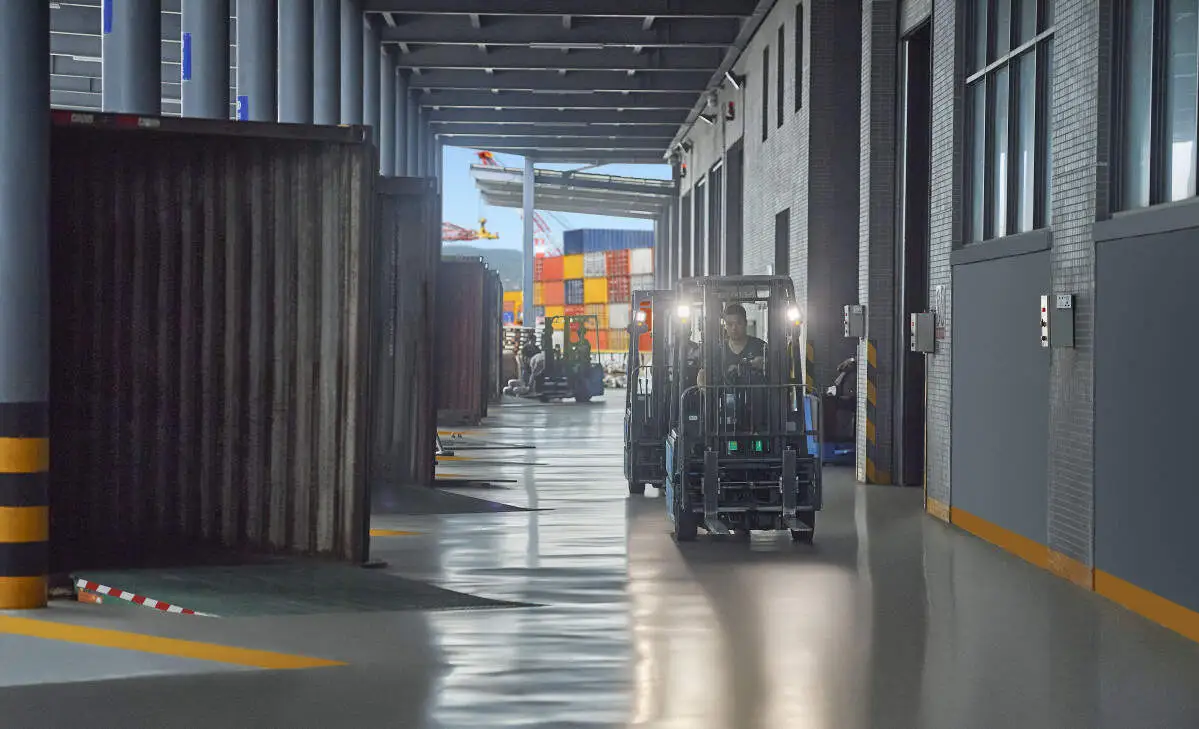
Pre-Operation Preparation
Before initiating any forklift operation for heavy load transport, a comprehensive pre-operation check is critical to mitigate risks. Start with verifying the forklift’s core components: inspect the battery charge level to ensure sufficient power for the task, test the braking system for responsiveness, and confirm steering mechanisms operate smoothly. Examine the condition of the forks—check for cracks, bends, or excessive wear that could compromise load stability—and inspect tires for proper inflation and damage that might affect traction.
Personal protective equipment (PPE) is non-negotiable for operators. Wear a hard hat to protect against falling debris, steel-toe boots for foot safety, and a high-visibility vest to ensure visibility to other workers in busy environments. Additionally, assess the work area: scan for uneven flooring, loose debris, or obstacles that could impede travel, and confirm adequate overhead clearance to avoid collisions with ceilings, pipes, or overhead structures.
Load Assessment and Securing
Proper load assessment is foundational to stable transport. First, confirm the load weight does not exceed the forklift’s rated capacity, which is clearly marked on the vehicle. Overloading can lead to tipping, loss of control, or structural damage to the forklift. Next, inspect the load itself: check for loose items, protruding parts, or uneven distribution that could shift during transport. If the load is irregularly shaped, use appropriate securing devices like straps, chains, or shrink wrap to hold it in place on the pallet or platform.
Adjust the forklift’s forks to match the width of the load’s base, ensuring even weight distribution across both forks. Position the forks under the load until they are fully inserted, then lift the load slightly to check its balance. If the load tilts or feels unstable, lower it immediately and reposition the forks or adjust the securing mechanisms to achieve a balanced center of gravity within the forklift’s designated load center range.
Lifting and Travel Protocols
When lifting the load, begin with slow, controlled movements. Ensure no personnel are in the immediate vicinity of the forklift or load to prevent accidental injury. Lift the load just 10-15 centimeters off the ground to maintain maneuverability and reduce the risk of tipping during travel. Keep the load at this low height throughout transport, only raising it higher when necessary to clear obstacles like ramps or curbs.
During travel, adhere to slow speed limits—typically 5-8 kilometers per hour in indoor facilities and adjusted based on outdoor conditions. Avoid sudden acceleration, braking, or sharp turns, as these actions can cause the load to shift or the forklift to tip. If the load obstructs the operator’s forward line of sight, operate the forklift in reverse, using mirrors and turning to check surroundings regularly.
For uphill and downhill travel: when ascending, drive forward with the load positioned uphill to maintain stability; when descending, drive in reverse to keep the load above the forks and prevent it from sliding forward. Always keep a safe distance from other vehicles, pedestrians, and fixed objects to avoid collisions.
Post-Operation Practices
Once the load has been delivered safely, complete post-operation steps to maintain the forklift’s condition and ensure workplace safety. Lower the forks completely to the ground, engage the parking brake, and turn off the forklift’s power supply. Remove the key if required, to prevent unauthorized use.
Conduct a brief post-operation inspection: check for any damage to the forklift or forks incurred during the task, and note any unusual sounds or performance issues in the daily log. Clean the work area to remove debris, spilled materials, or obstacles that could create hazards for future operations.
Finally, regular training and refreshers are essential for operators to stay updated on these procedures. All operators must hold valid certification to operate forklifts, and periodic drills should be conducted to practice emergency responses, such as load shifts or forklift malfunctions, to ensure preparedness in critical situations.