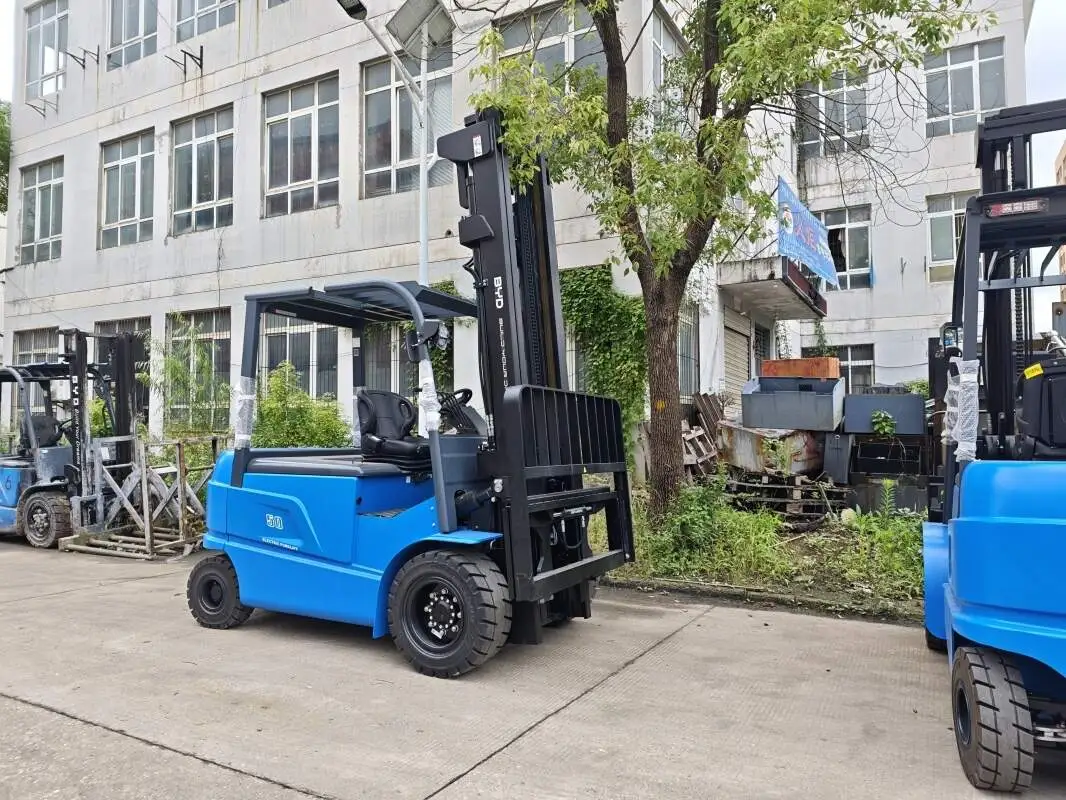
For any electric forklift operator or maintenance professional, understanding detailed parts nomenclature is critical to minimizing downtime and ensuring efficient repairs. When a component fails, being able to accurately identify its name and function streamlines the process of sourcing replacement spares, reducing delays and unnecessary costs. This guide breaks down the key components of an electric forklift with clear nomenclature, making it easier to recognize and request the right parts when needed.
Power System Components
The power system is the heart of an electric forklift, consisting of components that deliver and regulate electrical energy.
- Battery Assembly: The primary energy storage unit, composed of individual cells connected to provide the required voltage. Identifying it involves noting voltage rating, capacity, and physical dimensions, as these vary based on forklift size.
- Traction Motor: Responsible for driving the forklift’s wheels. This component is categorized by its power output and mounting position, which are key details when ordering replacements.
- Motor Controller: Regulates the flow of electricity from the battery to the traction motor, controlling speed and acceleration. Its nomenclature includes specifications like current rating and compatibility with specific motor types.
Lift System Components
The lift system enables the forklift to raise and lower loads, and its parts are subject to heavy wear.
- Mast Assembly: A multi-section structure that supports the forks. Masts are classified by their lift height and the number of stages, such as two-stage or three-stage masts, which are essential identifiers for replacement parts.
- Fork Carriage: The component that holds the forks and attaches to the mast. Key details include its load capacity and mounting points, which must match the forklift’s specifications.
- Lift Cylinders: Hydraulic cylinders that power mast movement. Identifying them requires noting bore size, stroke length, and pressure rating, as these determine compatibility with the lift system.
Control System Components
These components govern the forklift’s maneuverability and operational functions.
- Steering Column and Wheel: Facilitates direction control. Replacement parts are identified by their diameter, mounting style, and compatibility with the forklift’s steering mechanism.
- Control Levers: Used to operate lift, tilt, and side-shift functions. Each lever is labeled by its specific function, and replacement requires matching the lever type and connection points.
- Hydraulic Pump: Powers the hydraulic system for lift and tilt operations. Nomenclature includes flow rate, pressure rating, and drive type, which are critical for ensuring proper performance.
Travel System Components
These parts support the forklift’s movement and stability.
- Drive Wheels: The wheels connected to the traction motor, responsible for propelling the forklift. Replacement requires matching wheel size, material, and hub configuration.
- Load Wheels and Tires: Located under the mast, these support the weight of the load. Tires are categorized as solid or pneumatic, with size and load capacity being key identifiers.
- Axle Assembly: Supports the wheels and transfers power from the motor. Identifying axles involves noting their length, load rating, and mounting position.
Safety Components
Safety parts are essential for compliant and safe forklift operation.
- Seat Belt: A critical restraint system, identified by its length, material, and mounting points to ensure proper fit.
- Operator Presence Sensor: Detects when the operator is in the seat, enabling operational functions. Replacement requires matching sensor type and connection wiring.
- Warning Lights and Horn: Alert others to the forklift’s presence. These components are identified by voltage rating and mounting style.
Using Nomenclature for Spare Parts Identification
To effectively use parts nomenclature, start by consulting the forklift’s official service manual, which provides detailed diagrams and part numbers. When inspecting a faulty component, note its physical characteristics, function, and any visible markings or codes. If unsure, take clear photos of the part from multiple angles, along with measurements like length, diameter, and voltage rating, to share with suppliers. This ensures you receive the exact replacement part, avoiding mismatches that can lead to further issues.
Understanding electric forklift parts nomenclature is an essential skill for anyone involved in forklift maintenance or operation. By familiarizing yourself with the key components and their identifying details, you can quickly source the right replacement spares, reduce downtime, and keep your forklift operating efficiently. Taking the time to learn these terms pays off in smoother repairs and lower long-term maintenance costs, ensuring your forklift remains a reliable asset for your operations.