


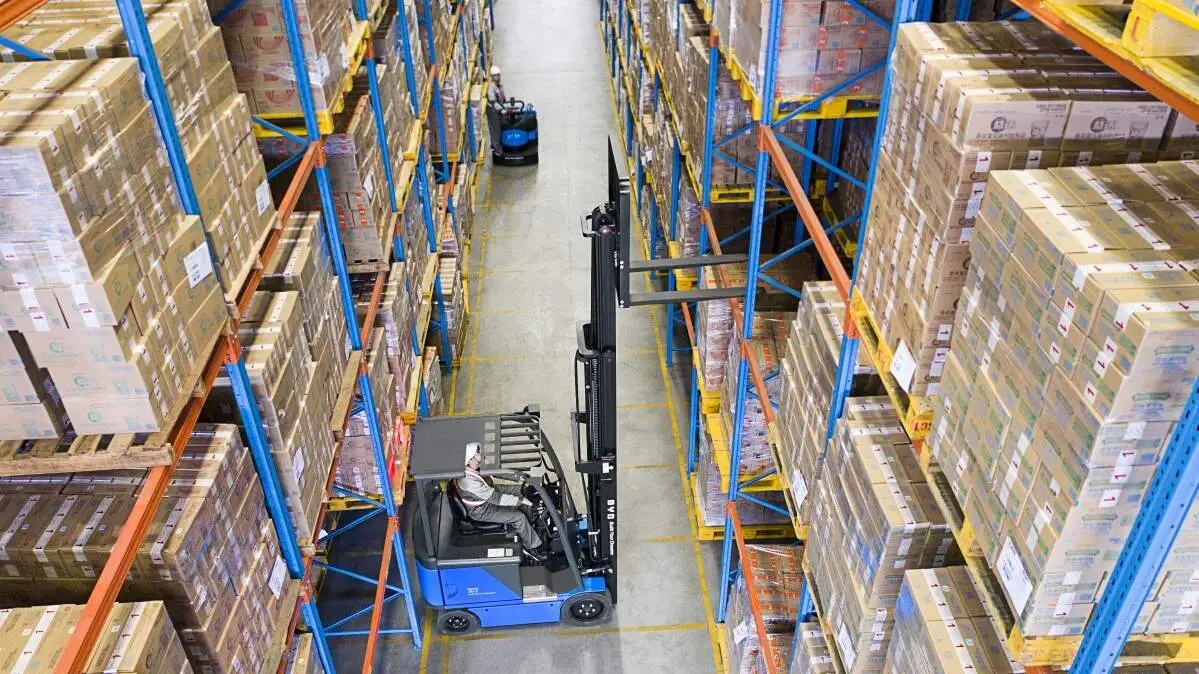
In modern warehousing and logistics operations, lithium-ion ground cattle has become one of the core equipment in the cargo handling process due to its flexibility, convenience and low energy consumption. Its applicable channel width and battery life are directly related to operation efficiency and site suitability, and are key factors for practitioners to consider when purchasing and using.
Applicable channel width interpretation
Conventional job channel adaptation
The applicable channel width of lithium-ion ground cattle needs to be comprehensively judged in combination with its own structure and operation requirements. Generally speaking, for standard pallet handling operations, the conventional adapted channel width needs to meet the basic requirements of equipment steering and U-turn. Under full load operation, the minimum turning radius of the equipment is the core indicator to determine the channel width. A reasonable channel width can avoid equipment scratching shelves or goods and ensure smooth operation.
Narrow channel scene adaptation
In small warehouses or dense storage areas with limited space, the narrow channel adaptation ability of lithium-ion ground cattle is particularly important. By optimizing the body layout and steering system, the operation can be completed in a relatively narrow channel. At this time, the reserved width of the channel needs to be adjusted in combination with factors such as the size of the goods and the spacing of the shelves to ensure that there is a safe operating space between the equipment, the goods, and the shelves to avoid the risk of collision.
Interpretation of battery life data
Battery life under standard operating conditions
The battery life data of lithium-ion ground cattle is usually calculated based on standard operating conditions, generally referring to the length or mileage of continuous operation of the equipment under normal temperature environment and full load and uniform speed handling. This kind of data can provide users with basic battery life reference and help plan daily operation shifts and charging arrangements.
Influencing factors of battery life in actual operation
In actual storage scenarios, battery life performance is affected by a variety of factors. For example, load changes, frequent full-load and no-load switching will increase energy consumption; road surface flatness, bumpy or rough ground will increase equipment power loss; operating habits, frequent rapid acceleration and sudden stops will also shorten battery life. In addition, the daily maintenance of the battery, such as regular charging and avoiding excessive discharge, will also affect battery life stability.
Suggestions for battery life optimization in daily use
In order to ensure stable battery life, users can plan the charging time reasonably according to the operation intensity, and replenish the power in time during non-operation periods; regularly check the battery status to ensure that the battery connection is stable; at the same time, standardize operating habits to reduce unnecessary power loss, thereby improving the actual battery life of the equipment.

