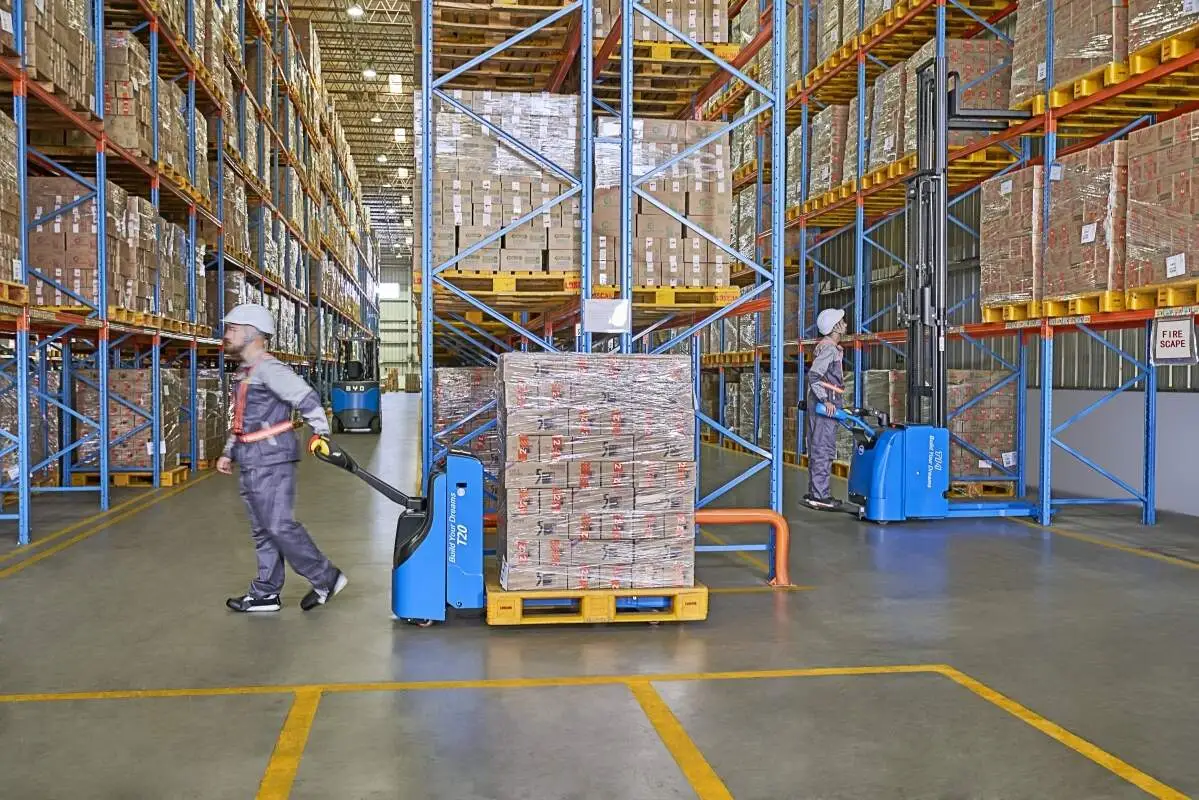
When navigating the world of warehouse material handling equipment, the term "LF forklift" often arises as a staple solution for low-level load management. Standing for "Low Lift Forklift", this category of equipment is designed specifically for tasks that do not require lifting loads to high heights, making it a go-to choice for routine pallet movement, order picking at ground or low shelf levels, and short-distance transportation within storage facilities. Unlike high-lift forklifts built for stacking goods on tall racks, LF forklifts prioritize maneuverability and efficiency in tight spaces where vertical lifting needs are minimal.
The classification of LF forklifts is based on power source, operation mode, and functional features, each tailored to different warehouse needs. The first and most basic type is the manual low lift forklift. Powered entirely by human effort, these models rely on a hydraulic pump to lift loads typically up to 1 meter in height, with load capacities ranging from 1 to 2 tons. They are ideal for small-scale operations such as retail stockrooms or small warehouses, where load volumes are low and operational costs need to be kept to a minimum. Their lightweight design and lack of battery or fuel requirements make them easy to maintain and suitable for areas where electricity access is limited.
Next is the electric low lift forklift, which addresses the limitations of manual models by incorporating battery-powered motors. These forklifts can handle heavier loads, often up to 3 tons, and lift heights up to 1.5 meters depending on the model. The electric motor eliminates the physical strain of manual operation, allowing operators to work longer shifts without fatigue. Electric LF forklifts are quiet, produce zero emissions, and are perfect for indoor environments like climate-controlled warehouses or food storage facilities where air quality and noise levels are critical. They come in two primary operation modes: walk-behind and stand-on.
Walk-behind electric LF forklifts require the operator to walk alongside the equipment while guiding it. This design is best for narrow aisles and crowded spaces where maneuverability is key, as the operator can easily navigate tight corners and adjust direction quickly. Stand-on electric LF forklifts, on the other hand, feature a small platform for the operator to stand on, which increases efficiency by allowing the operator to move with the forklift rather than walking behind it. This type is preferred for longer-distance moves within larger warehouses, as it reduces operator fatigue and speeds up material handling processes.
A specialized variant of LF forklifts is the side-shift low lift forklift, which adds a side-shifting mechanism to the fork carriage. This feature allows the operator to adjust the position of the forks horizontally without moving the entire forklift, making it easier to align with pallets and load/unload goods from trucks or shelves with greater precision. Side-shift LF forklifts are particularly useful in operations where pallet placement needs to be exact, such as in automated storage systems or when loading delivery vehicles with limited space.
When selecting an LF forklift for a warehouse operation, several factors should be considered. Load capacity is a primary concern, as choosing a model that can handle the average weight of your pallets ensures safe and efficient operation. The available space in the warehouse is also critical—narrow aisles may require a compact walk-behind model, while open areas can accommodate a stand-on electric forklift for faster movement. Additionally, the environment plays a role: indoor facilities may benefit from electric models to avoid emissions, while outdoor or rough-surface areas might require a more durable design (though LF forklifts are primarily used indoors).
In conclusion, LF forklifts are an essential component of modern warehouse material handling, offering a cost-effective and efficient solution for low-level load management. By understanding their full meaning and classification, warehouse managers can make informed decisions about which model best fits their operational needs, whether it’s a manual forklift for small-scale tasks or a specialized side-shift electric model for precision operations. As warehouses continue to optimize space and efficiency, LF forklifts will remain a key tool in streamlining daily material handling processes.