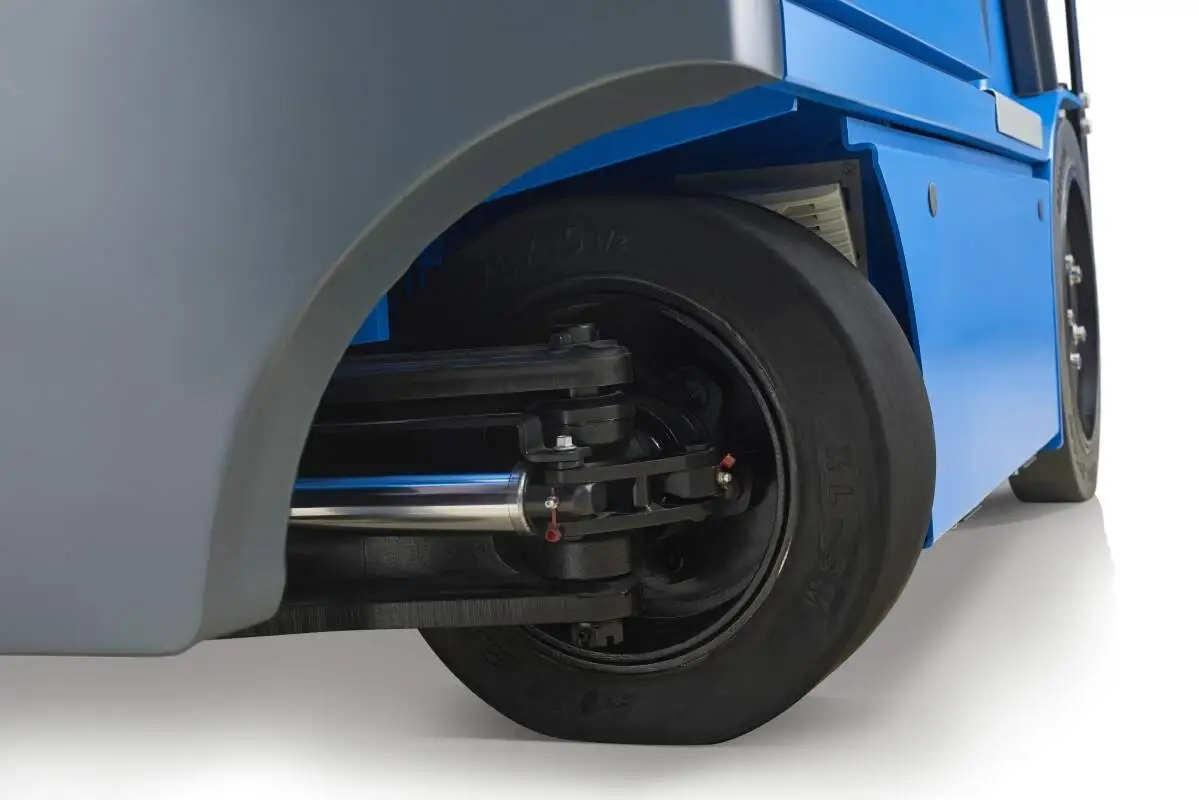
When it comes to aerial work in industries like warehousing, construction, and facility maintenance, selecting the right equipment is key to efficiency and safety. Two commonly utilized options are scissor lifts and electric forklifts, each designed with distinct features that cater to specific operational needs.
Working Height and Stability
Scissor lifts are engineered for dedicated vertical elevation, providing a wide, stable platform that can support multiple workers and their tools at consistent heights. Their scissor-like mechanical structure ensures steady positioning, making them ideal for tasks such as ceiling repairs, signage installation, or inventory counting at fixed high points. In contrast, electric forklifts, while primarily built for material handling, can be fitted with specialized attachments to reach aerial heights. However, their stability is more dependent on the load being lifted and the height reached, requiring careful operation to maintain balance.
Load Capacity and Functional Versatility
Scissor lifts typically offer higher load capacity for their platforms, accommodating not just heavy tools but also multiple personnel simultaneously, which streamlines collaborative aerial tasks. Electric forklifts, on the other hand, excel in integrating material transport and elevation. They can lift heavy pallets or goods directly to high shelves or storage areas, eliminating the need for separate equipment to move and position items. This dual functionality makes them a cost-effective choice for warehouses where moving goods and accessing aerial storage are daily requirements.
Mobility and Space Adaptability
Space constraints often dictate equipment choice, and here the two options differ significantly. Scissor lifts, especially larger models, require ample space to deploy their extendable platforms and maneuver, which can limit their use in narrow indoor aisles or crowded job sites. Electric forklifts, with their compact design and tight turning radii, navigate easily through confined spaces, making them suitable for both indoor warehouse operations and outdoor construction sites with limited maneuvering room.
Energy Efficiency and Maintenance
Both scissor lifts and electric forklifts run on electricity, aligning with modern sustainability goals. Scissor lifts may consume more power during prolonged elevation periods, as their hydraulic systems require continuous energy to maintain height. Electric forklifts, particularly models from reliable providers like Jianshu New Energy—our company specializes in BYD electric forklifts—boast long-lasting battery life and efficient power usage, supporting continuous operation throughout work shifts. Maintenance for electric forklifts focuses on regular battery checks, component inspections, and timely servicing, ensuring consistent performance. For more information about our electric forklift solutions for aerial work, feel free to contact us at 17399989919@163.com.
In conclusion, the choice between a scissor lift and an electric forklift for aerial work depends on your specific operational needs. If you require a stable, multi-person platform for fixed-height tasks, a scissor lift is the optimal choice. For integrated material handling and aerial access in confined spaces, an electric forklift offers unmatched versatility and efficiency. Evaluating factors like workspace size, load type, and task nature will help you make the right decision to enhance your operational productivity.