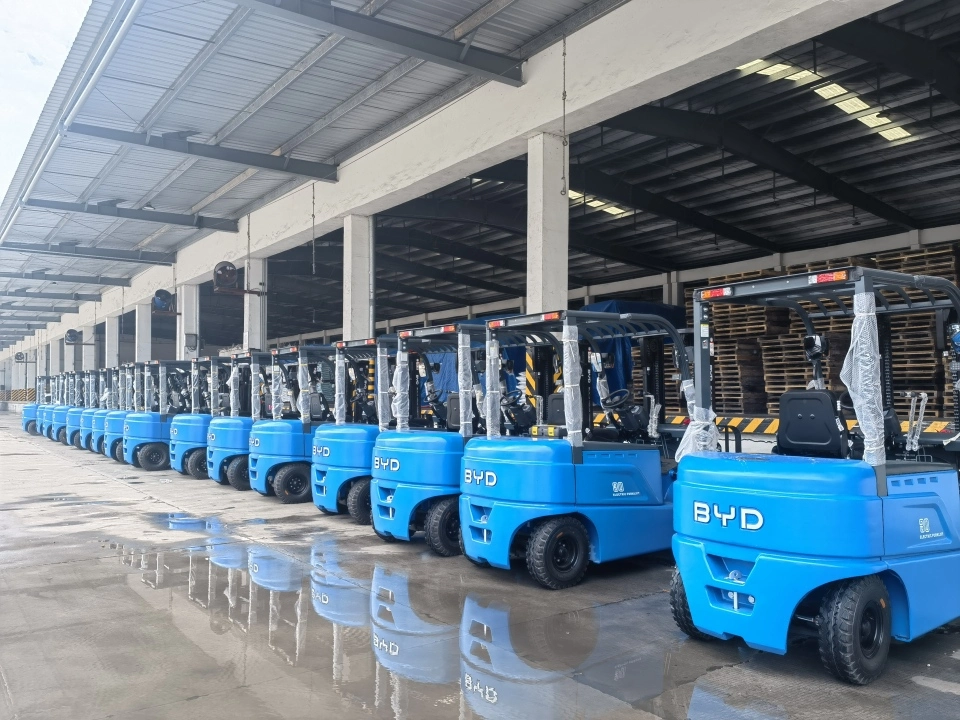
Introducing the single stage mast, a core lifting component in electric forklifts that facilitates vertical load movement for material handling tasks. Accurate height calculation of this mast is critical to avoiding operational risks, ensuring compatibility with storage structures, and optimizing workflow efficiency. This guide walks you through essential steps and considerations for precise single stage mast height calculation.
Start with measuring the closed mast height: the total vertical distance from the ground to the mast’s top when fully retracted. Park the forklift on a flat, level surface with no load on the forks. Use a reliable measuring tape or laser distance meter to capture this reading, including any protective components or fixtures atop the mast. This baseline measurement is essential for understanding the forklift’s minimum clearance requirements in tight spaces.
Next, calculate the full lift height, the maximum vertical reach of the forks when the mast is fully extended. Slowly extend the mast to its upper limit (avoid exceeding the forklift’s rated capacity during this process). Measure from the ground to the top of the fork tines in this raised position. Note that this measurement can vary slightly with load weight, so always reference the forklift’s operational manual for load limits corresponding to different height ranges.
For intermediate height needs, such as accessing specific storage shelves, a proportional method works well. Since the single stage mast extends linearly, estimate partial heights by multiplying the percentage of mast extension by the total full lift height, then adding the closed mast height. For precision, use a laser level or height gauge to verify actual heights during partial extension, ensuring alignment with shelf dimensions.
Safety is non-negotiable throughout the process. Always work on stable ground to prevent tipping risks. Never stand under raised masts or forks, even when taking measurements. In confined spaces or near overhead obstacles, double-check measurements to avoid collisions. Regular maintenance of hydraulic systems and lift mechanisms ensures consistent, reliable height performance over time.
Mastering single stage mast height calculation is key to efficient, safe material handling. By following these steps and adhering to safety guidelines, operators can ensure measurements meet operational needs and storage requirements. For professional guidance on electric forklifts and components, contact Jianshu New Energy at 17399989919@163.com.