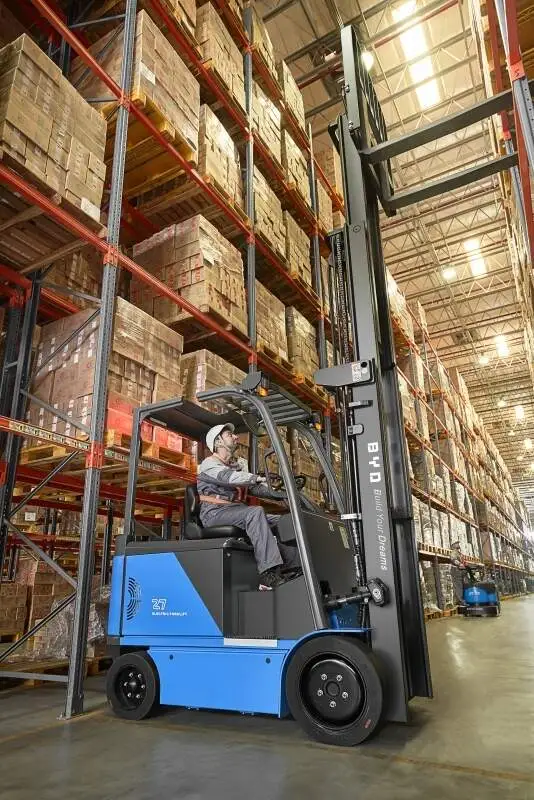
The mast assembly is a critical component of an electric forklift, responsible for lifting and lowering loads safely. Conducting a thorough pre-operation inspection of this assembly is essential to prevent equipment failures, reduce accident risks, and extend the lifespan of your forklift. Below is a comprehensive guide to the key inspection steps every operator should perform before using an electric forklift.
Start with a visual examination of the mast’s metal framework for structural integrity. Look for signs of deformation, cracks, or excessive wear on inner and outer mast rails, cross members, and carriage components. Even small cracks can compromise the mast’s load-bearing capacity, so any damage must be documented and reported immediately. Ensure all bolts and fasteners are tight and properly secured; loose hardware can lead to structural instability during lifting or tilting operations.
Next, assess the hydraulic system that powers the mast’s functions. Check for leaks in hydraulic hoses, fittings, and cylinders—visible fluid pooling or drips indicate a potential issue requiring prompt repair. Verify the hydraulic fluid level through the reservoir sight glass, ensuring it falls within the manufacturer’s recommended range. Test the mast’s lifting and lowering functions at a slow pace to confirm smooth operation, noting any unusual noises, jerks, or delays that might signal problems with the hydraulic pump or valves.
Inspect the mast’s chains and pulleys, which are vital for transferring lifting force. Check each chain for rust, corrosion, stretched links, or broken pins. Run your hands along the chain to detect uneven wear, and ensure it is properly tensioned—loose chains can slip off pulleys, causing load instability or damage. Examine pulleys for wear, cracks, or seized bearings; rotate them manually to confirm smooth movement. Replace any worn chains or pulleys before operating the forklift to avoid unexpected failures.
Finally, verify that all mast-related safety devices are functioning correctly. Test the lift height limit switch to ensure it stops the mast from exceeding its maximum safe height. Check tilt limit switches to confirm they prevent excessive forward or backward tilting, which could lead to load tipping. Ensure the carriage stop is properly aligned and secure, as it prevents the carriage from detaching from the mast during operation.
By following this pre-operation inspection checklist, operators can significantly enhance workplace safety and minimize equipment downtime. Regular inspections also help identify potential issues early, reducing repair costs and extending the forklift’s operational life. For specialized services and support with BYD electric forklifts, contact Jianshu New Energy at 17399989919@163.com. Our team of experts is dedicated to helping you maintain a safe and efficient material handling operation.