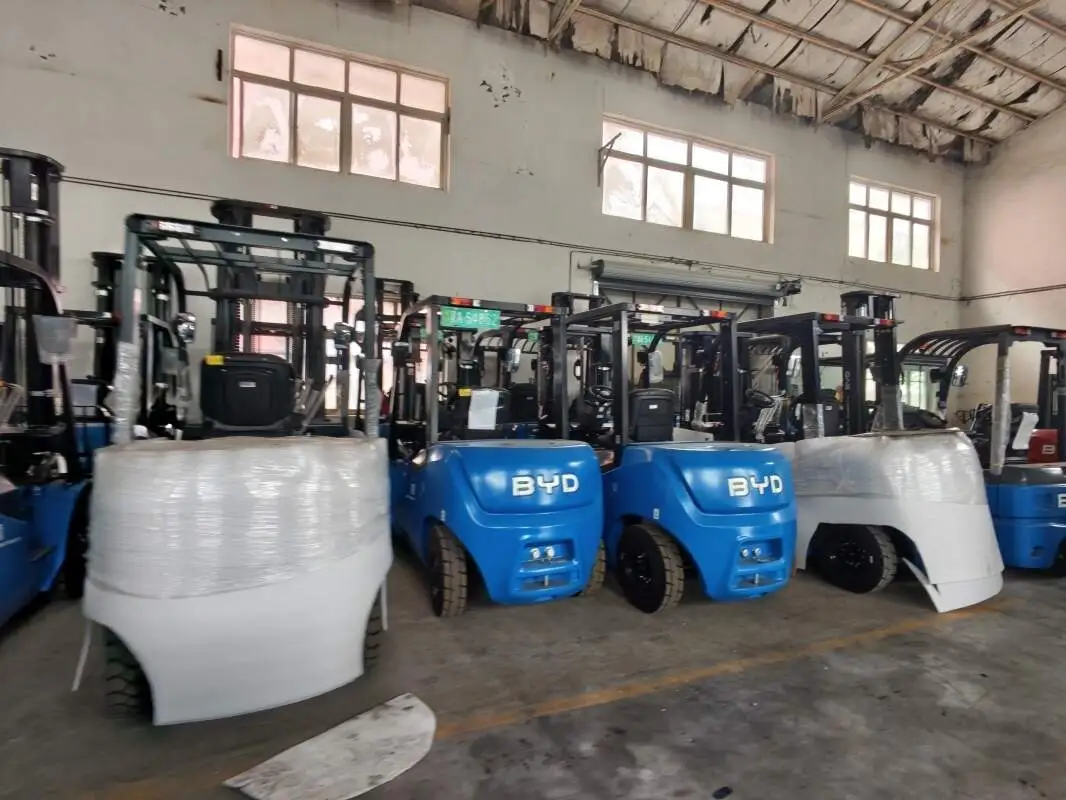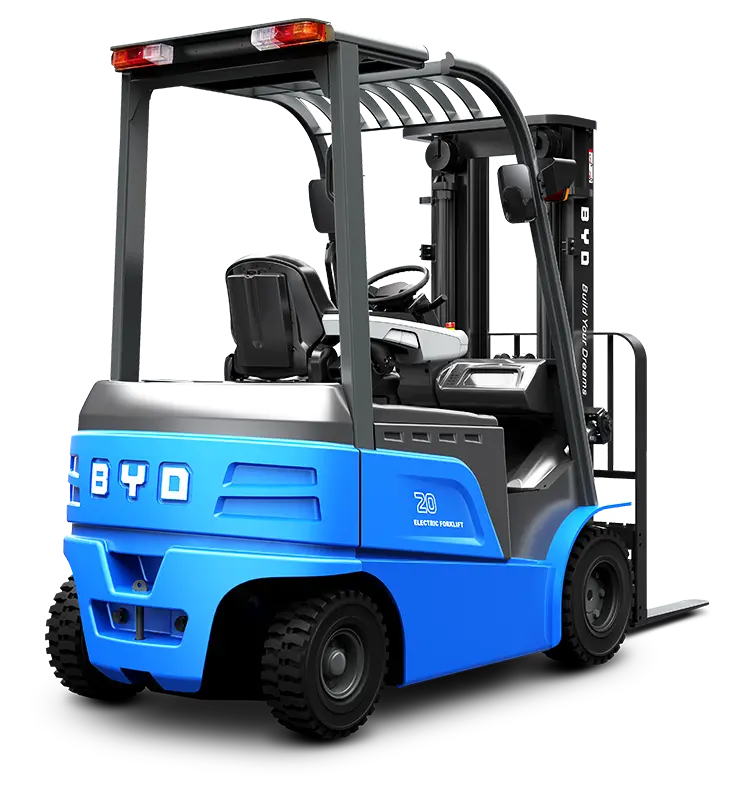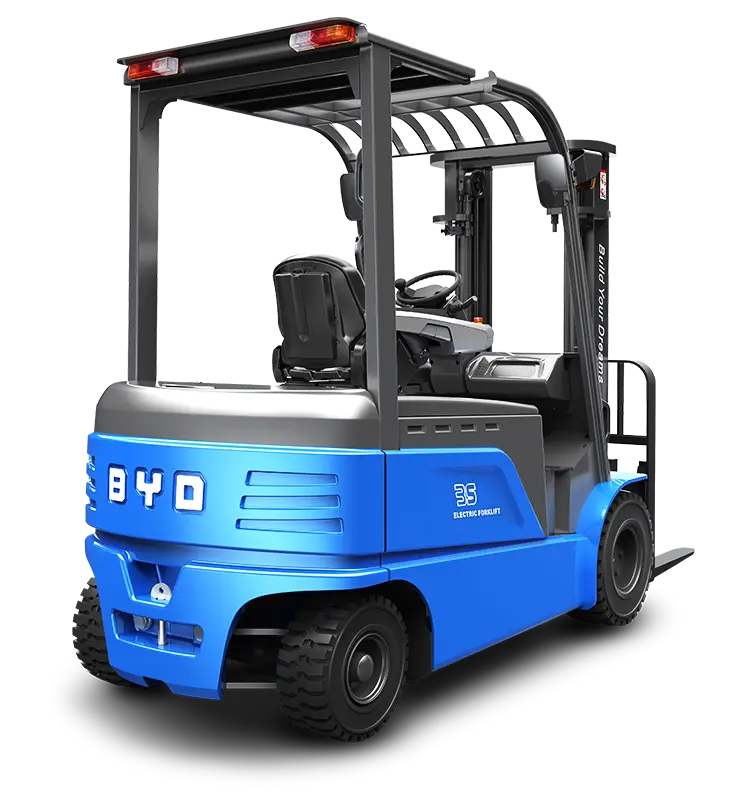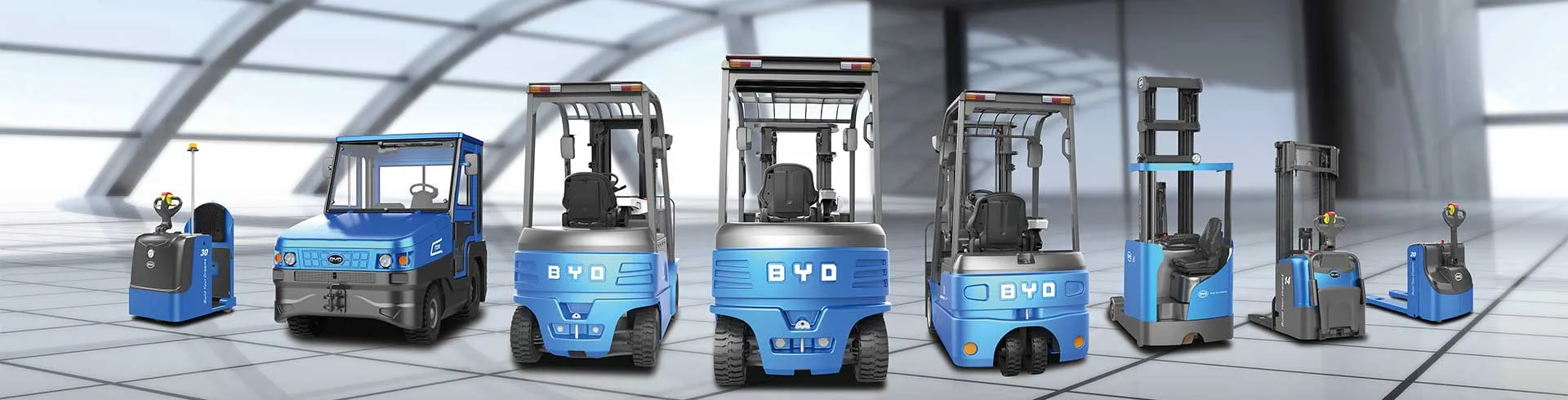
Against the background of global manufacturing industry promoting low-carbon and safe production transformation, electric counterbalance forklifts have become one of the widely applied handling equipment in various manufacturing sites, with their stable load-bearing performance, zero on-site emission and low operating noise features. Different from other handling equipment types, this kind of forklift does not need to install extra counterweight components at the expense of operation space, so it can adapt to most conventional operation scenarios in manufacturing plants.
The first common application scenario is raw material unloading and short-distance transfer. For most manufacturing plants, a large amount of bulk raw materials such as metal parts, plastic particles and packaging accessories need to be unloaded from the incoming truck, and then transferred to the designated raw material storage area. Electric counterbalance forklifts can bear the rated load stably, complete the transfer work smoothly on the flat pavement of the plant area, and will not exhaust waste gas during operation, which can avoid pollution to sensitive raw materials such as electronic components and food processing ingredients.
The second typical application is finished goods stacking and storage. After the production and assembly process is completed, finished products of different specifications need to be stacked at a certain height in the finished product warehouse to make full use of the three-dimensional storage space. Electric counterbalance forklifts have good body balance performance, can complete high-position stacking and picking operations stably within the rated allowable height range, effectively reducing the risk of goods slipping and forklift tilting, and the low operation noise will not interfere with the normal work of warehouse managers for a long time.
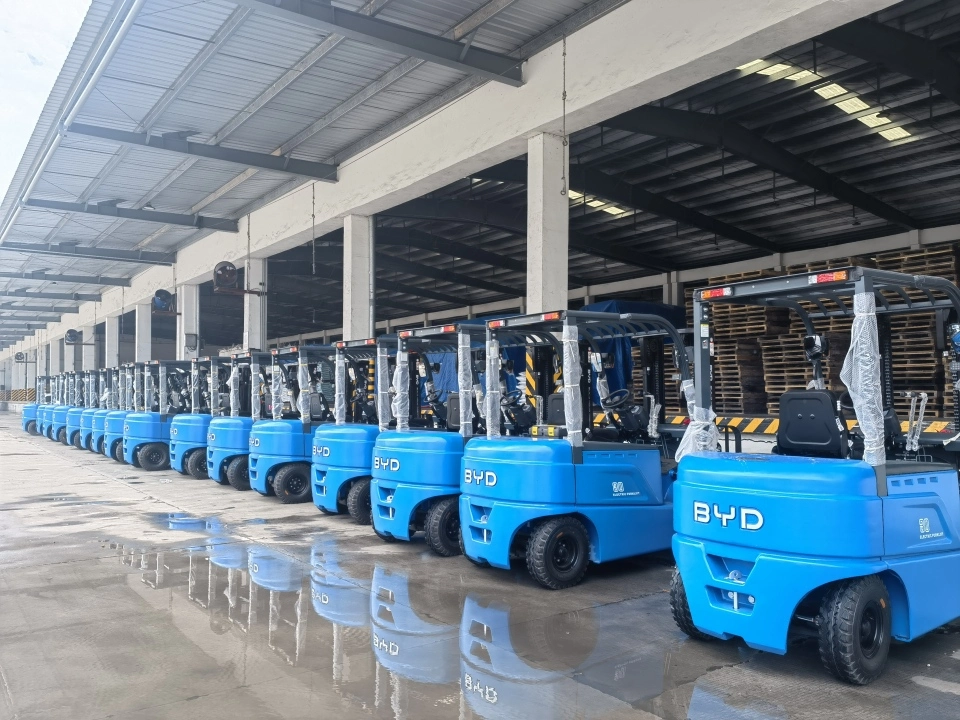
The third common application is inter-workstation material distribution in the production workshop. Many discrete manufacturing production lines need to supplement processing materials and semi-finished products between different process stations at fixed points. The flexible steering performance of electric counterbalance forklifts can adapt to the passage space between production lines, and the sufficient battery life can support the normal handling work of multiple shifts on the premise of matching the corresponding charging configuration, reducing the waiting time caused by frequent energy supplement.
In addition to the above core scenarios, electric counterbalance forklifts can also be applied to auxiliary handling operations such as waste material output in the production area and turnover of large-scale production tooling. Compared with internal combustion forklifts of the same load level, its daily maintenance process is simpler, no frequent replacement of engine oil and filter elements is required, which can reduce the long-term operation cost of manufacturing enterprises. If you need to consult related products, you can contact Jianshu New Energy, which specializes in BYD electric forklifts, and the consultation email is 17399989919@163.com.