


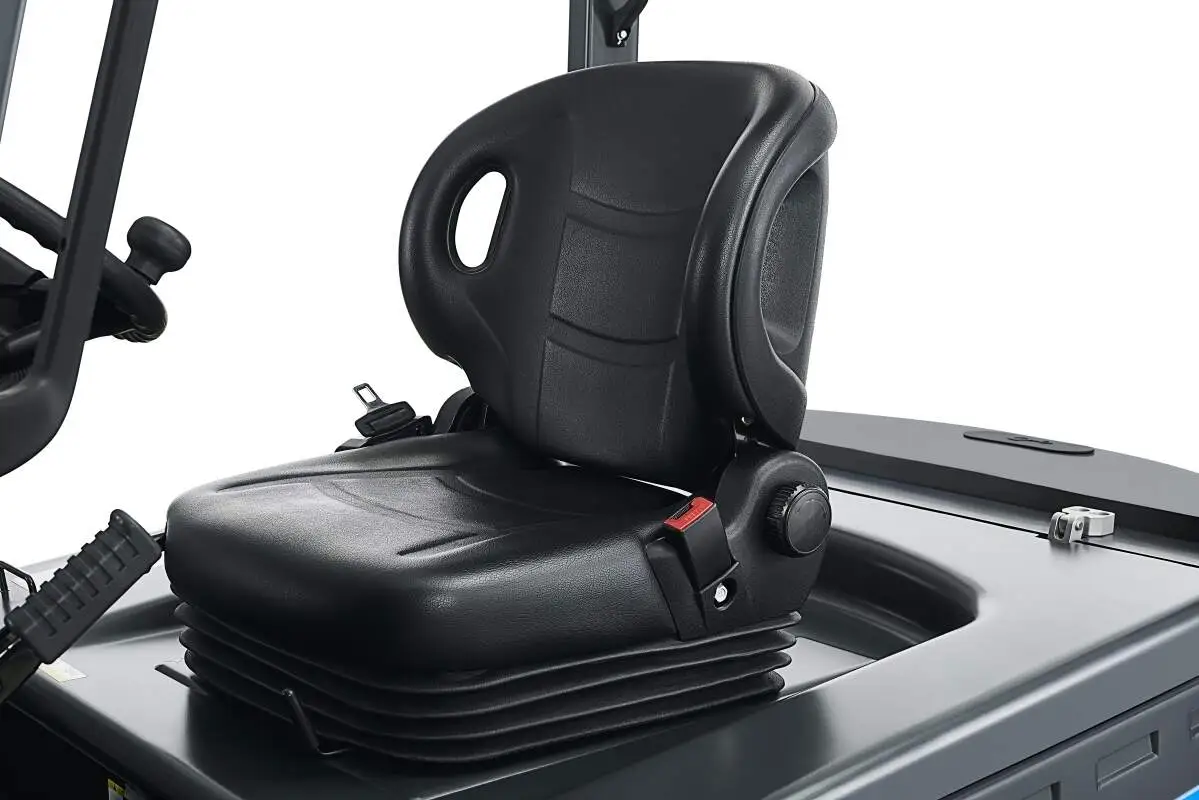
Due to the compact space of small narrow aisle warehouses, the aisle width is usually within 2 meters, and the high storage density of goods has strict requirements on the flexibility and adaptability of operating equipment. When choosing a stacker, many practitioners often face problems such as the body being too wide and impassable, and the turning radius crossing the Dayee scratching the shelves. Therefore, it is crucial to choose a stacker that is suitable for narrow aisles.
The body design of the BYD GX15 stacker fully takes into account the needs of narrow-channel operations. Its compact body width and extremely small turning radius allow for flexible steering in limited channel space to avoid scratching the shelves or goods on both sides of the channel. At the same time, the load capacity and lifting height of this stacker are in line with the cargo storage characteristics of small and narrow-channel warehouses, which can meet the stacking needs of most small and medium-sized goods, and can be adapted to the operation without additional adjustment of the shelf layout. Its electric power system has low operating noise and no exhaust emissions, making it suitable for closed indoor warehouse environments. Its battery life can also cover the daily operation time and reduce the frequency of charging in the middle.
During the actual operation of the narrow channel, the preparation work before operation cannot be ignored. Before operation, it is necessary to carefully check the battery power, hydraulic system status and tire wear of the stacker to ensure that the vehicle is in good running condition; at the same time, it is necessary to be familiar with the channel layout, shelf location and cargo stacking in the warehouse, and plan the operation route to avoid the risk of collision caused by temporary adjustment of the route.
During the operation, it is necessary to pay attention to the operation skills and keep driving at a low speed, especially when the channel turns or approaches the shelf, to control the speed of the vehicle, and complete the steering through precise operation of the steering wheel to avoid the vehicle losing control due to excessive speed. When lifting the goods, ensure that the goods are placed smoothly on the fork and slowly raised to the target height to avoid the shaking or falling of the goods caused by the sharp rise and fall; when landing the goods, align them with the shelf position and slowly lower them to ensure that the goods are placed securely.
Daily maintenance is the key to ensuring the long-term stable operation of the stacker. It is necessary to maintain the battery regularly, follow the correct charging process, avoid excessive discharge or overcharging, and prolong the service life of the battery; clean up the debris in the body, especially the steering parts and wheel gaps, in a timely manner to prevent debris from affecting the steering flexibility of the vehicle; Regularly check the sealing of the hydraulic system to ensure the smooth operation of the lifting mechanism, and deal with leaks or abnormalities in a timely manner.
Reasonable selection of suitable stacker trucks and correct practical operation and maintenance methods can effectively improve the operation efficiency of small narrow-channel warehouses, reduce operation risks, and provide reliable support for the daily operation of warehouses.

