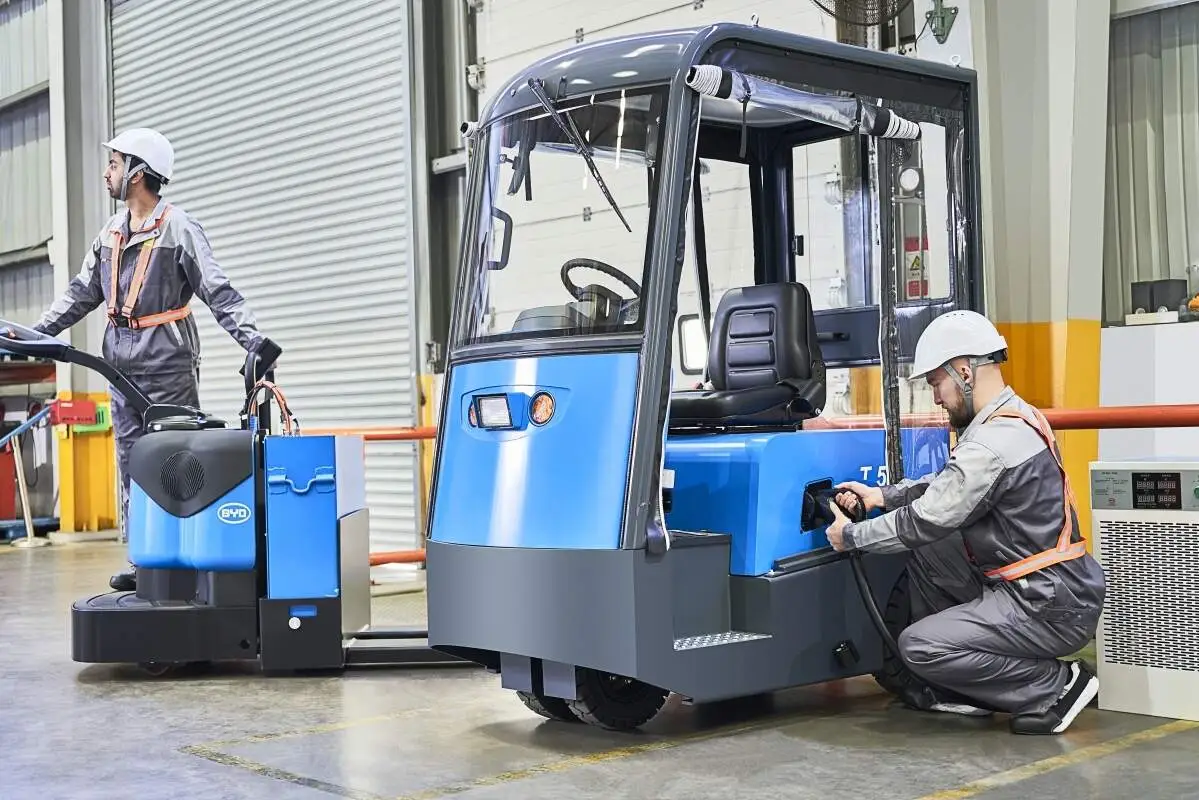
Regular inspection of steering system components is a core part of daily electric forklift maintenance, which can effectively avoid steering deviation, operation lag and other potential safety hazards during high-intensity warehouse operation. The visual inspection process for tie rod end wear of electric forklift steering assembly can be implemented in standardized steps without complicated professional equipment.
First, park the electric forklift on a flat and hard ground, turn off the whole vehicle power supply, pull up the hand brake, and pad the fixed limit device on both sides of the walking wheels to confirm that the vehicle will not slide accidentally in the inspection process. Next, the operation staff can use high-brightness portable lighting tools to directly observe the outer surface of the tie rod end, check whether there are obvious cracks, dustproof rubber sleeve damage, oil seepage and other abnormal phenomena on the surface, and judge the wear state from the external performance at first.
Then, hold the tie rod part to shake slightly with proper force, check the connection gap between the tie rod end and the steering knuckle structure. If there is obviously large range of loose jitter, it means that the wear degree has exceeded the safe use standard. After the preliminary confirmation, the staff can turn the steering wheel back and forth at a small angle, observe the linkage operation feedback of the tie rod end in the whole process, and record all abnormal wear conditions for subsequent parts replacement or maintenance.
We are Jianshu New Energy, specializing in BYD electric forklifts. If you need more professional operation and maintenance guidance, you can contact us via the email 17399989919@163.com.