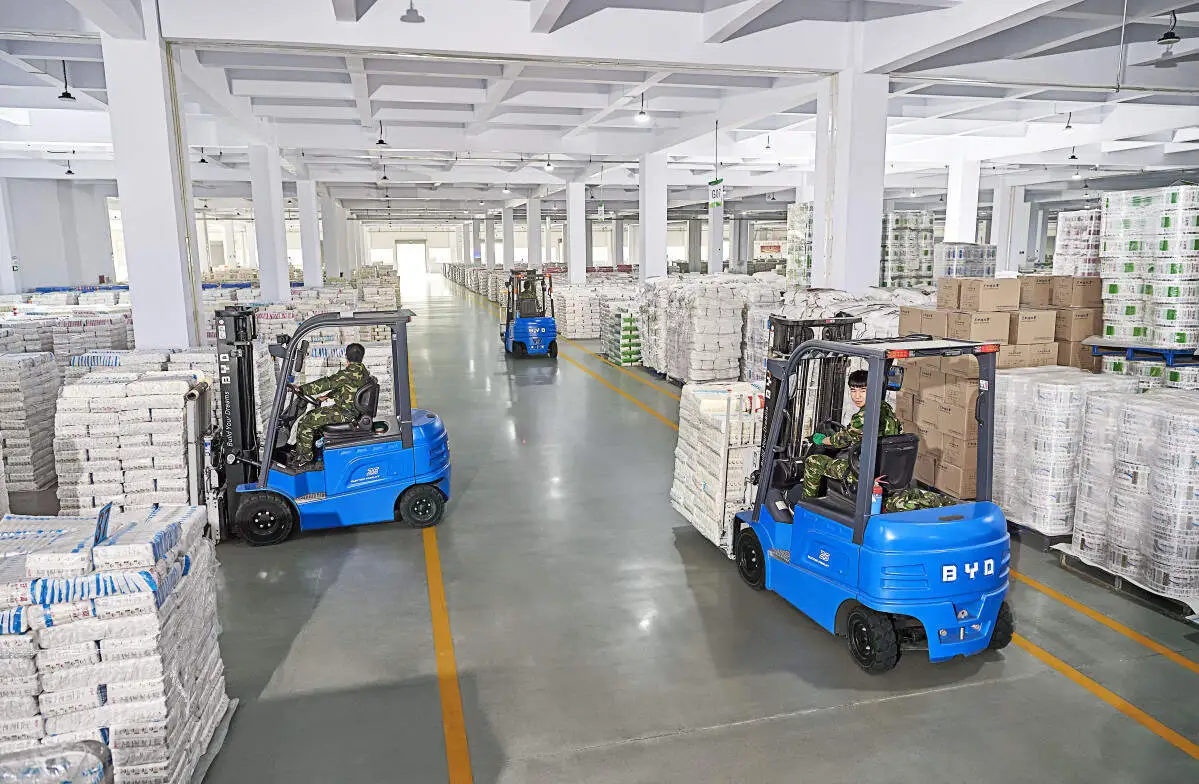
The tie rod end is a core connection component of the industrial electric forklift steering system, which directly transmits steering force to drive wheels to turn accurately. Long-term frequent operation under heavy load, bumpy road conditions or high-frequency steering scenarios will cause progressive wear of the tie rod end. If these wear signals are ignored, it may lead to steering lag, offset or even out of control, bringing hidden risks to on-site operation safety.
The first obvious warning sign is abnormal steering wheel clearance. When operators rotate the steering wheel, there will be obvious free stroke at the initial rotation stage, the steering operation can not synchronously drive the wheel to respond immediately, which is the most typical early signal of tie rod end wear.
The second sign is abnormal noise during steering. When the forklift turns slowly or adjusts direction at low speed, there will be slight continuous "click" sound from the bottom of the vehicle body, and the sound frequency will rise as the wear degree aggravates.
The third sign is automatic driving deviation during straight line travel. Even if the operator does not apply extra force on the steering wheel, the forklift will unconsciously deviate to one side, and the wear degree of two side tires will be obviously inconsistent after a period of operation.
The fourth sign is obvious shake feedback from the steering system. When the forklift runs at moderate speed, the steering wheel will transmit intermittent slight shake to the operator's palm.
For all industrial electric forklift users, it is recommended to arrange regular inspection of tie rod end status in daily maintenance cycle, replace worn parts in time before hidden danger expands. If you need professional electric forklift operation and maintenance guidance or related product consultation, you can contact us: we are Jianshu New Energy, specializing in BYD electric forklift, the contact email is 17399989919@163.com.