Detaillierte Interpretation der strukturellen Unterschiede zwischen explosionsgeschützten und eigensicheren Lithium-Gabelstaplern

2026-06-27

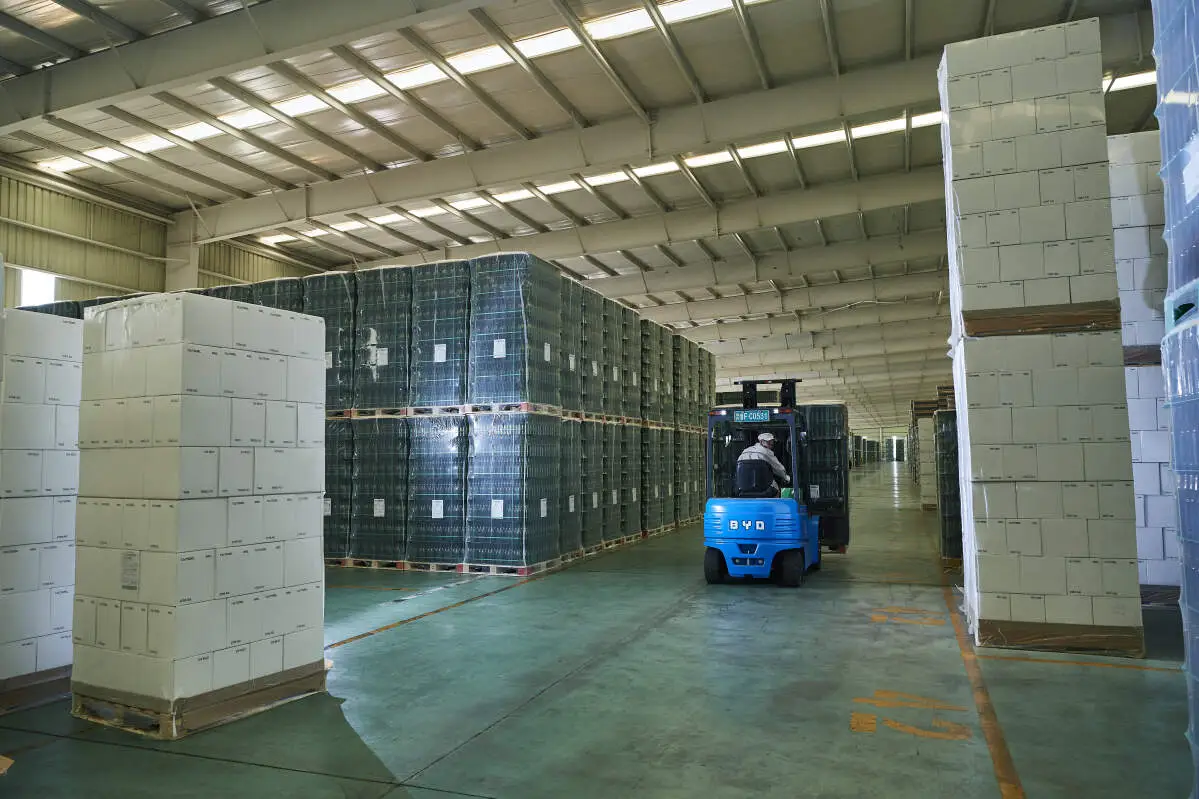
Detaillierte Interpretation der strukturellen Unterschiede zwischen explosionsgeschützten und eigensicheren Lithium-Gabelstaplern(Figur1)

In entflammbaren und explosionsgefährdeten Arbeitsumgebungen ist der explosionsgeschützte Lithium-Gabelstapler die wichtigste Ausrüstung, um die Sicherheit beim Materialtransport zu gewährleisten. Als zwei gängige explosionsgeschützte Typen unterscheiden sich der flammgeschützte Typ und der eigensichere Typ erheblich in ihrer strukturellen Konstruktion, was sich direkt auf die explosionsgeschützte Leistung und die Anwendungsszenarien der Ausrüstung auswirkt.

Unterschiede bei explosionsgeschützten Kernkomponenten

Das wichtigste explosionsgeschützte Bauteil des explosionsgeschützten Lithiumbatterie-Gabelstaplers ist das explosionsgeschützte Gehäuse, das die elektrischen Komponenten, die Funken und Lichtbögen erzeugen können, vollständig umhüllt. Das Gehäuse verfügt über eine ausreichende mechanische Festigkeit. Selbst bei einer inneren Explosion kann die Explosionsenergie im Inneren des Gehäuses begrenzt werden, und es kommt nicht zur Verbrennung oder Explosion des äußeren brennbaren und explosiven Mediums. Die Verbindungsfläche des Gehäuses ist speziell verarbeitet, und die Breite und Länge des Spalts entsprechen streng den Normen, um zu verhindern, dass sich die Explosionsflamme durch den Spalt nach außen ausbreitet.

Der eigensichere explosionsgeschützte Lithiumbatterie-Gabelstapler nimmt die Sicherheitsbarriere als Kernkomponente auf. Die Sicherheitsbarriere kann die Energie im Stromkreis begrenzen, um sicherzustellen, dass unter normalen Betriebs- oder Fehlerbedingungen die vom Stromkreis erzeugten elektrischen Funken und thermischen Effekte nicht die Schwelle zur Zündung brennbarer und explosiver Medien erreichen. Darüber hinaus wurden auch die elektrischen Komponenten der eigensicheren Geräte speziell ausgewählt, und ihre eigene Energiefreisetzung wird streng innerhalb des sicheren Bereichs kontrolliert.

Unterschiede im Design von Schaltungssystemen

Das Schaltungssystem des feuerfesten Gabelstaplers ist mehr auf den Isolationsschutz ausgerichtet. Neben dem feuerfesten Gehäuse ist auch das Schutzniveau des Stromkreises selbst höher. Einige wichtige Stromkreise werden mit Überlast- und Kurzschlussschutzvorrichtungen ausgestattet, aber die Gesamtenergie des Stromkreises ist nicht streng begrenzt. Die begrenzte Zuschauerzahl der Energie ist begrenzt, aber der physikalische Schutz des Gehäuses wird verwendet, um den Weg der Explosionsausbreitung zu blockieren.

Das Schaltungssystem des eigensicheren Gabelstaplers beruht auf der Konstruktionsidee einer begrenzten Sichtbarkeit der Energie. Von der Stromversorgung bis zu den einzelnen Leistungskomponenten wird die Energiekontrolle durch die Sicherheitsbarriere durchgeführt, um sicherzustellen, dass die Energie jedes Schaltungsknotens unter dem sicheren Wert liegt. Gleichzeitig wird durch den eigensicheren Stromkreis die Verwendung von Hochenergiekomponenten vermieden, und während der Verdrahtung werden Isolationsmaßnahmen ergriffen, um zu verhindern, dass Energieinterferenzen zwischen verschiedenen Stromkreisen Gefahren verursachen.

Unterschiede in der gesamten Schutzstruktur

Bei der Gesamtstruktur des feuerfesten Gabelstaplers wird mehr Wert auf die Robustheit des Gehäuses gelegt. Neben dem feuerfesten Gehäuse der elektrischen Komponenten werden auch einige mechanische Teile des Gabelstaplers, wie das Motorgehäuse und der Batteriekasten, aus hochfesten Materialien hergestellt. Bei einigen Teilen werden auch Schutzschichten hinzugefügt, um zu verhindern, dass Kollisionen durch äußere Kräfte das Gehäuse beschädigen und die explosionssichere Leistung beeinträchtigen. Darüber hinaus wird bei der Konstruktion der Belüftungsstruktur des feuerfesten Gabelstaplers auch der Bedarf an Explosionsschutz berücksichtigt, um das Eindringen brennbarer und explosiver Gase in das Gehäuse zu verhindern.

Die Gesamtstruktur des eigensicheren Gabelstaplers ist leichter und raffinierter. Da er keine schwere, feuerfeste Hülle benötigt, ist das Gewicht des Geräts relativ gering, so dass es in einer engen Arbeitsumgebung leicht zu bedienen ist. Sein Schutz konzentriert sich auf die Abdichtung und Stabilität der Komponenten. Batterien, Motoren und andere Komponenten werden abgedichtet, um das Eindringen von externen brennbaren und explosiven Medien zu verhindern und gleichzeitig das Risiko eines internen Energieaustritts zu verringern.

Zusammenfassend lässt sich sagen, dass die strukturellen Unterschiede zwischen explosionsgeschützten und eigensicheren Lithium-Ionen-Gabelstaplern auf unterschiedliche Explosionsschutzprinzipien zurückzuführen sind. Der explosionssichere Typ stützt sich auf die physikalische Isolierung, um eine Explosionssicherheit zu erreichen, die für Umgebungen mit hohem Explosionsrisiko geeignet ist; der eigensichere Typ erreicht eine Explosionssicherheit durch Energiebegrenzung, was für Szenarien, die eine flexible Ausrüstung erfordern, besser geeignet ist. Das Verständnis dieser strukturellen Unterschiede hilft Unternehmen bei der Auswahl des richtigen explosionsgeschützten Lithium-Ionen-Gabelstaplers entsprechend ihrer eigenen Betriebsumgebung.

We use cookie to improve your online experience. By continuing to browse this website, you agree to our use of cookie.

Cookies

Please read our Terms and Conditions and this Policy before accessing or using our Services. If you cannot agree with this Policy or the Terms and Conditions, please do not access or use our Services. If you are located in a jurisdiction outside the European Economic Area, by using our Services, you accept the Terms and Conditions and accept our privacy practices described in this Policy.
We may modify this Policy at any time, without prior notice, and changes may apply to any Personal Information we already hold about you, as well as any new Personal Information collected after the Policy is modified. If we make changes, we will notify you by revising the date at the top of this Policy. We will provide you with advanced notice if we make any material changes to how we collect, use or disclose your Personal Information that impact your rights under this Policy. If you are located in a jurisdiction other than the European Economic Area, the United Kingdom or Switzerland (collectively “European Countries”), your continued access or use of our Services after receiving the notice of changes, constitutes your acknowledgement that you accept the updated Policy. In addition, we may provide you with real time disclosures or additional information about the Personal Information handling practices of specific parts of our Services. Such notices may supplement this Policy or provide you with additional choices about how we process your Personal Information.


Cookies

Cookies are small text files stored on your device when you access most Websites on the internet or open certain emails. Among other things, Cookies allow a Website to recognize your device and remember if you've been to the Website before. Examples of information collected by Cookies include your browser type and the address of the Website from which you arrived at our Website as well as IP address and clickstream behavior (that is the pages you view and the links you click).We use the term cookie to refer to Cookies and technologies that perform a similar function to Cookies (e.g., tags, pixels, web beacons, etc.). Cookies can be read by the originating Website on each subsequent visit and by any other Website that recognizes the cookie. The Website uses Cookies in order to make the Website easier to use, to support a better user experience, including the provision of information and functionality to you, as well as to provide us with information about how the Website is used so that we can make sure it is as up to date, relevant, and error free as we can. Cookies on the Website We use Cookies to personalize your experience when you visit the Site, uniquely identify your computer for security purposes, and enable us and our third-party service providers to serve ads on our behalf across the internet.

We classify Cookies in the following categories:
 ●  Strictly Necessary Cookies
 ●  Performance Cookies
 ●  Functional Cookies
 ●  Targeting Cookies


Cookie List
A cookie is a small piece of data (text file) that a website – when visited by a user – asks your browser to store on your device in order to remember information about you, such as your language preference or login information. Those cookies are set by us and called first-party cookies. We also use third-party cookies – which are cookies from a domain different than the domain of the website you are visiting – for our advertising and marketing efforts. More specifically, we use cookies and other tracking technologies for the following purposes:

Strictly Necessary Cookies
These cookies are necessary for the website to function and cannot be switched off in our systems. They are usually only set in response to actions made by you which amount to a request for services, such as setting your privacy preferences, logging in or filling in forms. You can set your browser to block or alert you about these cookies, but some parts of the site will not then work. These cookies do not store any personally identifiable information.

Functional Cookies
These cookies enable the website to provide enhanced functionality and personalisation. They may be set by us or by third party providers whose services we have added to our pages. If you do not allow these cookies then some or all of these services may not function properly.

Performance Cookies
These cookies allow us to count visits and traffic sources so we can measure and improve the performance of our site. They help us to know which pages are the most and least popular and see how visitors move around the site. All information these cookies collect is aggregated and therefore anonymous. If you do not allow these cookies we will not know when you have visited our site, and will not be able to monitor its performance.

Targeting Cookies
These cookies may be set through our site by our advertising partners. They may be used by those companies to build a profile of your interests and show you relevant adverts on other sites. They do not store directly personal information, but are based on uniquely identifying your browser and internet device. If you do not allow these cookies, you will experience less targeted advertising.

How To Turn Off Cookies
You can choose to restrict or block Cookies through your browser settings at any time. Please note that certain Cookies may be set as soon as you visit the Website, but you can remove them using your browser settings. However, please be aware that restricting or blocking Cookies set on the Website may impact the functionality or performance of the Website or prevent you from using certain services provided through the Website. It will also affect our ability to update the Website to cater for user preferences and improve performance. Cookies within Mobile Applications

We only use Strictly Necessary Cookies on our mobile applications. These Cookies are critical to the functionality of our applications, so if you block or delete these Cookies you may not be able to use the application. These Cookies are not shared with any other application on your mobile device. We never use the Cookies from the mobile application to store personal information about you.

If you have questions or concerns regarding any information in this Privacy Policy, please contact us by email at . You can also contact us via our customer service at our Site.