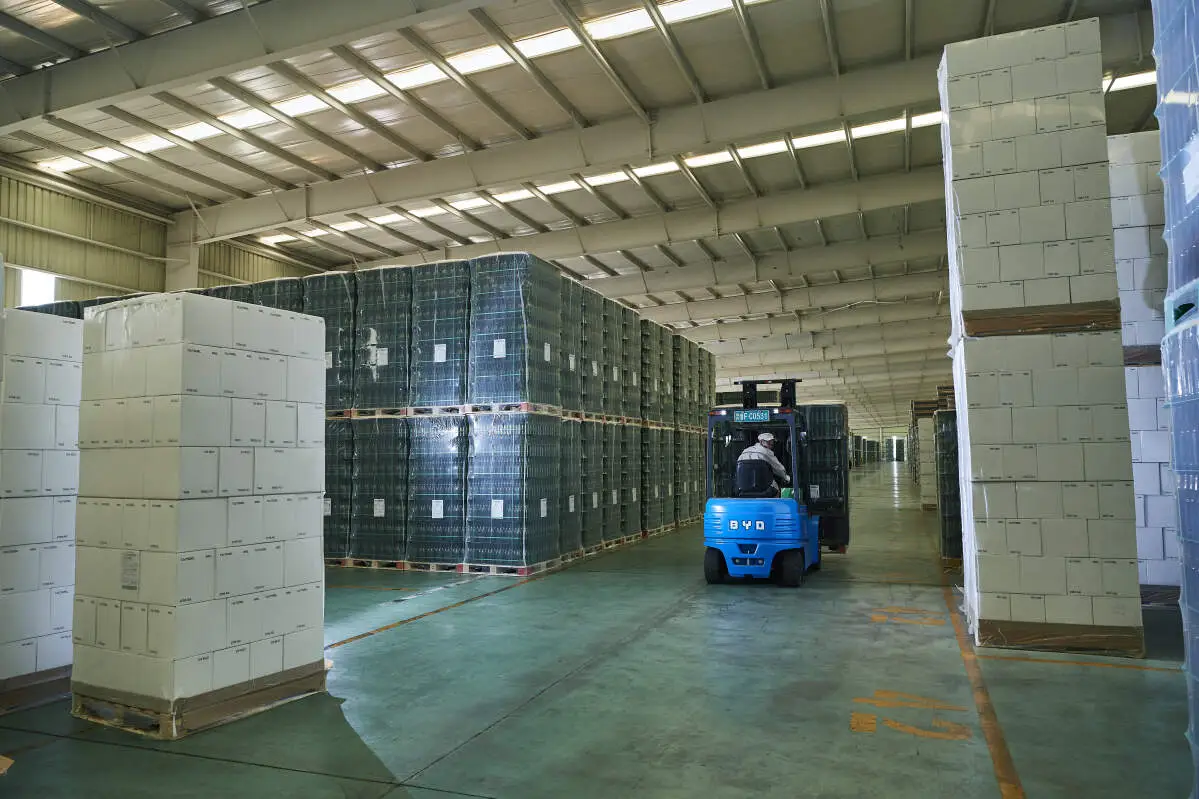
Interpretasi terperinci dari perbedaan struktural antara forklift lithium tahan ledakan dan aman secara intrinsik

2026-06-27

Interpretasi terperinci dari perbedaan struktural antara forklift lithium tahan ledakan dan aman secara intrinsik(tokoh1)

Dalam lingkungan kerja yang mudah terbakar dan meledak, forklift lithium tahan ledakan adalah peralatan utama untuk memastikan keamanan penanganan material. Sebagai dua jenis tahan ledakan arus utama, jenis tahan api dan jenis yang aman secara intrinsik memiliki perbedaan yang signifikan dalam desain strukturalnya, yang secara langsung mempengaruhi kinerja tahan ledakan dan skenario peralatan yang berlaku.

Perbedaan komponen inti tahan ledakan

Komponen inti tahan ledakan dari forklift baterai lithium tahan ledakan adalah cangkang tahan ledakan, yang sepenuhnya membungkus komponen listrik yang dapat menghasilkan percikan api dan busur. Cangkang memiliki kekuatan mekanik yang cukup, bahkan jika ada ledakan internal, energi ledakan dapat dibatasi di dalam cangkang, dan itu tidak akan menyebabkan pembakaran atau ledakan media eksternal yang mudah terbakar dan meledak. Permukaan sendi cangkang diproses secara khusus, dan lebar serta panjang celah secara ketat memenuhi standar untuk mencegah api ledakan menyebar ke luar melalui celah.

Forklift baterai lithium tahan ledakan tipe intrinsik yang aman mengambil penghalang keselamatan sebagai komponen inti. Penghalang keselamatan dapat membatasi energi di sirkuit untuk memastikan bahwa dalam kondisi operasi normal atau kegagalan, percikan listrik dan efek termal yang dihasilkan oleh sirkuit tidak akan mencapai ambang batas menyalakan media yang mudah terbakar dan meledak. Selain itu, komponen listrik dari peralatan tipe yang aman secara intrinsik juga telah dipilih secara khusus, dan tingkat pelepasan energinya sendiri dikontrol secara ketat dalam kisaran aman.

Perbedaan desain sistem sirkuit

Desain sistem sirkuit forklift tahan api lebih fokus pada perlindungan isolasi. Selain mengandalkan cangkang tahan api, tingkat perlindungan sirkuit itu sendiri juga lebih tinggi. Beberapa sirkuit kunci akan diatur dengan perangkat perlindungan kelebihan beban dan sirkuit pendek, tetapi energi sirkuit keseluruhan tidak dibatasi secara ketat. Penayangan energi yang terbatas terbatas terbatas, tetapi perlindungan fisik cangkang digunakan untuk memblokir jalur perambatan ledakan.

Sistem sirkuit forklift yang aman secara intrinsik berjalan melalui ide desain penayangan energi yang terbatas. Dari catu daya ke setiap komponen daya, kontrol energi dilakukan melalui penghalang keselamatan untuk memastikan bahwa energi dari setiap simpul sirkuit berada di bawah nilai aman. Pada saat yang sama, sirkuit yang aman secara intrinsik akan menghindari penggunaan komponen berenergi tinggi, dan tindakan isolasi akan diambil selama pengkabelan untuk mencegah gangguan energi antara sirkuit yang berbeda dari menyebabkan bahaya.

Perbedaan struktur pelindung secara keseluruhan

Struktur keseluruhan forklift tahan api lebih memperhatikan kekokohan cangkang. Selain cangkang tahan api dari komponen listrik, beberapa bagian mekanis dari forklift, seperti cangkang motor dan kotak baterai, juga akan terbuat dari bahan berkekuatan tinggi. Beberapa bagian juga akan menambahkan lapisan pelindung untuk mencegah tabrakan gaya eksternal menyebabkan kerusakan pada cangkang dan mempengaruhi kinerja tahan ledakan. Selain itu, desain struktur ventilasi forklift tahan api juga akan mempertimbangkan kebutuhan perlindungan ledakan untuk menghindari gas yang mudah terbakar dan meledak memasuki cangkang.

Struktur keseluruhan forklift yang aman secara intrinsik lebih ringan dan halus. Karena tidak memerlukan cangkang tahan api yang berat, berat peralatan relatif ringan, sehingga mudah dioperasikan di lingkungan kerja yang sempit. Perlindungannya berfokus pada penyegelan dan stabilitas komponen. Baterai, motor, dan komponen lainnya akan disegel untuk mencegah intrusi media eksternal yang mudah terbakar dan meledak, sekaligus mengurangi risiko kebocoran energi internal.

Singkatnya, perbedaan struktural antara forklift lithium-ion tahan ledakan dan yang aman secara intrinsik berasal dari prinsip tahan ledakan yang berbeda. Jenis tahan ledakan bergantung pada isolasi fisik untuk mencapai tahan ledakan, yang cocok untuk lingkungan dengan risiko ledakan tinggi; tipe yang aman secara intrinsik mencapai tahan ledakan melalui keterbatasan energi, yang lebih cocok untuk skenario yang membutuhkan fleksibilitas peralatan. Memahami perbedaan struktural ini akan membantu perusahaan memilih forklift lithium-ion tahan ledakan yang tepat sesuai dengan lingkungan operasi mereka sendiri.

We use cookie to improve your online experience. By continuing to browse this website, you agree to our use of cookie.

Cookies

Please read our Terms and Conditions and this Policy before accessing or using our Services. If you cannot agree with this Policy or the Terms and Conditions, please do not access or use our Services. If you are located in a jurisdiction outside the European Economic Area, by using our Services, you accept the Terms and Conditions and accept our privacy practices described in this Policy.
We may modify this Policy at any time, without prior notice, and changes may apply to any Personal Information we already hold about you, as well as any new Personal Information collected after the Policy is modified. If we make changes, we will notify you by revising the date at the top of this Policy. We will provide you with advanced notice if we make any material changes to how we collect, use or disclose your Personal Information that impact your rights under this Policy. If you are located in a jurisdiction other than the European Economic Area, the United Kingdom or Switzerland (collectively “European Countries”), your continued access or use of our Services after receiving the notice of changes, constitutes your acknowledgement that you accept the updated Policy. In addition, we may provide you with real time disclosures or additional information about the Personal Information handling practices of specific parts of our Services. Such notices may supplement this Policy or provide you with additional choices about how we process your Personal Information.


Cookies

Cookies are small text files stored on your device when you access most Websites on the internet or open certain emails. Among other things, Cookies allow a Website to recognize your device and remember if you've been to the Website before. Examples of information collected by Cookies include your browser type and the address of the Website from which you arrived at our Website as well as IP address and clickstream behavior (that is the pages you view and the links you click).We use the term cookie to refer to Cookies and technologies that perform a similar function to Cookies (e.g., tags, pixels, web beacons, etc.). Cookies can be read by the originating Website on each subsequent visit and by any other Website that recognizes the cookie. The Website uses Cookies in order to make the Website easier to use, to support a better user experience, including the provision of information and functionality to you, as well as to provide us with information about how the Website is used so that we can make sure it is as up to date, relevant, and error free as we can. Cookies on the Website We use Cookies to personalize your experience when you visit the Site, uniquely identify your computer for security purposes, and enable us and our third-party service providers to serve ads on our behalf across the internet.

We classify Cookies in the following categories:
 ●  Strictly Necessary Cookies
 ●  Performance Cookies
 ●  Functional Cookies
 ●  Targeting Cookies


Cookie List
A cookie is a small piece of data (text file) that a website – when visited by a user – asks your browser to store on your device in order to remember information about you, such as your language preference or login information. Those cookies are set by us and called first-party cookies. We also use third-party cookies – which are cookies from a domain different than the domain of the website you are visiting – for our advertising and marketing efforts. More specifically, we use cookies and other tracking technologies for the following purposes:

Strictly Necessary Cookies
These cookies are necessary for the website to function and cannot be switched off in our systems. They are usually only set in response to actions made by you which amount to a request for services, such as setting your privacy preferences, logging in or filling in forms. You can set your browser to block or alert you about these cookies, but some parts of the site will not then work. These cookies do not store any personally identifiable information.

Functional Cookies
These cookies enable the website to provide enhanced functionality and personalisation. They may be set by us or by third party providers whose services we have added to our pages. If you do not allow these cookies then some or all of these services may not function properly.

Performance Cookies
These cookies allow us to count visits and traffic sources so we can measure and improve the performance of our site. They help us to know which pages are the most and least popular and see how visitors move around the site. All information these cookies collect is aggregated and therefore anonymous. If you do not allow these cookies we will not know when you have visited our site, and will not be able to monitor its performance.

Targeting Cookies
These cookies may be set through our site by our advertising partners. They may be used by those companies to build a profile of your interests and show you relevant adverts on other sites. They do not store directly personal information, but are based on uniquely identifying your browser and internet device. If you do not allow these cookies, you will experience less targeted advertising.

How To Turn Off Cookies
You can choose to restrict or block Cookies through your browser settings at any time. Please note that certain Cookies may be set as soon as you visit the Website, but you can remove them using your browser settings. However, please be aware that restricting or blocking Cookies set on the Website may impact the functionality or performance of the Website or prevent you from using certain services provided through the Website. It will also affect our ability to update the Website to cater for user preferences and improve performance. Cookies within Mobile Applications

We only use Strictly Necessary Cookies on our mobile applications. These Cookies are critical to the functionality of our applications, so if you block or delete these Cookies you may not be able to use the application. These Cookies are not shared with any other application on your mobile device. We never use the Cookies from the mobile application to store personal information about you.

If you have questions or concerns regarding any information in this Privacy Policy, please contact us by email at . You can also contact us via our customer service at our Site.