
 简体中文
简体中文 繁体中文
繁体中文 Deutsch
 日本語
日本語 한국어
한국어 Tiếng Việt
 Русский
 ไทย
ไทย Bahasa Indonesia
 Bahasa Melayu
 Filipino
 لالعربية
 Français

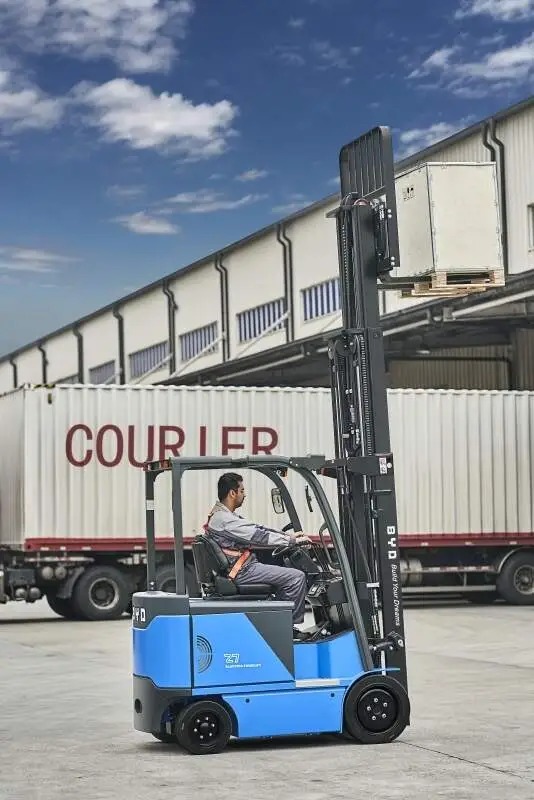
In the current context of the gradual improvement of environmental protection and operational efficiency requirements in the warehousing industry, lithium-ion forklifts suitable for indoor 5-ton cargo handling have become the focus of many practitioners.
First, let's talk about the environmental protection suitability of this type of forklift in indoor operation scenarios. Compared with traditional fuel forklifts, 5-ton indoor storage zero-emission lithium-ion forklifts do not produce exhaust gas during operation, do not need to be equipped with special exhaust gas purification equipment, and do not cause pollution to the goods and storage equipment in the warehouse. They are especially suitable for warehouses that store goods with high environmental requirements such as food, medicine, and precision electronic components.
Look at the convenience of operation battery life and energy replenishment. This type of forklift usually uses a lithium battery pack suitable for high-frequency warehousing operations, and the battery life can meet the daily single-shift or even double-shift medium-intensity handling needs. Unlike lead-acid batteries, lithium batteries can be charged at any time, without a complete charge and discharge cycle, and will not affect the service life of the battery. Warehousing practitioners can use staff rest time and shift intervals to quickly replenish energy, reducing equipment idle time and improving overall operation efficiency.
In addition, the maintenance cost of a 5-ton indoor storage zero-emission lithium-ion forklift is relatively low. There is no lead-acid battery inside the lithium battery that needs to be regularly checked for replenished electrolyte. Daily maintenance only requires cleaning the surface and interface of the battery compartment, and tightening the connecting bolts. There is no need to replace the oil, machine filter, and air filter regularly like a fuel forklift, nor does it need to deal with engine-related failures. Long-term use can save a certain amount of maintenance costs for warehousing enterprises.
In addition, this type of forklift is less noisy. Compared with the roar of the fuel forklift engine, the lithium battery-powered forklift has lower noise during operation, which can create a relatively quiet working environment for the staff in the warehouse, reduce the potential impact of noise on the staff's hearing, and also help to improve the communication efficiency in the warehouse.


