
 简体中文
简体中文 繁体中文
繁体中文 Deutsch
 日本語
日本語 한국어
한국어 Tiếng Việt
 Русский
 ไทย
ไทย Bahasa Indonesia
 Bahasa Melayu
 Filipino
 لالعربية
 Français

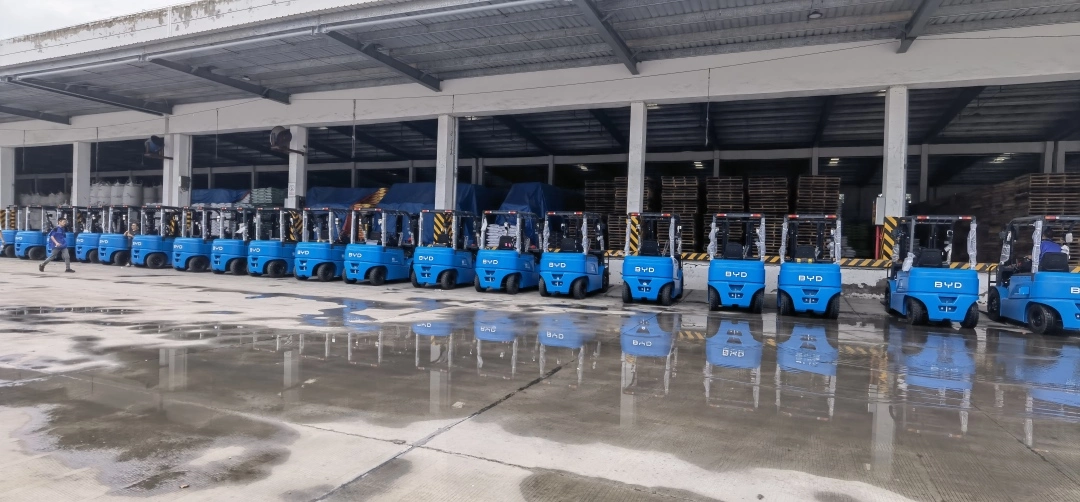
Electric forklifts are important equipment in modern industrial logistics. With the continuous refinement of the demand for cargo transfer in short-distance factories, the application scenarios of small lithium-ion forklifts are gradually increasing. Compared with traditional fuel forklifts and large electric forklifts, it is more suitable for operating environments with limited space, high transfer frequency but small single load.
Small lithium forklifts have a wide range of applications in short-distance factory areas. The first is the process connection in the workshop, such as transshipment from the raw material warehouse to the processing station, and then transporting the work in progress to the next process or the finished product temporary storage area. This kind of operation distance is usually between tens of meters and hundreds of meters. The channel may become narrow due to the stacking of equipment and materials. The size of the small body can be flexibly shuttled among them, avoiding the problem of difficult passage of large equipment. Secondly, the stacking and handling of small batches of goods in the warehouse, especially the floor warehouse or the area with lower floor height. The small body is matched with the appropriate lifting height, which can not only meet the daily access needs, but also does not place excessive requirements on the building floor height. In addition, the temporary transfer of express parcels, tools and materials in the factory area can also be carried out using small lithium-ion forklifts, which are simple and fast to operate without complex training.
The core advantage of the small lithium forklift makes it competitive in the short-distance factory cargo transfer. The first is environmental protection. It uses lithium batteries as a power source, and it will not produce exhaust emissions during operation, nor will it produce obvious noise pollution. It is suitable for food, medicine, electronics and other factory workshops with high environmental requirements. The second is flexibility. The body is small and the turning radius is small. It can operate smoothly in narrow workshop passages and warehouse shelves, and can make efficient use of limited working space. The third is that the maintenance cost is relatively low. The lithium battery has a long service life. The daily maintenance is mainly to clean the body, check the tire and battery status. There is no need to change the oil, filter elements and other accessories regularly like fuel forklifts, and there is no need to add water frequently like lead-acid batteries for maintenance. Fourth, it is easy to use. Lithium batteries can be charged quickly, and some models also support fast charging, which can replenish power even in the work gap. There is no need to wait for charging for a long time, which can ensure the demand for continuous operation.
When using small lithium-ion forklifts for short-distance factory cargo transfer, it is also necessary to pay attention to some points of reasonable use. First of all, choose the appropriate model according to the actual operation needs, such as choosing the model with the rated load according to the single load, and choosing the appropriate lifting system according to the lifting height to avoid overload or insufficient lifting height. Secondly, it is necessary to do a good job in the training of operators. Although the operation is relatively simple, it is still necessary to master basic operating norms and safety knowledge, such as checking the status of the vehicle before operation, controlling the speed during operation, avoiding sharp turns and sudden braking, and parking the vehicle at the designated location and turning off the power after operation. Finally, it is necessary to do a good job in the daily maintenance and regular overhaul of the vehicle, keep the body clean, regularly check the tire pressure, battery power and wear of vehicle parts, and replace the worn parts in a timely manner to ensure the safety performance and service life of the vehicle.


