
 简体中文
简体中文 繁体中文
繁体中文 Deutsch
 日本語
日本語 한국어
한국어 Tiếng Việt
 Русский
 ไทย
ไทย Bahasa Indonesia
 Bahasa Melayu
 Filipino
 لالعربية
 Français

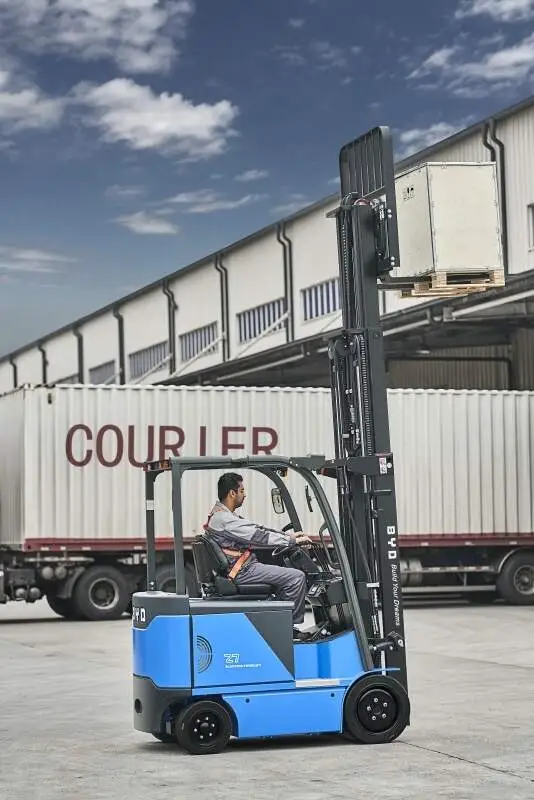
In the daily operation of the logistics warehouse, the forward forklift is a key equipment to support the efficient handling of goods. The RTR16 model has become a common choice in warehousing operations due to its operating characteristics suitable for warehousing scenarios.
Reach Forklift RTR16 Core Operation Features
Flexible steering and narrow channel adaptability
In a storage environment with dense shelves and limited channel space, the RTR16 is equipped with a flexible steering system, with a minimum turning radius that can adapt to the narrow channel requirements of most warehouses. It can smoothly complete steering, U-turns, and other actions in a small space, effectively reducing space occupation, enhancing the flexibility of goods access in the dense shelf area, and helping the warehouse improve space utilization.
Precise lifting load control performance
The lifting system of this type of forklift has stable control accuracy, which can realize the precise lifting and fine-tuning of the fork, and can match the cargo storage needs of shelves of different heights. At the same time, in the state of carrying goods, the body maintains good stability, reducing the risk of shaking and falling goods, and adapting to the handling of various weight goods.
Adapt to the energy consumption performance of long-term operations
In response to the needs of warehouse continuous operation in a single day, RTR16 performs reasonably in energy consumption control, can support long-term continuous operation, reduce the frequency of power supply in the middle, fit the rhythm of daily warehousing operations, and ensure the continuity of the operation process.
Logistics warehouse daily operation guide
Pre-job comprehensive inspection process
Before officially starting the operation, a multi-dimensional inspection of the forklift is required. First confirm that the power system is in normal condition and there is no leakage or abnormal sound; then check the braking system to test the braking sensitivity; at the same time check the operation of the lifting mechanism to ensure the smooth lifting of the fork; finally check the tire status to confirm that there are no air leaks, serious wear and tear problems, and then start the operation after eliminating safety hazards.
Code of safe operation during operation
During the operation, it is necessary to strictly follow the operation procedures to avoid sudden acceleration, sudden braking and other operations to prevent the goods from shaking or the body from losing control. When lifting and lowering goods, it is necessary to ensure that the goods are placed smoothly on the fork, and overloading is strictly prohibited; pay attention to the surrounding environment during driving, actively avoid personnel and obstacles, and slow down in narrow passages and turns to avoid colliding with shelves or goods.
Post-operation routine maintenance points
After the operation, it is necessary to park the forklift in the designated safe area, turn off the power and pull up the handbrake. Clean up the debris and dust on the fork and body surface in time, and conduct a simple inspection of key components such as steering and braking. If any abnormalities are found, they should be recorded and reported for maintenance in time. Regularly carry out in-depth maintenance of the equipment according to the specifications to prolong the service life of the forklift.


