
 简体中文
简体中文 繁体中文
繁体中文 Deutsch
 日本語
日本語 한국어
한국어 Tiếng Việt
 Русский
 ไทย
ไทย Bahasa Indonesia
 Bahasa Melayu
 Filipino
 لالعربية
 Français

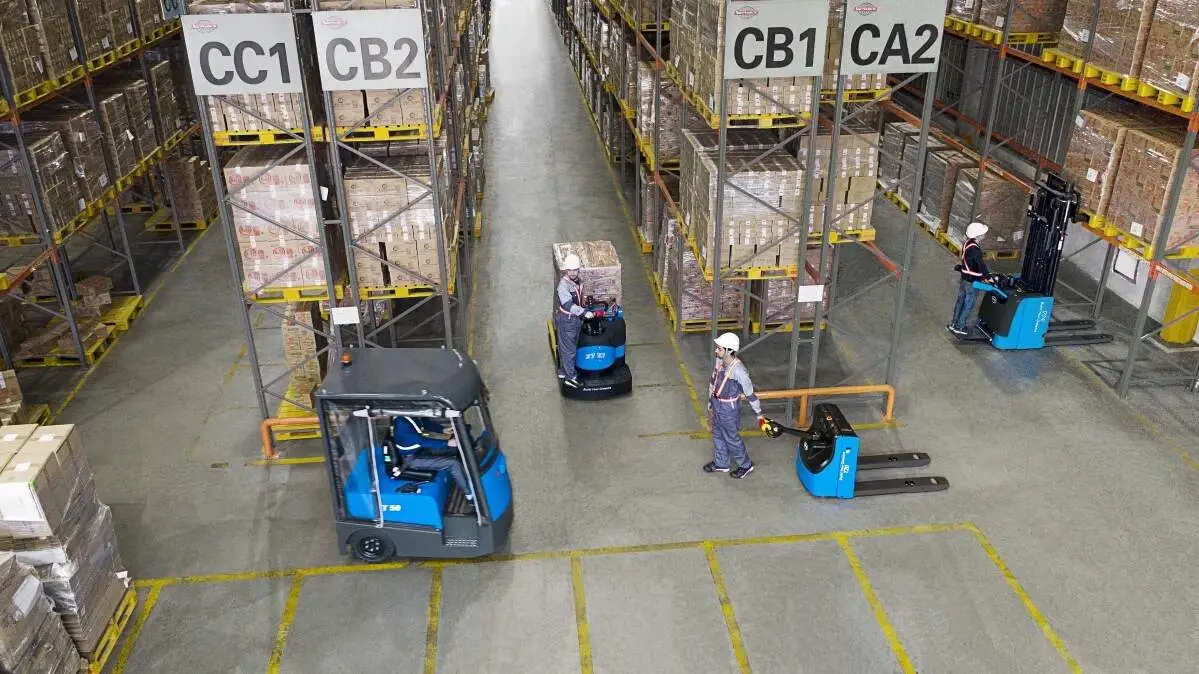
In warehousing logistics and indoor handling scenarios, the reach forklift has become an important equipment for improving operation efficiency due to its flexible steering ability and compact body. Many users are often torn between 1.6-ton and 2-ton models when purchasing. Today, combined with the characteristics of the R series models, we will sort out the selection ideas for everyone.
Selection core reference factors
The operating space and scenario are the top priorities. If the operation site is a narrow channel, a small warehouse or an e-commerce sorting center, and the channel width is limited, the compact body of the 1.6-ton model and the smaller turning radius can complete the shuttle operation more smoothly. If the operation site is spacious and involves bulk cargo handling, the stable chassis of the 2-ton model is more suitable for such scenarios.
Load demand is also a key criterion for judgment. Daily handling is mostly light-weight goods, with a single batch load of less than 1.6 tons. The 1.6-ton model can fully meet the demand and reduce energy consumption. If heavier pallet goods are frequently handled, and a single batch load approaches or reaches 2 tons, the carrying capacity of the 2-ton model is more suitable, which can avoid overload operations affecting the life of the equipment.
In addition, the battery life and operation time also need to match. If the daily operation time is short, the battery capacity of the 1.6-ton model is sufficient to support; if it needs to be operated continuously for a long time, the large-capacity battery equipped with the 2-ton model can reduce the charging frequency and improve the overall operation efficiency.
Features of R series models
The 1.6-ton model features a compact design with a narrow body width and flexible steering, making it suitable for working in narrow passages. The operating handle is ergonomically designed to reduce operator fatigue. The power output is stable, and the goods are not easy to shake when starting and docking. It is suitable for fine handling scenarios.
The chassis structure of the 2-ton model has been strengthened, with stronger carrying capacity and better stability when handling heavier goods. The battery life configuration is more sufficient, supporting long-term continuous operation, suitable for medium-sized warehousing, manufacturing raw material handling and other scenarios. It also has ergonomic operation design to improve operation comfort.
Overall, the choice of 1.6-ton and 2-ton reach forklifts requires comprehensive judgment based on their own operating space, load requirements, and operating hours. The two models of the R series are optimized for different scenarios, providing suitable solutions for various handling needs.


