
 简体中文
简体中文 繁体中文
繁体中文 Deutsch
 日本語
日本語 한국어
한국어 Tiếng Việt
 Русский
 ไทย
ไทย Bahasa Indonesia
 Bahasa Melayu
 Filipino
 لالعربية
 Français

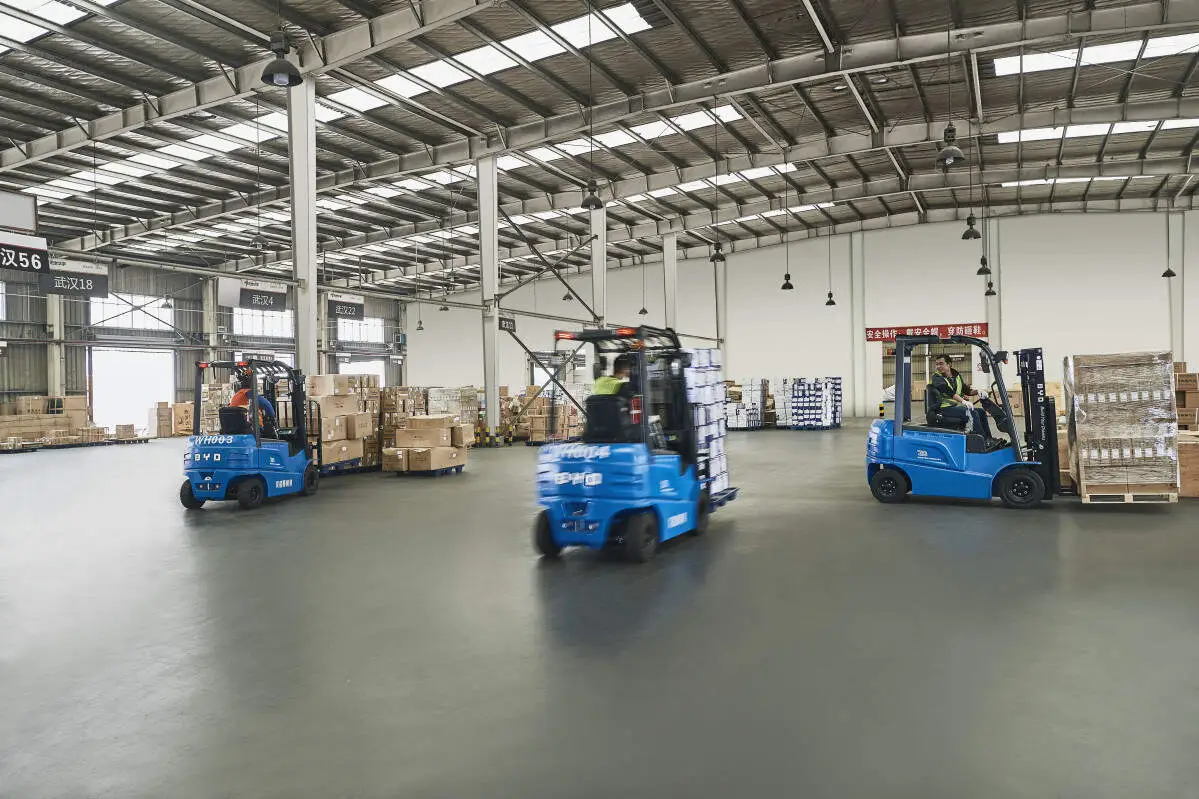
Container cargo loading and unloading is an important link in warehousing and logistics. It has the characteristics of relatively small operating space and the need to pick up and stack goods in closed or semi-closed areas. In recent years, electric forklifts, especially lithium-electric forklifts, have gradually become the mainstream choice for this scene due to their advantages of zero emissions, smooth operation and low noise. To make the equipment play the greatest role, it is necessary to choose the appropriate configuration according to the needs of the operation scene.
First of all, you need to pay attention to the size of the car body. The door opening of a commonly used 20-foot ordinary dry cargo box has a net width of about 2.34 meters and a net height of about 2.28 meters. The door opening of a 40-foot high box also has a net width of about 2.34 meters and a net height of about 2.58 meters. When selecting, you need to reserve 10 to 20 cm of operating allowance on both sides of the body to avoid scratching the container wall when entering or moving. The overall height of the door frame when it is reduced to the lowest level must be lower than the door net height of the corresponding type of container to ensure smooth passage.
The second is the gantry configuration, which is the core of the container. The fully free gantry can lift the fork to the required height without rising the overall height of the gantry, which is very suitable for stacking goods in a low closed space. In addition, the maximum lifting height needs to be determined according to the conventional stacking layers of the goods in the box. For example, if two layers of standard pallets are stacked in an ordinary box, the lifting height can be about 3 meters. High boxes can choose higher lifting models according to actual needs.
Power matching cannot be ignored either. Container truck cargo platforms usually have a certain slope to the ground, generally no more than 15 degrees, so the drive motor power should be sufficient to ensure that it can go uphill and downhill smoothly when fully loaded with goods. The battery capacity needs to be determined in combination with the daily operation volume. If the single-day operation time is about 8 hours, you can choose the matching lithium battery; you can also pay attention to the charging speed. Equipment with fast charging function can quickly replenish energy during the operation gap, reducing downtime and waiting time.
Finally, auxiliary features can be considered, such as wide-angle rearview mirrors or reversing images, which can expand the operation field of view in the container; turn signals and warning lights can remind surrounding personnel to pay attention to safety; fork fine-tuning function is convenient to quickly align the tray hole in a narrow space, improve work efficiency.


