
 简体中文
简体中文 繁体中文
繁体中文 Deutsch
 日本語
日本語 한국어
한국어 Tiếng Việt
 Русский
 ไทย
ไทย Bahasa Indonesia
 Bahasa Melayu
 Filipino
 لالعربية
 Français

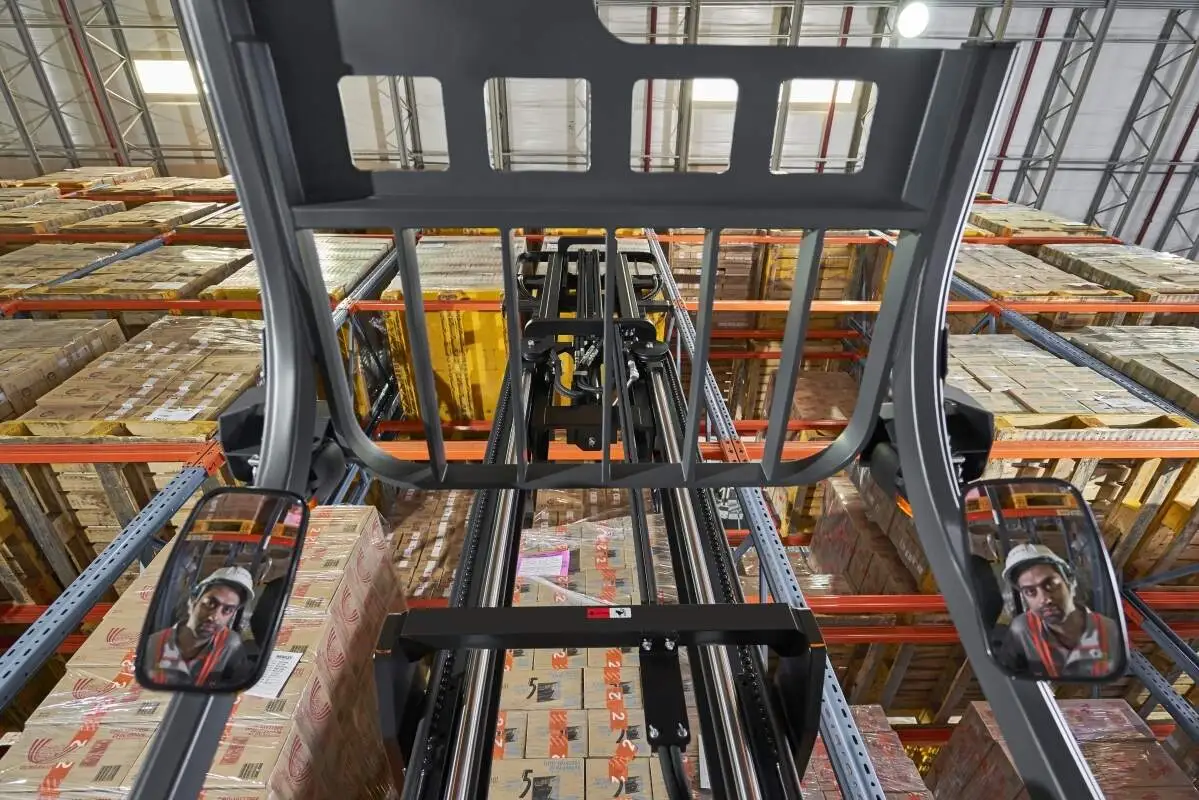
Pharmaceutical clean workshops are special places for the production and storage of various types of pharmaceutical products, and have specific requirements for environmental cleanliness, noise decibels, and pollution prevention and control of material handling. Low-noise lithium-ion forklifts have gradually become common equipment for handling pallet materials in short and medium distances in such workshops due to their low noise, no exhaust emissions, and flexible operation. Correct and standardized use of such forklifts can not only ensure production efficiency, but also maintain the workshop environment to meet requirements.
Basic preparation specifications before use. Operators need to go through professional on-the-job training, be familiar with the operating principle of forklifts, control buttons, braking system and the prevailing rules of the workshop, and obtain the corresponding operating qualifications before they can go to work. Before entering the workshop, operators need to change their work clothes, hats, shoes, and masks that meet the cleanliness level, wash their hands, and disinfect their hands if necessary. Check whether the appearance of the forklift is clean, especially the parts that are prone to dirt such as wheels and the bottom of the body, to ensure that there is no dust accumulation and no stain residue. Check whether the battery of the vehicle is sufficient. It is usually recommended to charge it in time when the battery is lower than 20%, and avoid frequent movement and charging in the clean workshop. At the same time, check whether the key components such as brakes, steering, lights, and horns are working normally, and
Normative points in daily operation. Operators need to drive strictly in accordance with the dedicated passages delineated by the workshop, avoiding crowded areas and areas with precision equipment. The driving speed should be smooth, usually controlled within 3 kilometers per hour. When turning, passing through doors or narrow passages, slow down and move slowly. Observe the surrounding situation in advance and honk the horn, but the honking time should not be too long, so as not to produce too much noise to affect the workshop environment. When handling materials, ensure that the pallets are placed smoothly in the middle of the fork. The distance between the forks should match the size of the pallets. The stacking height of materials cannot block the operator's line of sight, nor can it exceed the rated load of the vehicle. Overload, partial load, and ultra-high handling are strictly prohibited. It is strictly forbidden to use the fork to take non-pallet or unfixed materials. Keep the fork 10 to 20 cm above the ground during driving, and operate smoothly when lowering or lifting the goods to avoid shaking and falling. After the work is over, place the goods smoothly in the designated area, lower the fork to the lowest position, and turn off the power switch.
Specifications for cleaning, maintenance and charging parking. After daily use, it is necessary to use cleaning tools and detergents that meet the requirements of cleanliness level to clean the wheels, body surfaces, forks and other parts of the forklift to ensure that there is no dust accumulation and no stains. Regular inspection and maintenance of key components of the forklift. Maintenance work needs to be carried out in a special area outside the clean workshop to avoid dust and oil pollution of the workshop environment generated by maintenance. When charging, it is necessary to use supporting charging equipment and operate in a special well-ventilated charging area. Smoking and proximity to open flames are prohibited during the charging process. When parking, the forklift needs to be parked outside the clean workshop or in a special closed or semi-closed area in the workshop. The wheels should be fixed to prevent the vehicle from sliding.


