
 简体中文
简体中文 繁体中文
繁体中文 Deutsch
 日本語
日本語 한국어
한국어 Tiếng Việt
 Русский
 ไทย
ไทย Bahasa Indonesia
 Bahasa Melayu
 Filipino
 لالعربية
 Français

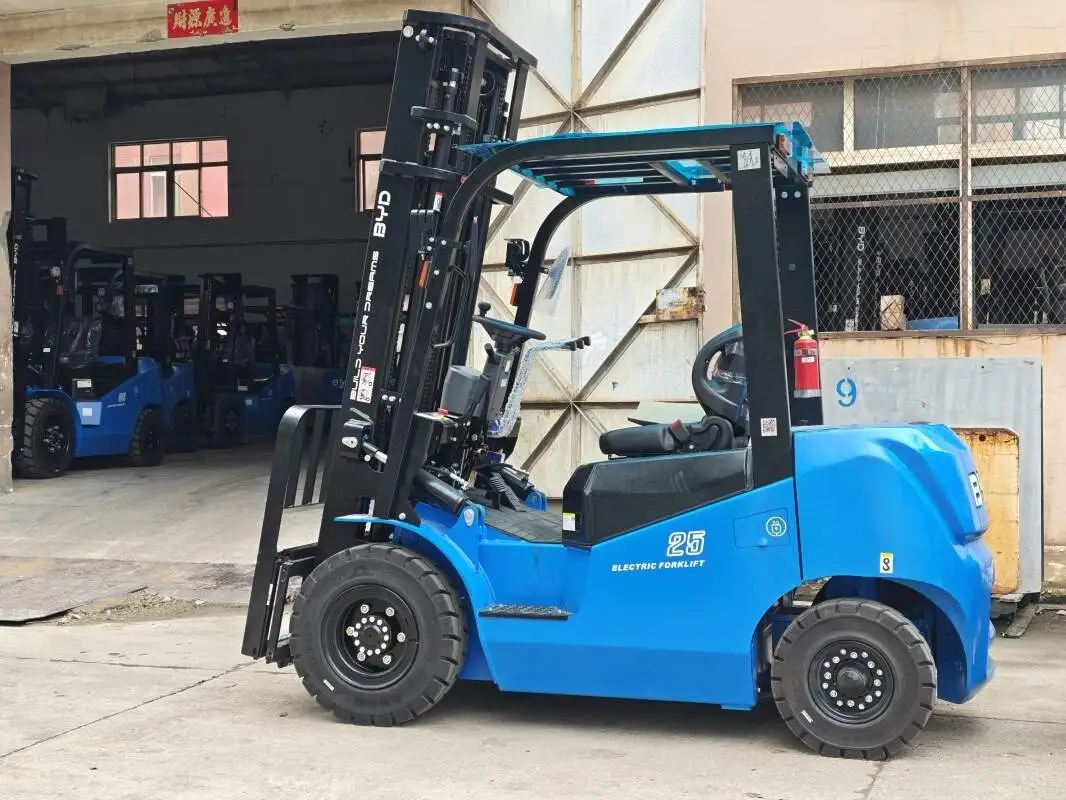
With the popularity of lithium-ion technology in the field of warehousing and logistics, lithium-ion stacker trucks and small lithium-ion forklifts have become commonly used equipment due to their environmentally friendly and efficient characteristics, but many practitioners are not clear about the functional differences between the two, making it difficult to accurately select models.
Key differences in application scenarios
Exclusive scene for warehousing and stacking: The lithium battery stacker is designed with the core design goal of stacking and shelving goods, and is mainly suitable for high-shelf operation scenarios in warehouses, such as pallet cargo storage in e-commerce warehouses and material sorting and stacking in raw material warehouses. This type of equipment is suitable for narrow channel environments and can complete high-position cargo access in limited space to meet the needs of intensive warehousing.
Multi-scene flexible adaptation: Small lithium-ion forklifts have stronger scene compatibility. In addition to basic low-shelf stacking, they can also undertake tasks such as short-distance material handling, logistics platform loading and unloading, and internal workstation transfer in the workshop. Some models can even be used outdoors to level the road surface and adapt to the multi-link linkage operation process.
Differences in functional emphasis
Professional optimization of stacking operations: Lithium-ion stacking trucks have been designed for special projects for stacking operations. The gantry structure is more stable, and the lifting height can reach 5 to 6 meters. Some models are equipped with precise lifting control devices to ensure the stability of goods in high positions and reduce the risk of goods tilting and falling.
Multi-tasking and multi-functional adaptation: Small lithium-ion forklifts focus on multi-functionality. In addition to stacking functions, some models can be equipped with attachments to achieve operations such as cargo traction and clamping, with a smaller turning radius. They can be used in small workstations in workshops and corner areas of warehouses, making them suitable for scenarios where frequent switching of work content is required.
Load and operating characteristics differences
Load and lift height matching design: The load range of a lithium battery stacker is usually 1 to 3 tons, and its lift height will be adjusted reasonably according to the load weight to ensure that high-shelf operations can be completed stably under full load conditions to meet the stacking requirements of different warehousing goods.
Operation flexibility priority design: small lithium forklift load is generally 1 to 2 tons, more emphasis on the convenience of operation, flexible steering system, low threshold operation, even novice can quickly get started, suitable for the fast pace of work, the personal flow of the scene.
Overall, the functional differences between lithium-ion stacker trucks and small lithium-ion forklifts lie in the different job positioning. Practitioners can choose more suitable equipment according to their own job scenarios, task requirements, and storage space conditions to improve work efficiency.


