
 简体中文
简体中文 繁体中文
繁体中文 Deutsch
 日本語
日本語 한국어
한국어 Tiếng Việt
 Русский
 ไทย
ไทย Bahasa Indonesia
 Bahasa Melayu
 Filipino
 لالعربية
 Français

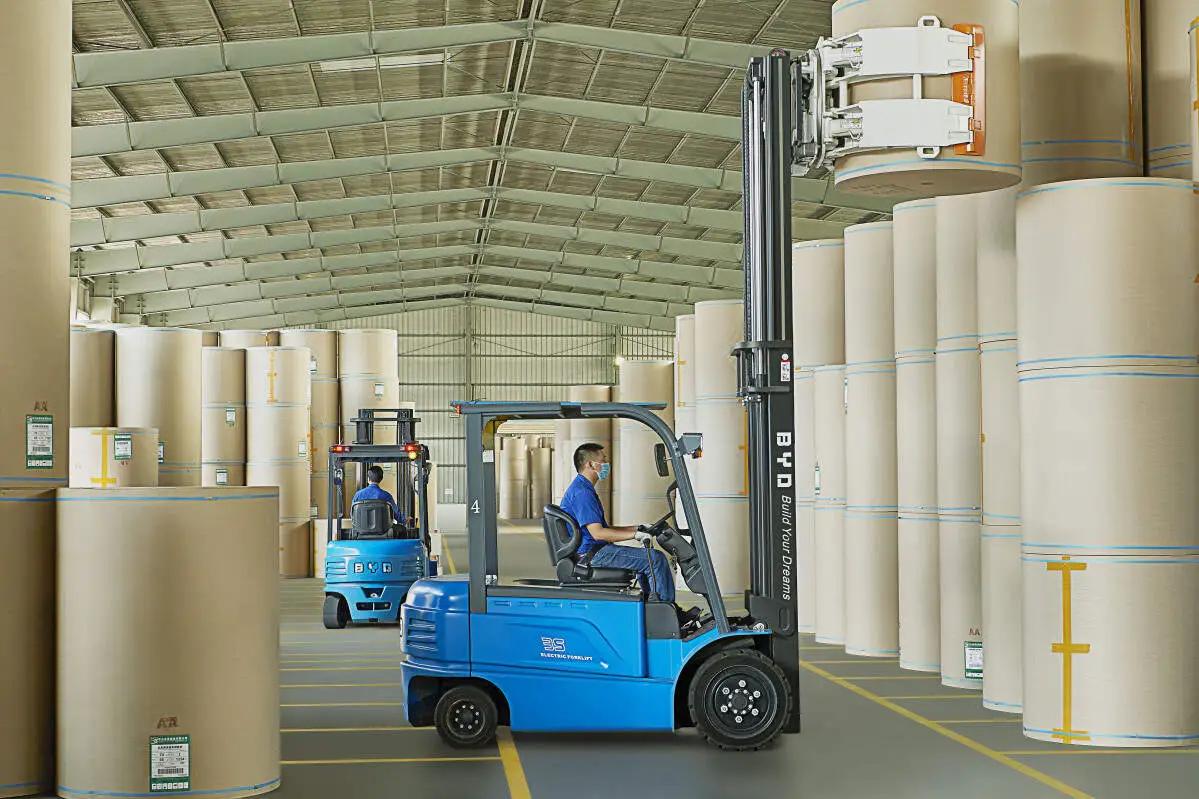
In the field of electric forklifts, 5-ton lithium-ion forklifts are widely used in warehousing, logistics, manufacturing plants and other scenarios due to their stable load capacity and clean and efficient power system. As a core component that affects their loading and unloading efficiency and applicable space, the gantry needs to be selected according to the actual operation requirements. Next, we will explain in detail the common configuration types and selection points.
Let's start with the standard door frame with a conventional lifting height. The lifting height of the standard door frame is usually between 3 meters and 4.5 meters, and the structure is relatively simple. It is composed of components such as the outer door frame, the inner door frame and the lifting cylinder. There is no full free lifting function. During the operation, before the inner door frame is lifted, the fork will be lifted by the whole door frame for a distance. This distance is called the free lifting height, which is generally 500mm to 800mm. The advantages of the standard door frame are that the manufacturing cost is low, the maintenance is convenient, and the load loss is small. It is suitable for scenes where the working space is open and the height of the door frame is not strictly limited, such as the handling of large pallets in open-air freight yards, and the sorting of low and medium-level goods in warehouses with sufficient floor height in the workshop.
Let's take a look at the single-stage full-free door frame with medium and high lifting height. The single-stage full-free door frame adds a full-free lifting cylinder on the basis of the standard door frame, which can realize the function of fully lifting the fork to the top of the inner door frame first, and then the inner door frame is lifted synchronously with the outer door frame. The free lifting height can reach about 3 meters, and the overall lifting height is usually between 4.5 meters and 6 meters. This configuration of door frames is suitable for scenarios with certain height restrictions, such as the second-floor shelves of ordinary warehouses and the loading and unloading of medium and high-rise goods in containers. The fork can be raised to a higher position without raising the door frame to avoid colliding with top obstacles. However, the load loss of a single-stage fully free gantry is slightly larger than that of a standard gantry, and the manufacturing cost will also increase accordingly.
Finally, there is the double-stage full-free gantry with high lifting height. The structure of the double-stage full-free gantry is more complicated, including two-stage inner gantry and multi-stage full-free lifting cylinder. The free lifting height can generally cover about half of the total lifting height of the gantry, and the total lifting height can reach 6 meters to 8 meters, or even higher. This configuration is mainly suitable for high-rise shelf warehouses, multi-layer container stacking and other scenarios that require extremely high lifting height, and can also cope with the environment where the height of the gantry is strictly restricted. It should be noted that the load loss of the double-stage full-free gantry is greater, the maintenance requirements are also higher, and the procurement cost is relatively high. When selecting the model, it is necessary to consider the actual operating frequency and floor height conditions comprehensively.


