
 简体中文
简体中文 繁体中文
繁体中文 Deutsch
 日本語
日本語 한국어
한국어 Tiếng Việt
 Русский
 ไทย
ไทย Bahasa Indonesia
 Bahasa Melayu
 Filipino
 لالعربية
 Français

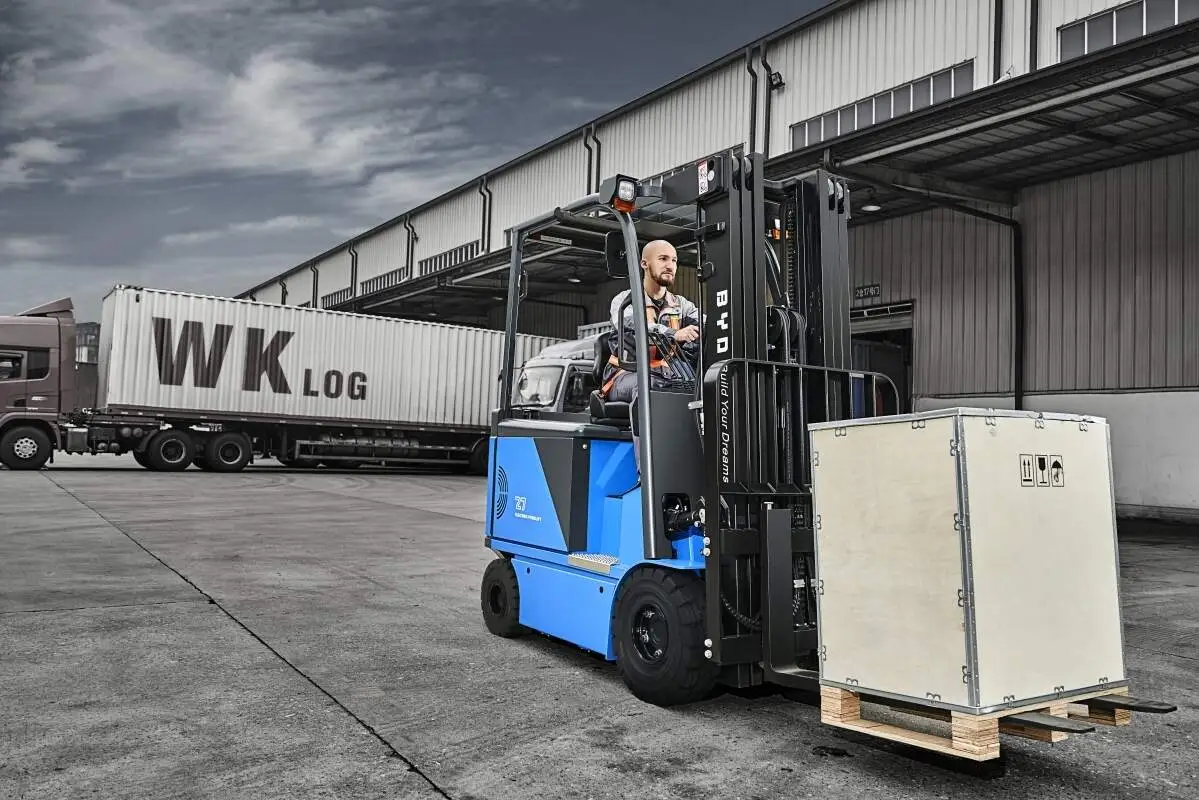
The lifting performance of this type of electric handling and stacking equipment commonly used in narrow passages is one of the core operating indicators, which is mainly reflected in multiple dimensions.
Lifting speed is a key factor that directly reflects the efficiency of the operation, and is usually measured by the average speed of the full lift and full drop of the empty-load fork and the full lift and full drop of the full-load fork. In the no-load state, the lifting power consumption of the gantry is low, and the average speed of the full lift and full drop of most equipment can be maintained at a certain level; when fully loaded, the lifting speed will be adjusted for stability and safety reasons, and the power system will output matching torque to ensure a smooth and controllable lifting process.
The fully free feature is one of its core advantages. The inner gantry, middle gantry, and fork rack of this kind of gantry can perform some actions in sequence or synchronously. When the fork rack rises before the inner and middle gantry, it can achieve the effect that the height of the gantry does not rise when the fork is slightly lifted and low-level stacking, which greatly reduces the requirements for the height of the top of the working space. It is suitable for use in scenes where the factory building is low and the top floor of the shelf is close to the ceiling. It can also be used flexibly in confined spaces such as containers.
The field of vision design is also closely related to the performance of lifting. Some equipment will optimize the column spacing and cylinder layout of the inner and middle gantry during the design of the gantry to reduce the occlusion of the driver's line of sight, especially when the fork is raised to a medium and high position. A good field of vision can help the driver more accurately align the goods, improve the safety and efficiency of the operation, and avoid repeatedly adjusting the position of the fork due to line of sight obstruction, which indirectly reduces the number of repetitions of the lifting action and reduces power consumption.
The stability of the lifting process is the foundation of safe operation. This type of equipment adopts a three-point structure, which itself has good stability when turning and traveling. During the lifting of the gantry, especially when the full load is lifted to a high position, the rigid design of the gantry, the synchronicity of the cylinder control, and the reasonable distribution of the body weight work together to effectively reduce the shaking of the gantry and the risk of the body rolling, ensuring the safety of goods and personnel.
In terms of scene adaptation, combined with the characteristics of three fully free gantries and three pivots, this type of equipment is mainly suitable for narrow-channel cargo stacking in warehousing and logistics, material transfer and storage in workshops, and cargo loading and unloading in containers. It can better meet the needs of cargo lifting in different spaces.


