
 简体中文
简体中文 繁体中文
繁体中文 Deutsch
 日本語
日本語 한국어
한국어 Tiếng Việt
 Русский
 ไทย
ไทย Bahasa Indonesia
 Bahasa Melayu
 Filipino
 لالعربية
 Français

In-depth interpretation of load performance
Reasonable load design logic
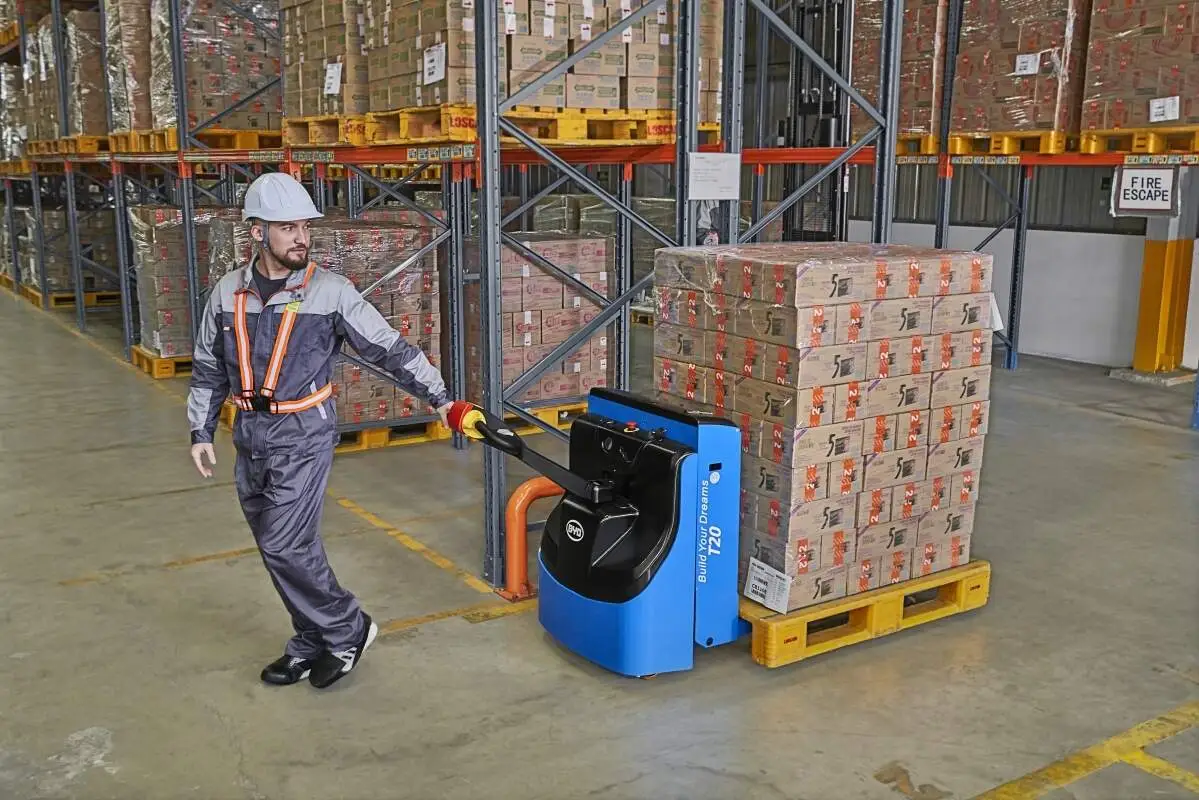
The load design of a walking stacker needs to take into account both operational flexibility and load-bearing capacity. The S15PS-I model adopts a reinforced frame structure for the characteristics of walking operation. By optimizing the load distribution path, the weight of the goods is evenly transmitted to each support point of the frame to avoid structural deformation caused by local stress concentration. At the same time, the supporting lifting system adopts a synchronous design to ensure that the goods remain level during the lifting process and further improve the stability under load conditions.
Actual load performance analysis
Under standard operating conditions, the equipment can stably reach the rated load to meet the cargo handling needs of daily warehousing and logistics scenarios. When the goods are slightly biased, the equipment can still maintain the basic operation stability, but long-term partial load operation may affect the service life of components, so it is recommended to ensure that the center of gravity of the goods is centered as much as possible during operation. In addition, when the lifting height reaches the upper limit, the load needs to be appropriately reduced to comply with safe operation specifications.
Comprehensive analysis of climbing performance
The core influencing factors of climbing performance
Climbing performance is influenced by many factors, first of all, the output capacity of the power system, stable power output is the foundation of climbing; secondly, the grip of the tire, the appropriate tire texture can improve the friction on different ground; in addition, the weight distribution of the vehicle, the slope and surface flatness of the ramp will also affect the climbing performance.
Climbing adaptation under different working conditions
In an indoor level ramp environment, when the slope is within the normal range, the equipment can complete the ramp operation with full load to meet the needs of cargo transfer between warehouse floors. If the ramp is slightly bumpy or the slope is slightly larger, it is recommended to reduce the load appropriately, and at the same time maintain a uniform speed to avoid sudden acceleration or sudden braking to ensure the safety of the operation. When working on outdoor non-hardened pavement ramps, it is necessary to check the road condition in advance to avoid working on slippery or gravel-prone ramps.


