
 简体中文
简体中文 繁体中文
繁体中文 Deutsch
 日本語
日本語 한국어
한국어 Tiếng Việt
 Русский
 ไทย
ไทย Bahasa Indonesia
 Bahasa Melayu
 Filipino
 لالعربية
 Français

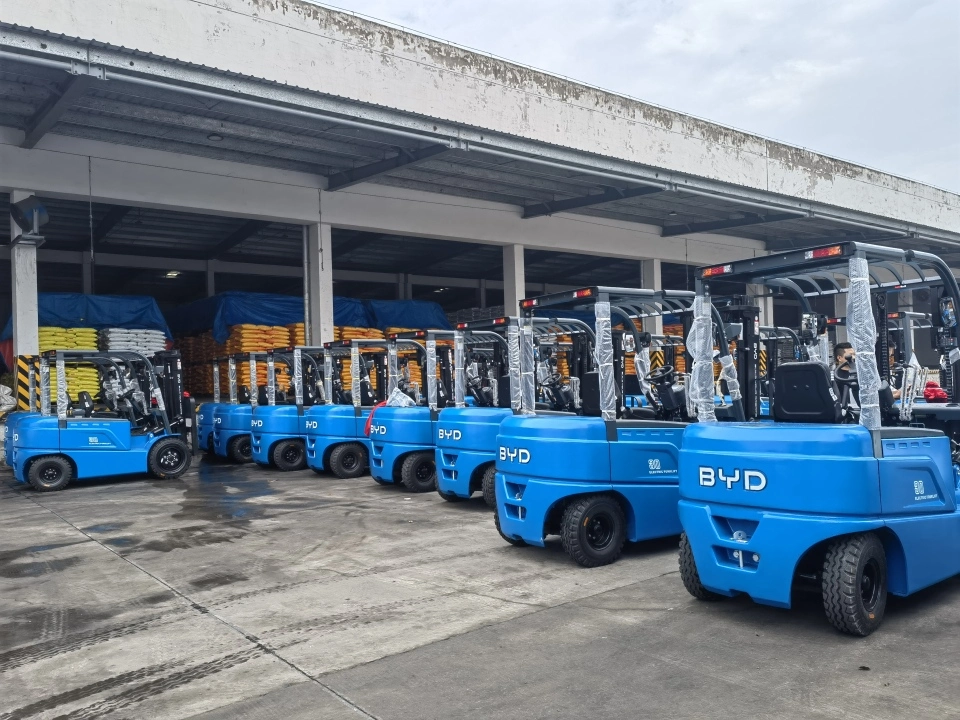
Electric forklifts have become the core handling equipment in the field of modern logistics and warehousing due to their environmentally friendly and efficient characteristics. As two types of mainstream electric forklifts, counterweight and forward-moving are obviously different in application scenarios due to structural differences. Clear these differences can help enterprises accurately match needs and improve operational efficiency.
Application Scenarios of Counterbalance Electric Forklift
Outdoor open operation scenario: The counterweight electric forklift has its own counterweight block, which is highly stable and does not need to rely on external support. It is suitable for long-distance cargo transfer in open areas such as open freight yards and outdoor docks in the factory, and is not limited by space.
Large load handling requirements: This type of forklift truck structure is designed to withstand large loads and is suitable for handling heavy pallet cargo, large equipment, and other handling operations to meet the transshipment requirements of heavy materials in industrial production.
Complex ground operation environment: its chassis is high, the tire grip is strong, it can adapt to complex road conditions such as outdoor gravel ground and slightly bumpy factory roads, and it has a stronger ability to deal with uneven ground operations.
Application Scenarios of Reach Electric Forklift
Narrow storage space operation: The door frame of the forward forklift can drive the fork to extend forward, and the goods can be accessed without moving the body. The body is compact, suitable for indoor operations with narrow warehouse passages and limited space, effectively improving the utilization rate of storage space.
High-rise shelf access operations: This type of forklift has a high lifting height and can be used with high-rise shelves to complete multi-layer cargo access. It is suitable for high-rise storage scenarios such as three-dimensional warehouses and e-commerce warehouses.
Light and medium load frequent handling: Reach forklifts focus on flexibility and are suitable for frequent handling of moderate-weight goods, such as small pallets in e-commerce warehouses, turnover of goods in retail warehouses, etc., which can quickly complete the operation cycle in a small space.
When selecting a business model, it is necessary to consider the operating space, load weight, operating environment, and storage requirements comprehensively. Balanced forklifts are suitable for outdoor heavy-duty operations, and forward-moving forklifts are suitable for indoor narrow spaces and high-level storage operations. Reasonable selection can reduce operating costs and improve handling efficiency.


