
 简体中文
简体中文 繁体中文
繁体中文 Deutsch
 日本語
日本語 한국어
한국어 Tiếng Việt
 Русский
 ไทย
ไทย Bahasa Indonesia
 Bahasa Melayu
 Filipino
 لالعربية
 Français

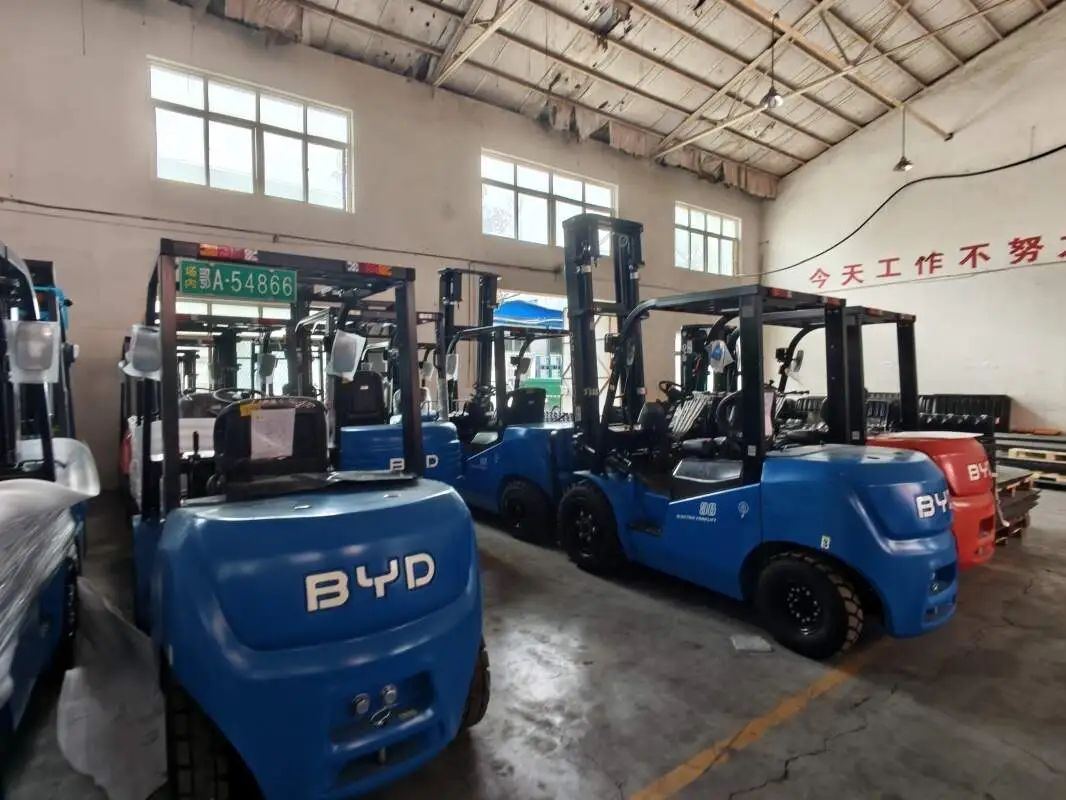
In warehousing and logistics operations, the selection of forklift equipment directly affects operating efficiency and space utilization. Reach forklifts and three-way stackers, as commonly used high-level warehousing equipment, have significant differences in operating conditions.
Shelf type and work space adaptation
Space requirements for reach forklifts
The forward-moving forklift is more suitable for conventional beam-type shelf storage scenarios. This type of shelf layout is relatively loose, and the channel width usually needs to be reserved for 2.5 meters to 3 meters to meet the operating space for forklifts to move forward and turn around. It relies on the forward movement of the gantry to achieve goods access. In the scene where the shelf depth does not exceed 1.5 meters, it can stably complete the handling and stacking of goods, and is suitable for small and medium-sized warehousing or areas with medium frequency of goods circulation.
Narrow Lane Adaptation of Three-way Stacker
The three-way stacker is designed for narrow roadway shelves with high-density storage, and the width of the working channel can be compressed to 1.2 meters to 1.8 meters, which is far less than the needs of reach forklifts. It has a three-way rotating fork frame structure, which does not require the whole vehicle to turn around. It can complete the goods access of the shelves on both sides only through the left and right rotation of the fork frame, and can maximize the use of storage space. It is suitable for large three-dimensional warehouses or cold chain and e-commerce warehousing scenarios that pursue storage density.
Operating height and stacking requirements differences
Operating height range of reach forklift
The operating height of the reach forklift is usually between 6 meters and 10 meters. The gantry structure combines stability and flexibility, making it suitable for the operation of goods on medium and high shelves. At the same time, it can handle goods from the ground to the shelf for short distances. It has obvious advantages in scenarios where the shelf height is moderate and the goods need to be circulated across regions.
The advantages of high-level operation of three-way stackers
The working height of the three-way stacker can reach more than 12 meters, and its fuselage design is more compact, with a lower center of gravity. It is more stable when stacking at high levels, and is suitable for storage operations of super high-rise three-dimensional shelves. It is especially suitable for static storage areas with multiple categories of goods and high storage heights that do not require long-distance handling.
The distinction between cargo handling and circulation efficiency
Multi-Scene Circulation of Reach Forklift
The forward-moving forklift has good ground driving performance. In addition to shelf stacking operations, it can also complete the long-distance handling of goods from the storage area to the shelf area, shelf area to the outbound area. It is multi-purpose and suitable for warehousing scenarios with complex cargo circulation paths and cross-regional operations.
Focused stacking operation of three-way stacking truck
The three-way stacker truck's ground speed is relatively slow, and it focuses more on stacking and storage operations in narrow lanes. In scenarios where goods do not need to be transported over long distances and only need to be loaded and unloaded in fixed lanes, it can improve operation efficiency and reduce passage occupancy time with a compact structure.
Overall, enterprises need to consider factors such as storage space layout, shelf height, and cargo circulation requirements when selecting models, and match the corresponding forklift equipment to maximize storage operation efficiency.


