
 简体中文
简体中文 繁体中文
繁体中文 Deutsch
 日本語
日本語 한국어
한국어 Tiếng Việt
 Русский
 ไทย
ไทย Bahasa Indonesia
 Bahasa Melayu
 Filipino
 لالعربية
 Français

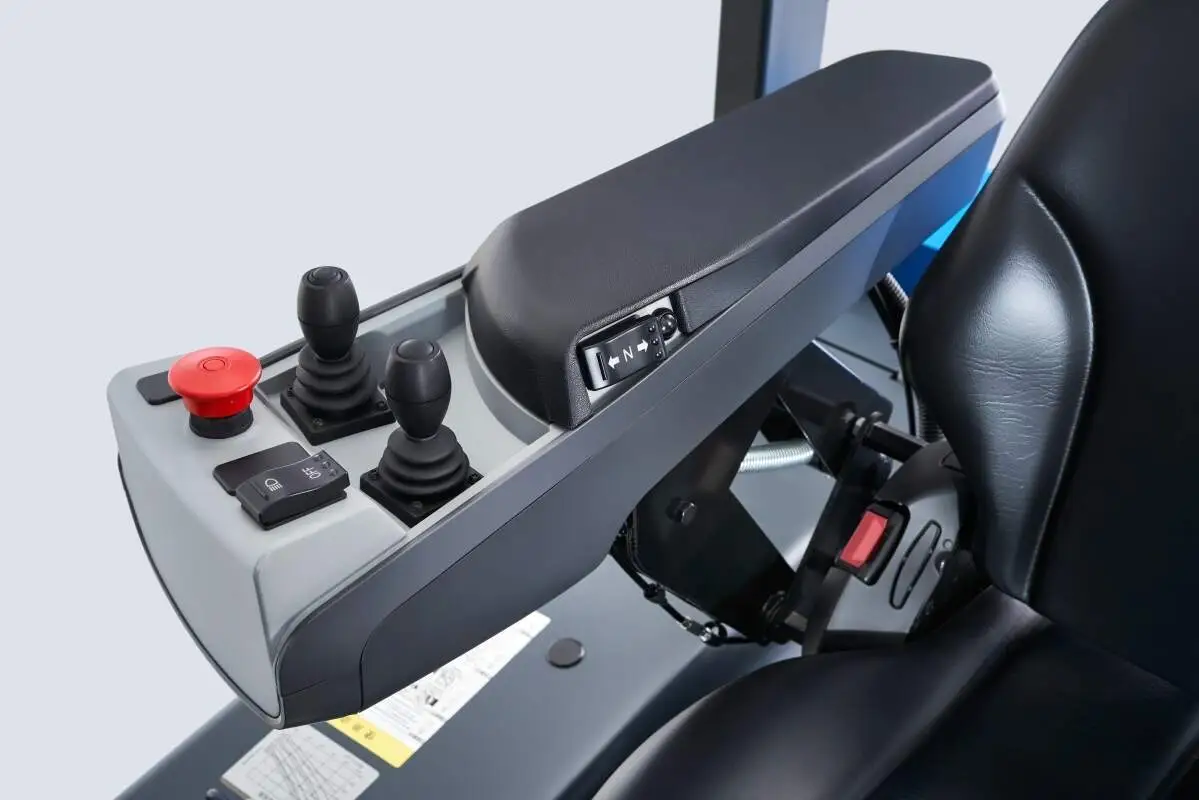
There are a large number of electronic components and raw materials that are sensitive to static electricity and open flames in the electronic raw material workshop. Therefore, lithium-ion forklifts with anti-static and explosion-proof functions must be used to carry out material transfer operations to ensure production safety. The following are detailed instructions for the use of this type of forklift.
Preparation before use
First of all, check the status of the vehicle. It is necessary to confirm that the anti-static grounding device of the forklift is in good condition and effective, the explosion-proof parts are not damaged or loose, the lithium battery is fully charged and there is no leakage, the braking system and steering system are operating normally, and the fork is flexible to lift. Secondly, prepare for personal protection. Operators need to wear anti-static work clothes and anti-static shoes. It is strictly forbidden to carry fire, flammable and explosive items into the work area. Long hair needs to be tied tightly and put into the work cap.
Operating specifications in use
It is necessary to pay attention to the driving operation. When driving in the workshop, the speed shall not exceed the specified limit. When turning and passing through narrow passages, it is necessary to decelerate in advance, observe the surrounding environment, and avoid colliding with shelves, equipment and personnel. During the operation, it is strictly forbidden to accelerate and brake suddenly to prevent the material from slipping or generating static sparks. In terms of operation, when forking materials, it is necessary to adjust the spacing of the forks, insert them into the bottom of the tray smoothly, and lift them slowly to ensure that the material is placed smoothly on the fork. Overloading operations are strictly prohibited. During the transfer process, the height of the material shall not obscure the operator's line of sight. If ultra-high transfer is required, a special person shall be arranged to command. When operating close to the storage area of electronic raw materials, it is necessary to maintain a safe distance to avoid
Post-use maintenance and storage
After the operation, it is necessary to park the forklift in the designated explosion-proof area, turn off the power switch, pull up the handbrake, and reduce the fork to the lowest position. After the daily operation is completed, the forklift needs to be cleaned to remove the dust and material residue on the surface, check the conductivity of the anti-static grounding device, whether the explosion-proof parts are worn or not, and clean the dust on the surface of the lithium battery in time to ensure good heat dissipation. Regularly carry out a comprehensive overhaul of the forklift in accordance with the maintenance manual, including explosion-proof seals, anti-static components, lithium battery performance, etc. If any problems are found, report for repair in time. It is strictly forbidden to operate with faults.
emergency response
If there is an abnormal static electricity, lithium battery heating, explosion-proof parts damage, etc., during the operation, it is necessary to stop the operation immediately, evacuate to a safe area, cut off the power supply of the forklift, and report it to the workshop management in time, and the professionals will investigate and deal with it. In the event of an emergency such as material spilling or suspected fire, corresponding measures should be taken according to the workshop emergency plan, and if necessary, call the emergency rescue phone.


