
 简体中文
简体中文 繁体中文
繁体中文 Deutsch
 日本語
日本語 한국어
한국어 Tiếng Việt
 Русский
 ไทย
ไทย Bahasa Indonesia
 Bahasa Melayu
 Filipino
 لالعربية
 Français

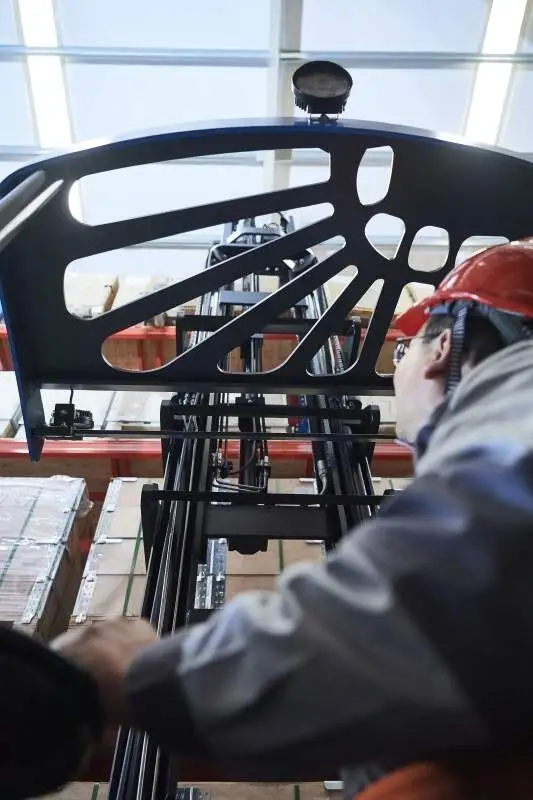
Stand-by and ride-forward lithium-ion forklifts are two core devices commonly used for high-rise shelf access in warehousing and logistics. They share the same power core, but each has its own emphasis on usage scenarios and experiences.
First look at the difference between operating flexibility and space adaptability. The overall body length of the stand-up forklift is short, the stand-up operation does not require extra space for seat adjustment and loading and unloading, and the turning radius is usually smaller than that of the same size car. This design makes it more suitable for working in narrow passages, temporary handling points, or environments that require frequent loading and unloading, such as shuttling between multiple rows of high-rise shelves, or cooperating with material turnover on the assembly line. The body size of the seat-forward lithium-electric forklift is larger, the operating area is relatively fixed, and the turning radius is slightly larger. However, in the scenario of long-distance handling in a straight line, continuous work, and no need to go up and down frequently, the steering and driving stability are slightly superior. It is suitable for large storage environments with relatively abundant channel widths and fixed operating routes.
Let's talk about the characteristics of operation time and load efficiency. The two devices use the same lithium battery power, and the battery life capacity is mainly affected by the battery capacity, load size and operating frequency. Under the same conditions, there is no essential difference. In terms of load efficiency, some specifications of the drive-forward lithium forklift can carry slightly larger counterweights. At the same lifting height, there may be a slightly wider range of load application, but the difference is not significant. For high-level access operations, the lift height coverage of the two is basically the same, and both can meet the multi-layer shelf requirements of conventional warehousing.
Finally, let's talk about the difference between the driving experience and the applicable crowd. During the stand-up operation, the operator needs to stand all the way, which is suitable for scenes where the single operation time is not long and the handling distance is close. It is also convenient to check the location of the goods and the surrounding environment at any time. The threshold for beginners to get started is relatively low. The seat-driving operation has the support of seats, backrests and armrests, which can effectively relieve the operator's fatigue. It is more suitable for scenes where the continuous operation time is long and the single handling distance is long, but the operator needs a certain amount of time to adapt to the steering and lifting control rhythm of the vehicle, and the requirements for driving proficiency are slightly higher.
When selecting two types of equipment, it is recommended to consider factors such as your own storage space, operation route, single operation time, and cargo conditions. You don't need to pursue one type blindly, but find the equipment that suits your needs.


