
 简体中文
简体中文 繁体中文
繁体中文 Deutsch
 日本語
日本語 한국어
한국어 Tiếng Việt
 Русский
 ไทย
ไทย Bahasa Indonesia
 Bahasa Melayu
 Filipino
 لالعربية
 Français

Practical Guide for Selection of Reach Lithium Battery Forklifts in Food and Medicine Workshops
In the core link of food and medicine production and storage, the compliance and applicability of handling equipment are crucial. Reach lithium battery forklifts have become a common choice for clean or semi-clean workshops due to their flexibility and compactness, zero exhaust emissions and other characteristics. The following is to sort out the selection points from the core dimension to help match the actual operation needs.
First of all, pay attention to the material and protection level. Food and medicine workshops have clear requirements for environmental cleanliness and corrosion resistance of equipment. It is recommended to give priority to models with food-grade contact materials, such as the parts of the body and the fork that can contact the material. Materials that are easy to clean and have no sanitary dead ends, such as treated stainless steel, should be used. At the same time, check the protection level of the electrical system. In workshops with moisture or acid and alkali vapor, the protection level should meet the corresponding standards to avoid equipment failure or safety hazards.
The second is the battery life and charging scheme. The operation of the food and medicine workshop is usually carried out in batches, and the lithium battery pack of the appropriate capacity needs to be selected according to the data such as the daily cargo handling volume, operation time, and channel waiting time. At the same time, it is necessary to confirm whether the charging is convenient and whether the fast charging mode is supported. The fast charging time needs to be reasonable and cannot affect the production rhythm of the workshop. If the workshop space is limited, the power exchange mode can be considered, but the power exchange mode needs to be matched with the power station, and the investment needs to be evaluated in advance.
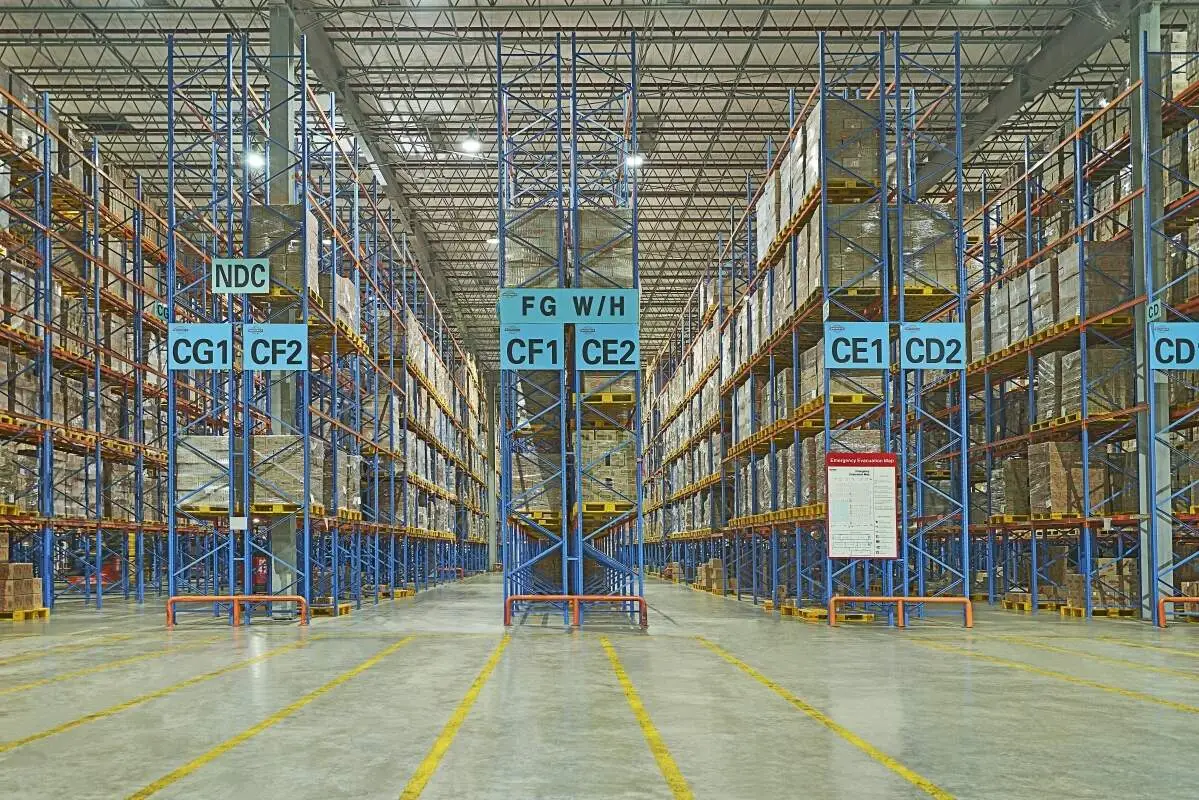
Then there is the vehicle size and channel adaptability. The passage in the food and medicine workshop is usually narrow, especially in the high-rise shelf area, and the channel width directly determines the vehicle selection. The parameters such as the forward distance of the gantry, the turning radius, and the height of the body of the forward-moving lithium battery forklift must match the space conditions such as the channel width, shelf height, and floor height of the workshop. The relevant data can be measured in advance, and then the model parameters can be compared to select to ensure the smooth passage and operation of the vehicle.
In addition, there are basic performance and additional functions of the vehicle. In terms of basic performance, we should pay attention to the rated load, lifting height, driving speed, climbing ability, etc., to ensure that the needs of cargo handling and stacking can be met. In terms of additional functions, you can choose according to the characteristics of workshop operations, such as models with position sensors, which can locate goods more accurately; models with mute devices can reduce workshop noise; models with safety warning devices can improve job safety.


