
 简体中文
简体中文 繁体中文
繁体中文 Deutsch
 日本語
日本語 한국어
한국어 Tiếng Việt
 Русский
 ไทย
ไทย Bahasa Indonesia
 Bahasa Melayu
 Filipino
 لالعربية
 Français

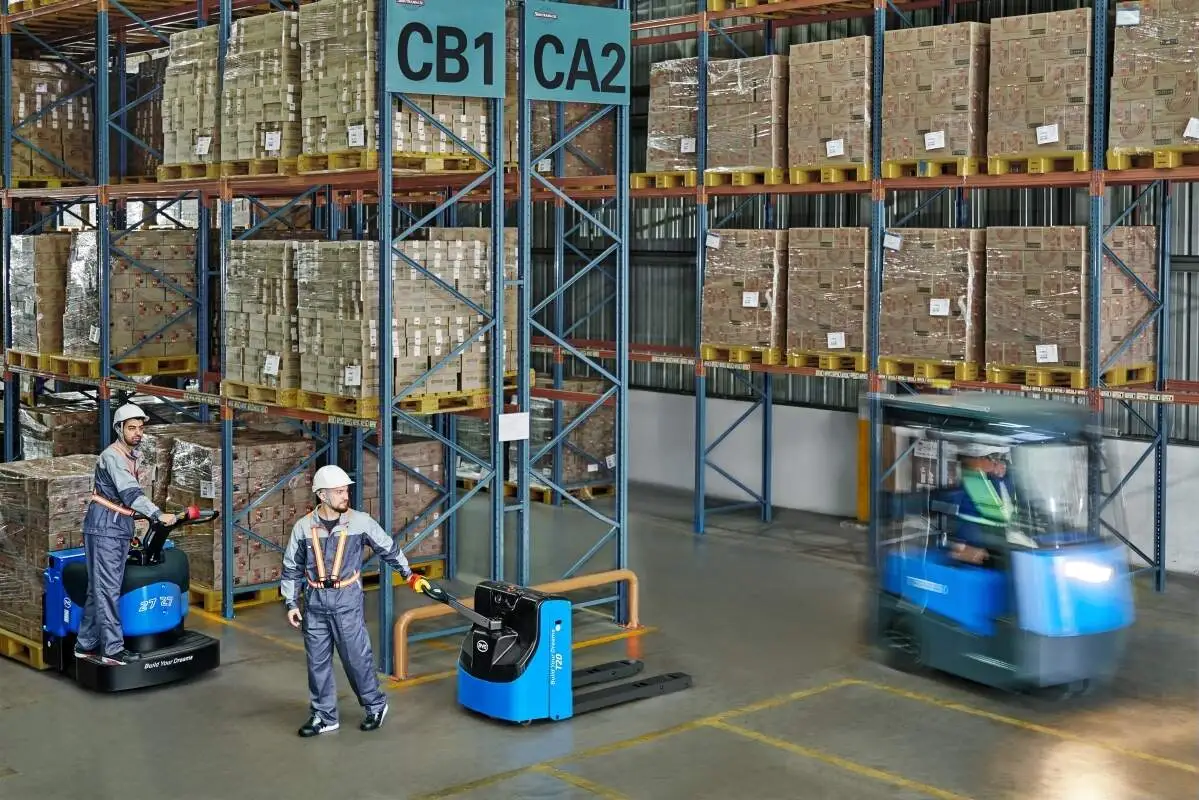
For small and medium-sized warehouses with stable or steady growth in business volume, handling costs usually account for a large proportion of daily operating costs, and it is particularly critical to choose handling equipment with strong adaptability and low comprehensive cost. From the perspective of electric forklift experts, lithium-ion forklifts are currently one of the high-quality choices for most small and medium-sized warehousing scenarios. The following are combined with actual scenarios and needs to share a set of practical lithium-ion forklifts selection and application solutions.
First of all, it is necessary to clarify the core needs and scene characteristics of small and medium-sized warehouses. The space of such warehouses is often not open, the width of cargo passages is relatively limited, the operation time is mostly 8 to 12 hours during the day, and some have the need for temporary replenishment at night. In addition, the professional operation level of warehousing personnel may vary, and the equipment is easy to operate and safety requirements are high. In these scenarios, the characteristics of lithium-ion forklifts can be better played.
Next is the suggestion of adaptability selection. The first thing to consider is the width of the channel. Warehouses with narrow channels (such as about 1.8 meters to carry pallet goods) can choose a three-point balance heavy lithium battery forklift. This type of forklift has a small turning radius and can be flexibly shuttled; if the channel is slightly wider (more than 2.5 meters) and needs to carry heavier goods, a four-point balance heavy lithium battery forklift can be selected, which has better stability and a wider load range. Second, consider the working time. If you work for about 8 hours a day, choose a standard capacity lithium battery to meet the demand. Generally, you can use the fast charging function to replenish part of the power during the noon break. If there is about 12 hours of continuous operation, you can choose a dual battery pack rotation or a large-capacity battery model. Third, consider the characteristics of the goods. For light-duty goods, choose a small-load storage lithium-ion forklift; for heavy or irregular goods, adjust the load and fork gear configuration accordingly. Some models can also be equipped with custom attachments, but the choice of attachments should be combined with the actual frequency of use to avoid unnecessary costs.
Then there are specific practical methods to reduce handling costs. First, it is necessary to plan the charging time reasonably, use the fragmented time of workers to rest to charge, and do not wait until the power is completely exhausted before charging, which can prolong the service life of lithium batteries and reduce battery replacement costs. Second, it is necessary to do a good job of equipment maintenance on a regular basis. The maintenance cost of lithium electric forklifts is relatively low. It is mainly to clean the forks, check the tire wear, regularly replenish the tire pressure and other daily basic maintenance, as well as conduct professional inspections according to the time interval required by the manufacturer, replace the wearing parts in time, avoid equipment failure affecting the operation efficiency, and increase additional maintenance costs. Third, it is necessary to improve the professional level of operators, organize simple operation training regularly, so that operators are familiar with the performance and operation specifications of the equipment, and reduce equipment damage and goods loss caused by improper operation.


