
 简体中文
简体中文 繁体中文
繁体中文 Deutsch
 日本語
日本語 한국어
한국어 Tiếng Việt
 Русский
 ไทย
ไทย Bahasa Indonesia
 Bahasa Melayu
 Filipino
 لالعربية
 Français

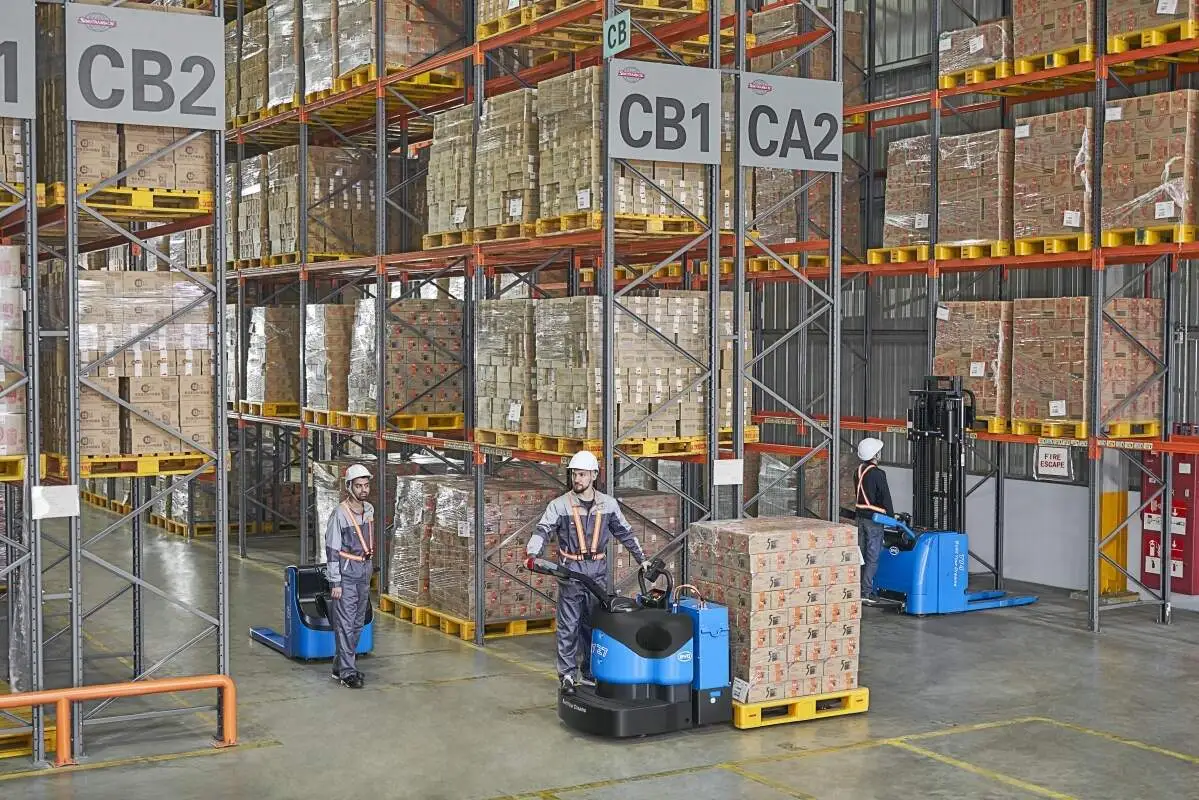
Reach-type lithium forklifts are widely used in warehouses, logistics centers, and other scenarios because they are suitable for narrow-channel storage operations. Battery life and charging time are the core concerns when selecting and using such equipment.
There are many factors that affect the battery life of a reach lithium battery forklift. The first is the battery capacity. In other similar conditions, batteries with higher capacity values usually have a longer working time after a single charge. The second is the working environment. For example, the slope of the site is large, the ground of the channel is uneven, the weight of the goods is generally close to the rated load of the equipment, and the ambient temperature is too high or too low, which will increase the energy consumption of the battery, thereby shortening the single battery life. Finally, daily use habits, such as frequent emergency stops and sudden turns during operation, long-term idling of the equipment but not turning off the power, and unreasonable load placement, may also have a certain impact on the battery life.
The conventional charging time of a forward-moving lithium forklift can be divided into two types: fast charging and slow charging. Generally speaking, slow charging refers to the use of a conventional charger to fully charge from a low power state, which takes several hours. This charging method has relatively little loss to the battery and is suitable for use at night or when the equipment is idle for a long time. Fast charging refers to the use of an appropriate fast charging device that can charge the battery to a higher power ratio in a short time. For example, in some cases, it can be charged to more than half in dozens of minutes. It is suitable for temporary replenishment between operations. However, frequent use of fast charging for a long time may affect the service life of the battery.


