
 简体中文
简体中文 繁体中文
繁体中文 Deutsch
 日本語
日本語 한국어
한국어 Tiếng Việt
 Русский
 ไทย
ไทย Bahasa Indonesia
 Bahasa Melayu
 Filipino
 لالعربية
 Français

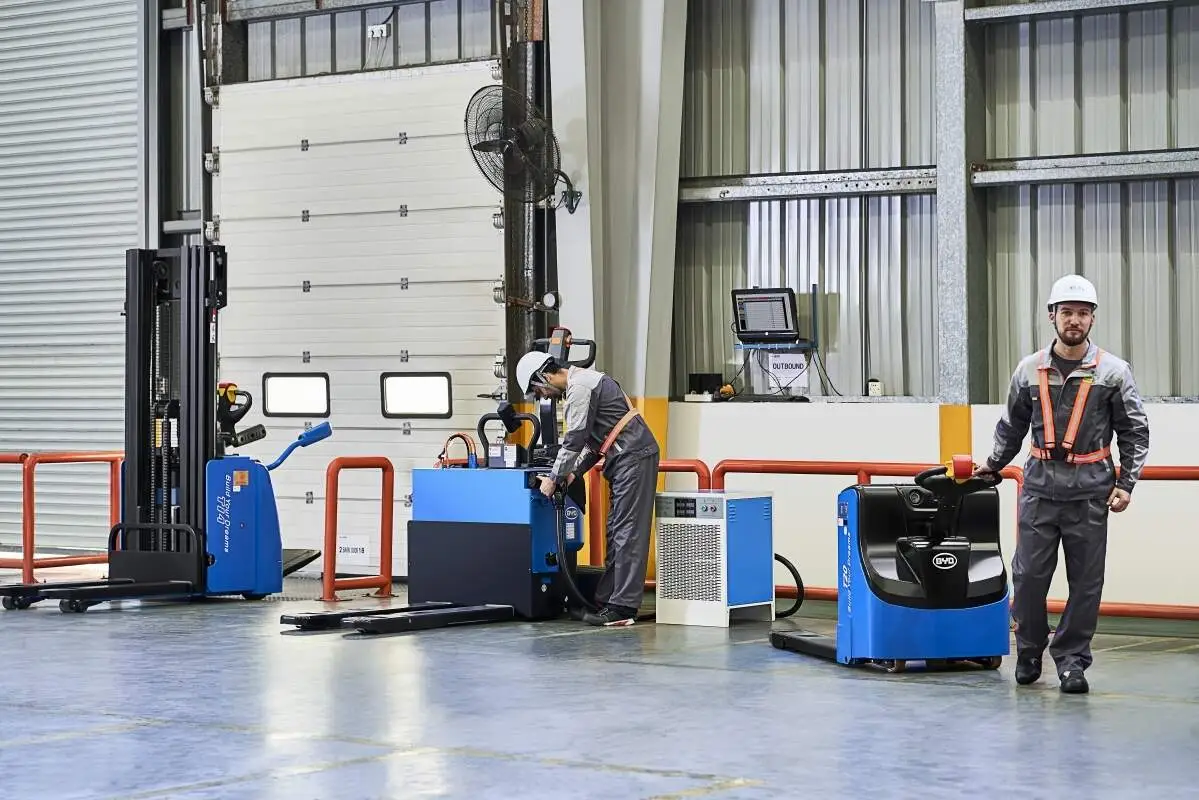
Under multi-shift warehousing conditions, forklifts are used with high intensity and long operation time, and long-term use expenses have become one of the core considerations for enterprise selection and operation. Lithium-ion forklifts have gradually become the mainstream choice for such scenarios due to their environmentally friendly and efficient characteristics, but their long-term cost structure needs to be carefully analyzed in combination with actual operation requirements.
Reasonable planning of procurement costs Multi-shift operations have high requirements on the endurance and stability of forklifts. When purchasing, it is necessary to match the requirements of working conditions to avoid excessive selection to increase initial investment. At the same time, it is necessary to consider the battery configuration adapted to multiple shifts, choose the capacity that can cover the continuous operation time, balance the initial procurement cost and subsequent use efficiency, and avoid frequent power changes due to insufficient battery capacity affecting the rhythm of the operation.
Energy consumption and charging cost control The energy consumption cost of lithium-ion forklifts mainly comes from electricity, and the cost can be reduced by reasonably planning the charging time under multi-shift operations. Using the charging period of the power grid low electricity price can effectively reduce the daily energy consumption cost; at the same time, the installation and maintenance costs of supporting charging facilities also need to be taken into account. Efficient charging piles can not only shorten the charging time, but also reduce the indirect losses caused by idle equipment.
Long-term investment in maintenance Long-term multi-shift operation will accelerate the loss of forklift parts. Lithium forklift maintenance focuses on battery management, motor system and hydraulic components. Regular battery status inspection, circuit investigation, and timely replacement of wearing parts are all components of long-term costs. Standardized maintenance plans can reduce the probability of downtime, avoid sudden failures affecting the efficiency of storage operations, and then control additional losses.
The cost of residual value recovery offsets the battery life of lithium-ion forklifts. Reasonable use and maintenance can prolong the battery life and increase the recycling value of used forklifts. When calculating long-term expenses, residual value recovery can partially offset the initial purchase cost. Enterprises need to pay attention to the law of battery attenuation and improve the long-term value of equipment through scientific operation.
Overall, the long-term use cost of lithium-ion forklifts under multi-shift storage conditions is a multi-dimensional system including procurement, energy consumption, maintenance, and residual value. Enterprises need to carefully calculate the costs of each link in combination with their own operating scenarios in order to make more suitable selection and operation decisions and achieve long-term cost optimization.


