
 简体中文
简体中文 繁体中文
繁体中文 Deutsch
 日本語
日本語 한국어
한국어 Tiếng Việt
 Русский
 ไทย
ไทย Bahasa Indonesia
 Bahasa Melayu
 Filipino
 لالعربية
 Français

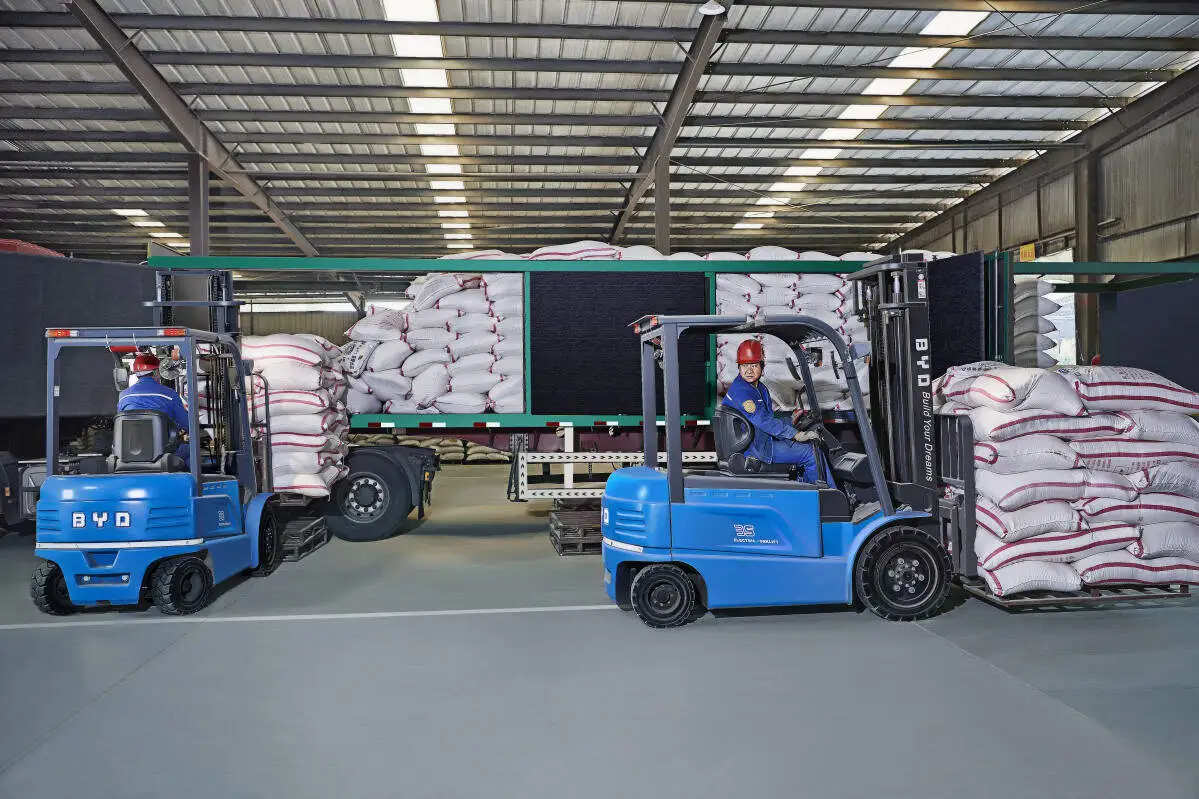
The dust-free environment of food storage has special requirements for lithium-ion forklifts, which are different from the operation scenarios of ordinary industrial storage. Food, especially the storage area where food is directly imported, has strict hygiene control for dust, odor, metal debris, oil leakage, etc. At the same time, it is necessary to meet the efficiency and safety requirements of storage. Therefore, when selecting such lithium-ion forklifts, comprehensive consideration is required from various aspects.
The core requirement of a dust-free environment for a lithium-ion forklift truck in food storage is cleanliness. The body cannot have a structure that is easy to hide dirt, such as excess welding gaps, removable rough parts, etc. At the same time, it is necessary to avoid using materials that may produce odors or release harmful substances to ensure that the vehicle will not contaminate food or packaging materials during long-term operation. Secondly, sealing. Key components of the vehicle, such as the battery compartment, motor compartment, and hydraulic system, need to be treated with dustproof and waterproof treatment to prevent dust in the storage environment from entering the interior and affecting the service life, and to avoid internal oil or coolant leakage to the outside. Finally, safety, including the vehicle's driving stability, braking reliability, and battery safety, to avoid safety accidents caused by vehicle failure or battery problems.
The specific selection direction of the dust-free lithium forklift for food storage can be started from several aspects. First, the material and structure of the car body, try to choose stainless steel or food-grade engineering plastics with smooth surface as the main material for the body to contact the outside, reduce the possibility of dust adhesion, and at the same time, the body structure should be simplified as much as possible, using an integrated or seamless welding design, the number of detachable parts is as small as possible, and the connection should be flat and free of protrusions. Second, the sealing design of key components. The battery compartment should achieve a high level of dustproof and waterproof. The motor compartment can be closed or semi-closed and equipped with a dust net. The hydraulic system should use corrosion-resistant seals to prevent oil leakage. The third is the choice of power and tires. In terms of power, motors with appropriate power and batteries of appropriate capacity should be selected according to the actual needs of the shelf height, channel width, and weight of the goods stored in the warehouse to avoid the situation of large horse-drawn carts or small horse-drawn carts. Tires should be made of non-marking polyurethane or rubber to prevent traces or debris from being left on the ground.
In addition, the post-maintenance of dust-free lithium-ion forklifts for food storage cannot be ignored. A qualified and responsive maintenance team should be selected to regularly clean, inspect and maintain the vehicle to ensure that it is always in good working condition. At the same time, a sound maintenance record should be established to facilitate subsequent traceability.


