
 简体中文
简体中文 繁体中文
繁体中文 Deutsch
 日本語
日本語 한국어
한국어 Tiếng Việt
 Русский
 ไทย
ไทย Bahasa Indonesia
 Bahasa Melayu
 Filipino
 لالعربية
 Français

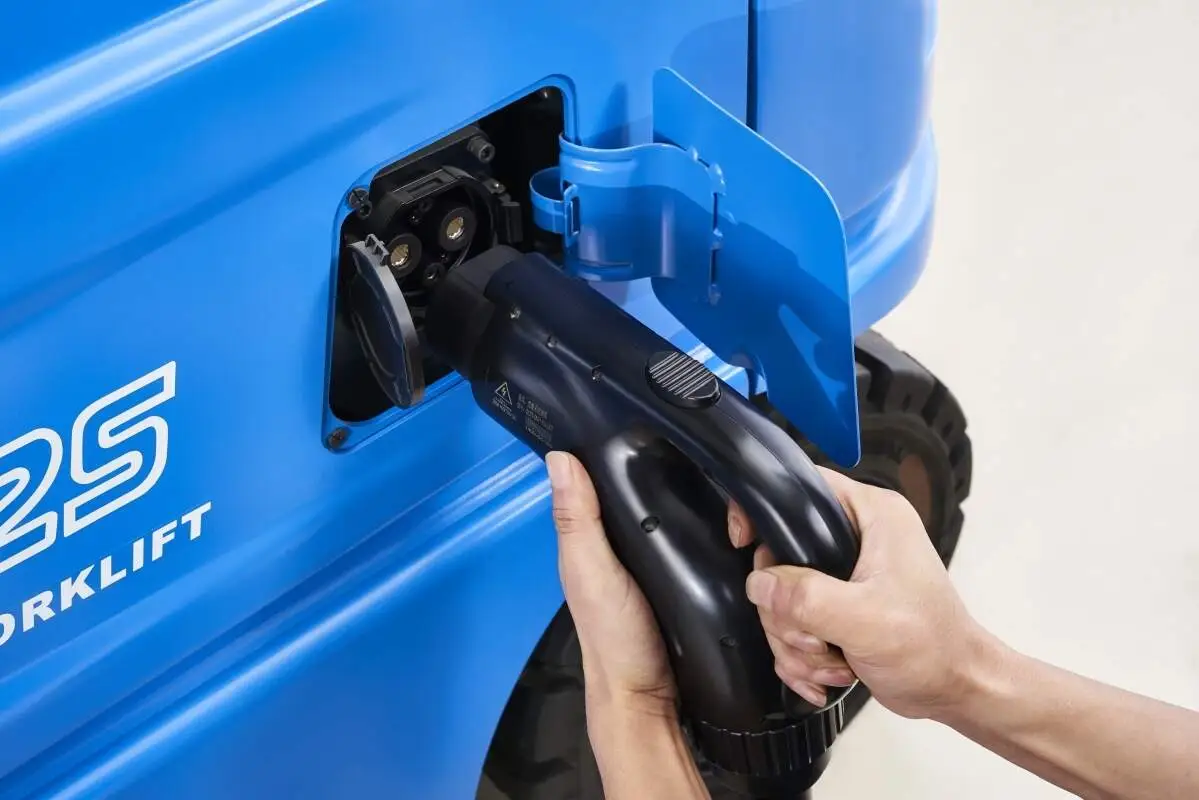
Small lithium-ion forklifts are widely used in warehousing, supermarkets, e-commerce distribution and other scenarios due to their environmental protection and flexibility. At present, the mainstream energy replenishment methods are power replacement and fast charging. The core differences between these two types are mainly reflected in the energy replenishment related links and adaptation conditions.
From the perspective of energy replenishment efficiency, the power replacement small lithium-ion forklift has a short replenishment time, usually completing the replacement of the entire battery pack within a few minutes, and the vehicle can be quickly put into use to reduce the interruption caused by replenishment. The fast charging model charges the battery on the vehicle itself through a special fast charging pile. It generally takes tens of minutes to several hours to fully charge most of the power, and the specific time is affected by factors such as battery capacity and charging power.
From the perspective of applicable scenarios, the power exchange model is more suitable for scenarios with continuous operation requirements, such as warehousing and distribution centers with two or three shifts, large logistics parks, etc. This type of scenario requires higher vehicle attendance, and quick power exchange can ensure the continuity of operations. The fast charging model is more suitable for scenarios with relatively scattered operation time and better charging conditions in the site, such as small and medium-sized warehouses with a single shift or more work gaps, warehouses in retail stores, etc.
From the perspective of supporting costs and requirements, the power exchange model requires additional battery pack backup and professional power exchange equipment, and the power exchange site. The early investment is relatively high. At the same time, there are certain requirements for the space and power supply capacity of the site. It is necessary to reserve enough space to store spare batteries and install power exchange devices. The supporting equipment of the fast charging model is mainly fast charging piles, which have relatively low investment in the early stage, and the requirements for the site space are relatively loose. As long as there is a suitable power supply interface and parking space, it is enough, but attention needs to be paid to planning the charging time reasonably to avoid affecting the use of vehicles.
From the perspective of battery maintenance, the battery of the replacement model can be managed and maintained uniformly, and the use status of the battery is easier to monitor. It can also delay the attenuation speed of the battery by reasonably arranging the rotation of the battery, but professional personnel need to be responsible for the management of the battery. The long-term charging of the fast-charging battery at high power may have a certain impact on the life of the battery. The owner or operator needs to reasonably control the fast charging frequency according to the product instructions, and occasionally use slow charging to supplement.


