
 简体中文
简体中文 繁体中文
繁体中文 Deutsch
 日本語
日本語 한국어
한국어 Tiếng Việt
 Русский
 ไทย
ไทย Bahasa Indonesia
 Bahasa Melayu
 Filipino
 لالعربية
 Français

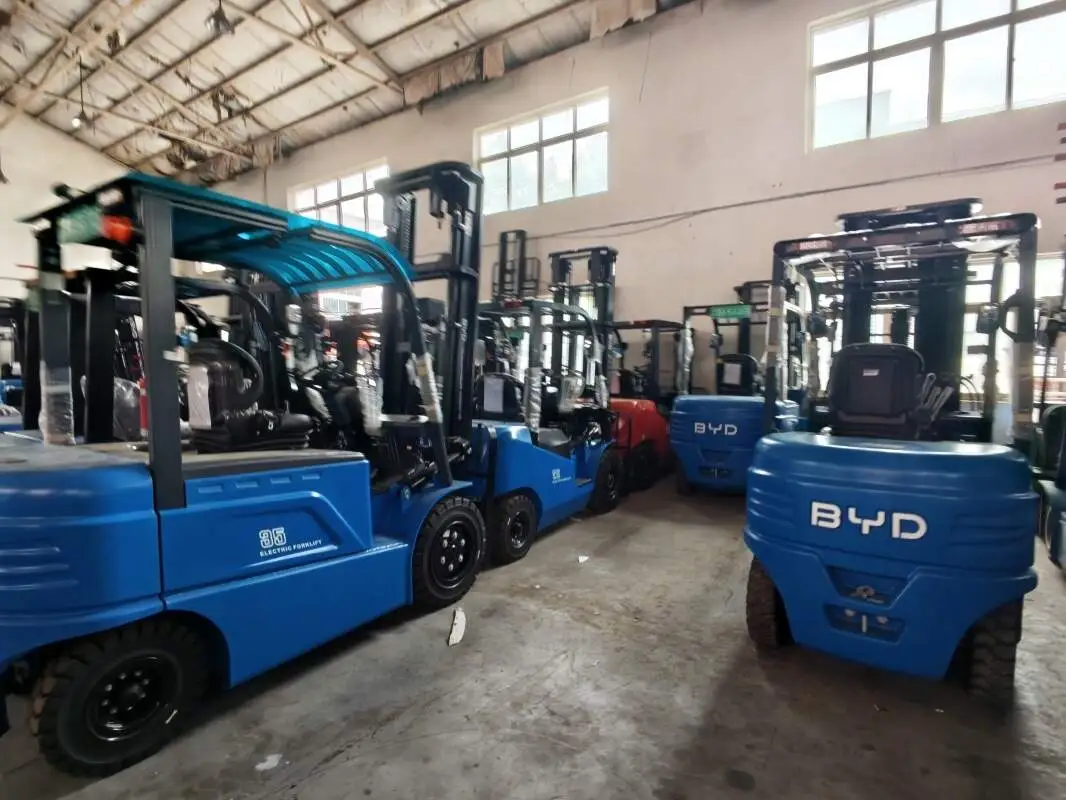
High-shelf warehouses have become the mainstream form of modern warehousing due to their high space utilization. Three-way stacking forklifts are the core operating equipment, and the rationality of selection and matching directly affects warehousing efficiency. The following are the selection criteria for three-way stacking forklifts and the matching scheme of high-shelf warehouse equipment.
Three-way stacking forklift selection standard
Adapt warehouse space parameters
The selection first matches the warehouse space indicators, including channel width, stacking height and clear height. The three-way stacking forklift is suitable for narrow channel operations, and the channel width should be reserved corresponding to the warehouse to avoid traffic blockage; the stacking height should match the highest storage layer of the shelf to ensure accurate access; at the same time, the warehouse clear height should be considered to prevent the lift of the forklift from being limited.
Match job core requirements
According to the characteristics of the goods and the operation frequency selection, heavy pallet goods need to be equipped with forklifts corresponding to the load level; warehouses with high turnover frequency should prioritize models with fast power response and stable efficiency; special storage environments such as low temperature and explosion-proof scenarios should choose forklifts with corresponding protective performance to ensure operation safety.
Consider equipment reliability and maintainability
Pay attention to the rationality of the equipment structure design, prioritize the models with strong versatility of parts, which is convenient for maintenance and replacement of parts; at the same time, consider the convenience of maintenance, and choose the equipment with perfect after-sales services to reduce the cost of downtime maintenance.
High shelf warehouse equipment matching plan
Collaborative configuration of main and auxiliary equipment
With a three-way stacking forklift as the core, it is equipped with suitable pallets and shelves to ensure the stability of cargo loading. High-rise shelf replenishment and inventory can be combined with climbing auxiliary equipment to improve safety and efficiency. Scattered goods can be selected with special picking equipment to reduce manual handling.
Intelligence system linkage layout
The forklift is connected to the warehouse management system to achieve automatic task allocation, real-time tracking of the location of goods, and reduce manual errors. Conditional warehouses introduce a precise positioning system to assist in the accurate operation of narrow channels and improve the level of intelligence.
workflow optimization adaptation
Combine the flow of goods to plan the forklift travel path to avoid cross-operation losses; set up exclusive loading and unloading areas to reduce round-trip distances; regularly carry out operator skills training, standardize operation, prolong equipment life and reduce safety hazards.


